


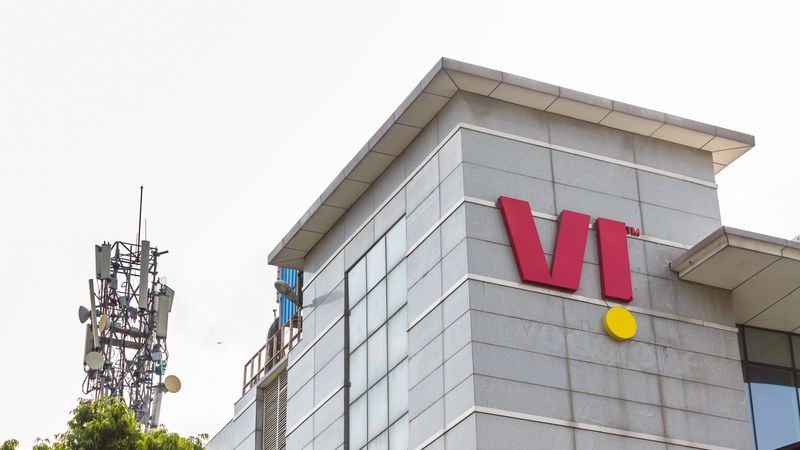
A Supreme Court order granting Vodafone Idea some breathing room on fees it owes the government could lead India's third-largest telecoms operator to raise up to Rs50bn (US$563m) from high-yield bonds, according to market sources.
Vodafone Idea, which is 49% government-owned and has 200 million subscribers, owes nearly Rs600bn to the state in adjusted gross revenue payments and had petitioned the top court for relief. In back-to-back decisions on October 27 and November 3, the court allowed the government to reassess the company's AGR payments for the entire amount at stake, including interest and penalties.
According to analysts at Citi Research, the decision "could free up cash for debt servicing" and "in turn, would alleviate concerns about the sustainability of Vodafone Idea's network capex, which have arisen due to recent delays in securing bank debt".
According to market sources, Vodafone Idea Telecom Infrastructure, the company's unit that builds and maintains fibre optic networks and tower infrastructure, is planning to raise Rs35bn from two-year bonds at around 12% and Rs15bn from four-year bonds at around 14%.
While the size and pricing are yet to be decided, the deal could come in November or early December, a source said.
JM Financial is said to be working on the transaction and talks are on with a few more arrangers.
The company did not reply to an email seeking confirmation of the plans. JM Financial declined to comment.
The AGR dues have been a major burden for the company, which has to pay about Rs135bn by next March.
A moratorium on Vodafone Idea's spectrum and AGR payments ended in September. In March, the government converted spectrum auction dues worth Rs369.5bn into equity equivalent to the 49% stake.
Analysts estimate the Supreme Court order could ease pressure on about one-third of Vodafone Idea’s Rs1.8trn of debt as of March 31 this year.
Some reprieve
"We believe AGR relief could be in the form of a partial waiver of dues or extension of timeline for payment of the dues, or a combination of the two," said Citi Research in a note on October 27.
Other analysts remain sceptical.
"The potential AGR waiver offers only partial relief – addressing perhaps 20% to 30% of the problem as operational challenges persist. Even after the waiver, the company will still carry debt of around Rs1trn, and subscriber losses remain a critical concern," said Aditya Shah, founder of investment manager Hercules Advisors.
Vodafone Idea has lost subscribers consistently since its inception in 2018 against fierce competition from rivals Bharti Airtel and Reliance Jio. Its market share has fallen to 15.8% versus 43.4% for Reliance Jio and 35.7% for Bharti Airtel, according to September numbers quoted by Kotak Institutional Equities.
The company reported a net loss of Rs66.1bn for the quarter ended in June, compared to a loss of Rs64.21bn during the same period last year. It is targeting capex of Rs50bn–Rs60bn by the end of March, management said on an August 18 earnings call.
Fundraising opportunity
Despite these challenges, some investors think the company has an opportunity to raise debt and equity.
"The sentiment has improved following the Supreme Court’s allowance for AGR reassessment and, with the government holding 49%, the credit story is still evolving," said the head of a private credit fund.
Shares in Vodafone Idea have surged over 36% in the last three months to Rs9.40 on improved sentiment.
"AGR relief could even pave the way for another equity raise down the road. A successful equity raise would dilute the government’s stake below the current 49%, providing the government with the option of converting additional dues into equity," Citi Research said.
Vodafone Idea raised Rs180bn in April 2024 via India’s largest follow-on public offering and obtained board approval to raise Rs200bn through equity and debt instruments in June.
On the August 18 earnings call, CEO Akshaya Moondra said the company is exploring nonbanking sources for capex funding.
The high-yield bonds, if they come to fruition, are expected to be sold to private credit funds, wealthy investors and nonbanking financial companies.
"The coupon on the high-yield bonds is likely to be in the 12%–14% range, with participation expected from private credit AIFs [alternative investment funds], specialised investment funds, ultra-high-net-worth investors, family offices, and wealth clients," said Killol Pandya, head of fixed income at JM Financial Asset Management.
"Bond investors are likely to demand a significant risk premium given the company’s weak financials and ongoing losses," said Shah at Hercules Advisors.
The company’s infrastructure assets may help attract investors. "Identifiable passive assets and contracted tenancy streams allow lenders to underwrite infrastructure value rather than only corporate credit," said the head of the private credit fund.
However, risk appetite for this credit remains narrow and only a limited pool of investors may engage meaningfully, he said.