


ReNew bonds mark GIFT City first
ReNew Energy Global became the first issuer to issue bonds through India's offshore financial hub, in a tax-saving move that could pave the way for others to follow.
The Indian renewable power company on Thursday sold a US$600m five-year non-call three senior secured green bond via its treasury unit in Gujarat International Finance Tec‑City. The bond priced at par to yield 6.5%, inside initial guidance of the 6.875% area.
The issuer, ReNew Treasury IFSC, was established in November as a specialised fund vehicle for liquidity management and to act as a common vehicle for borrowings and cash pooling. It will also reduce the need for ReNew to use multiple units or special purpose vehicles for fundraisings, as Indian high-yield issuers have often done for offshore bond deals until now.
ReNew and other Indian companies have raised US dollar bonds through a variety of structures, often issuing through Mauritius-based SPVs rather than negotiate India's restrictive rules on external commercial borrowings.
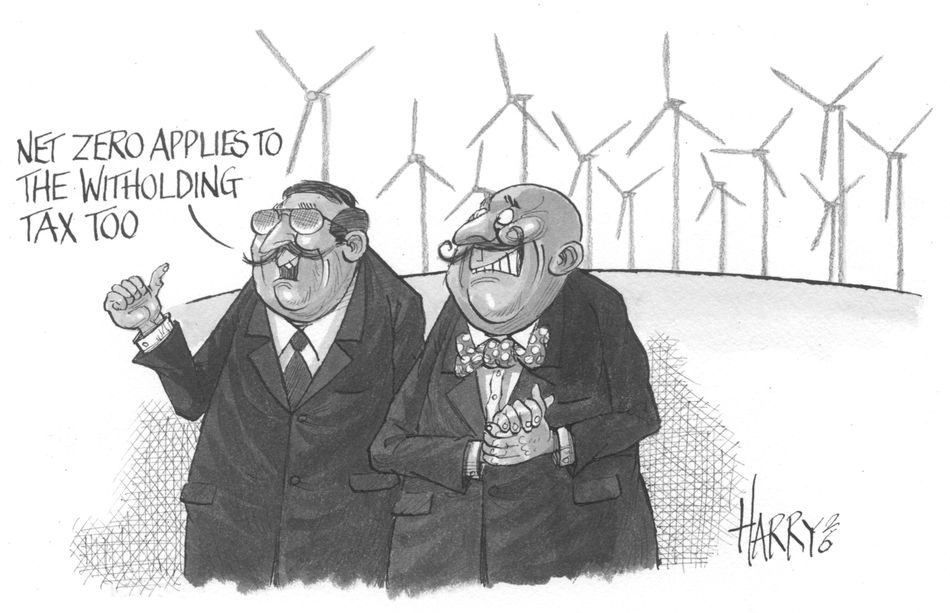
Treasury centres in GIFT City are treated as offshore vehicles, and when they on-lend proceeds to the Indian unit they also benefit from exemptions to withholding tax, which is usually charged at 20% on offshore US dollar bond coupons, and are not subject to Foreign Exchange Management Act regulations.
"The withholding tax for dollar bonds raised out of GIFT City is zero as compared with higher withholding tax rates for other foreign jurisdictions like 7.5% for Mauritius," said Girish Madan, director in Fitch’s Asia Pacific corporates team.
The withholding tax on dollar bonds listed on exchanges in GIFT City's International Financial Services Centre is 9% for issuers, but if the funds are raised from a GIFT City unit, there is no withholding tax.
DCM bankers expect this to translate into noticeably tighter pricing, "There is 60bp or more pricing benefit for using the GIFT City route," said a banker.
Investor feedback was positive, with many noting the enhanced structure relative to ReNew's Diamond II notes issued out of Mauritius three years ago, particularly because the new deal carries a corporate guarantee from Indian entity ReNew Private and Nasdaq-listed ReNew Energy Global.
"Moreover, the guarantor is closer to the cashflows of the company," the same banker said.
Besides tax exemptions, there are additional benefits such as cost efficiency and regulatory clarity by issuing from GIFT City. "These [GIFT City] entities are exposed to Indian regulations like IBC [India's Insolvency and Bankruptcy Code] and not to the regulations in the foreign jurisdictions like Mauritius," Madan at Fitch said.
"Over time, companies may shift most treasury activity – hedging, borrowing, lending, trading – from their traditional bases to GIFT City for tax efficiency," said Manisha Shroff, partner for banking, finance and debt capital markets at law firm Khaitan & Co.
Indian Oil Corp, ONGC Videsh, ArcelorMittal Nippon Steel, GAIL India, Welspun India and Vedanta have already set up treasury units in GIFT City, according to Khaitan & Co.
However, certain rules still need to be streamlined. "Particularly, repatriating money back to India currently requires routing it as an ECB which eats into the available monetary limits under the ECB regulations; a simplified mechanism for intergroup flows would greatly help," she said.
Strong response
A banker on the deal said ReNew received strong IOIs during marketing but a market downturn on Tuesday following the Greenland headlines prompted the issuer to delay the transaction by a day from Wednesday, which proved to be the right strategy.
"Markets were very quick to bounce back on Thursday and if anything that blip and bounceback turned out to be a good tailwind for the issuer," she said.
The deal benefited from rarity value, as ReNew had not tapped the market since April 2023 and investors had not seen a green deal out of India since Greenko Energy's US$1bn bond in March 2025.
While rupee funding remains attractive and the group had access to different funding channels, it decided to return to the US dollar market to maintain access, said a second banker on the transactions. The new issue will address its US$525m 7.95% July 2026 bond issued through Diamond II, which has a call date on January 28.
"ReNew has lot of large real money followers who have been with them over the years; the easiest way to maintain that engagement is not just roadshows or non-deal meetings but to have something outstanding," he said.
Both bankers estimated the deal pricing of 6.5% came at fair value and at the tight end of investor feedback. CreditSights placed fair value at 6.44% using Continuum Green Energy's June 2033s and Greenko's September 2028s as comparables.
The strong name, the natural interest that investors have to roll over their holdings of the maturing bond, and net redemptions in the sector are factors that played into the success of the deal, said a third banker.
"In the renewables sector there are certain names that are viewed with some scrutiny; the consensus is that ReNew is among the very strong ones and a name investors want to own," she said, noting there are around US$1.95bn of upcoming maturities in the Indian renewable energy space this year.
Orders reached US$2.1bn at final guidance of 6.5%, before dropping to US$1.65bn from 122 accounts at reoffer. Asia took 34%, EMEA 31% and the US 35%. Fund and asset managers bought 92%, insurers, pension funds and official institutions 7% and banks, private banks and others 2%, to the nearest percent.
The security of the bonds includes a charge over receivables from onshore pipes and certain other assets. The bonds will be 0.5 times covered by fixed-asset security and one time covered by total security.
The 144A/Reg S notes will be rated Ba3/BB– (Moody's/Fitch). They will be listed on NSE International Exchange.
Barclays, BNP Paribas, Deutsche Bank, HSBC, JP Morgan, MUFG and Standard Chartered were joint global coordinators, as well as bookrunners with Credit Agricole, DBS Bank and SMBC Nikko.
The bonds traded slightly above par on Friday morning.
The proceeds will be used for lending to entities within ReNew Group for refinancing. An amount equivalent to the net proceeds will be used towards eligible green projects.