


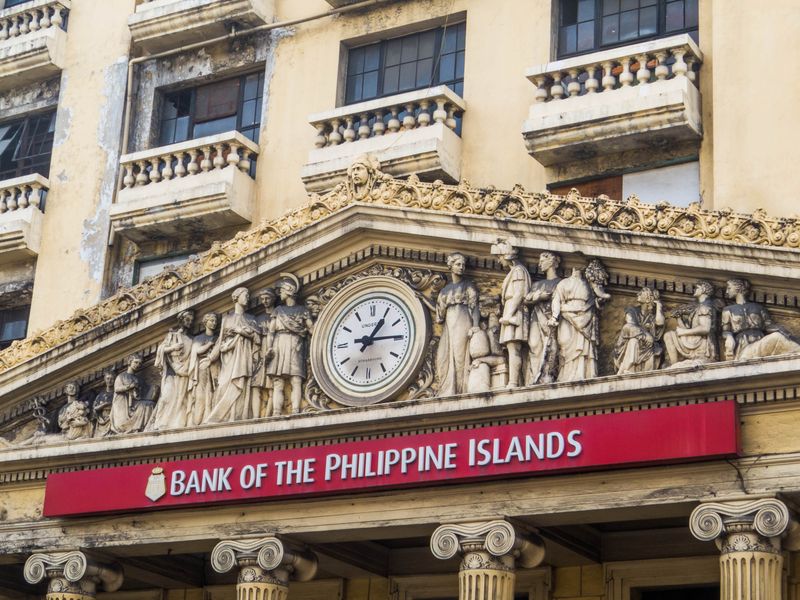
Bank of the Philippine Islands is committed to expanding its labelled ESG bond issuance in the local market, while considering a public US dollar bond later in the year to address upcoming maturities, executives said in an interview.
On February 13 the lender raised Ps50bn (US$868m) from a public offering of 5.405% two-year bonds labelled "supporting individuals to grow, lead and achieve", or SIGLA, 10 times larger than the base issue size of Ps5bn.
The deal was the bank’s second off a Ps200bn bond and commercial paper programme approved in October 2024, after it issued “supporting inclusion, nature and growth”, or SINAG, bonds in May last year.
Sigla means "strength" in Tagalog, while Sinag translates as "ray of light".
“This is really taking advantage of our expanded ESG framework, that increases what would qualify as social bonds,” said BPI treasurer and head of global markets Dino Gasmen.
Labelled bonds “are a type of product that has become quite popular in the local market … We think our issuance of ESG-themed bonds will accelerate their development,” he added.
Proceeds from BPI’s SIGLA bonds will be used towards eligible social projects under the bank’s sustainable funding framework and in line with the ASEAN Social Bond Standards. These include lending to underbanked individuals and SMEs, teacher loans, low-cost and social housing, and other loans linked to socioeconomic empowerment.
BPI Capital and ING Bank Manila branch were joint lead arrangers and selling agents.
Eric Luchangco, chief finance and sustainability officer, said he believes the bank’s sustainability-linked lending will continue to grow as a proportion of total lending – from around 50% today, which it reached ahead of its original target date of the end of 2026.
“We achieved that already; we have not reset the target yet,” he said.
Onshore, the bank addressed a Ps33.4bn bond due in early February and faces a further Ps40bn maturity in December.
Market permitting, the bank plans to raise at least enough from the peso bond market this year to cover the maturities. It may issue beyond this in line with balance sheet growth, as long as it has sufficient green and social assets to support new ESG bond issuance.
“It’s actually cheaper for us [to issue ESG bonds than conventional bonds] because of the accommodation from the central bank,” Gasmen said.
In 2023 Bangko Sentral ng Pilipinas approved several measures to promote sustainable finance, including a gradual reduction in the reserve requirement ratio for ESG bonds issued by banks to zero.
“The central bank overall has been quite supportive of sustainability initiatives,” said Gasmen.
But investor awareness of ESG products has room to grow. “There's still a lot of opportunity to generate more public awareness about sustainability. The more that we issue ESG bonds, the more it helps generate that awareness,” he said.
Dollar maturities
Offshore, BPI has a US$250m green bond that the International Finance Corporation subscribed to via private placement in 2023. That bond comes due in August, and to address it BPI will look at a public US dollar bond or syndicated loan, Gasmen said. “If a US dollar bond, it will be issued in Q3,” he said.
The bank last tapped the public offshore bond market in March 2025, raising US$800m from two tranches. It also raised US$400m in March 2024 after an almost five-year absence. Besides the public placement bond, it has no other US dollar maturities until 2029, when the bond issued in 2024 comes due, and also faces US dollar maturities in 2030 and 2035 from the bonds issued last year.
Gasmen said the bank assesses relative costs and target tenors when deciding whether to issue peso or US dollar securities, with current conditions favourable to US dollars.
“Currently, the swap market is priced such that there's actually benefit in raising dollars and swapping it to pesos to refinance peso bonds,” Gasmen said.
Reforms in the foreign exchange market announced by the central bank in April 2025 expanded the list of allowable hedging instruments and relaxed requirements for FX forward contracts, among other changes, making it easier for issuers to swap proceeds between US dollars and pesos.
“For a three-year transaction, it's actually about 20bp–30bp cheaper compared to a peso time deposit of a similar tenor because of the intermediation costs, documentary stamp tax, deposit insurance costs and reserve requirements for peso,” Gasmen said.
The bank will also favour US dollars when targeting three to five-year issuance, given the preference from peso investors for the shorter end of the curve, he said.