


SP Group mulls US dollar debt debut
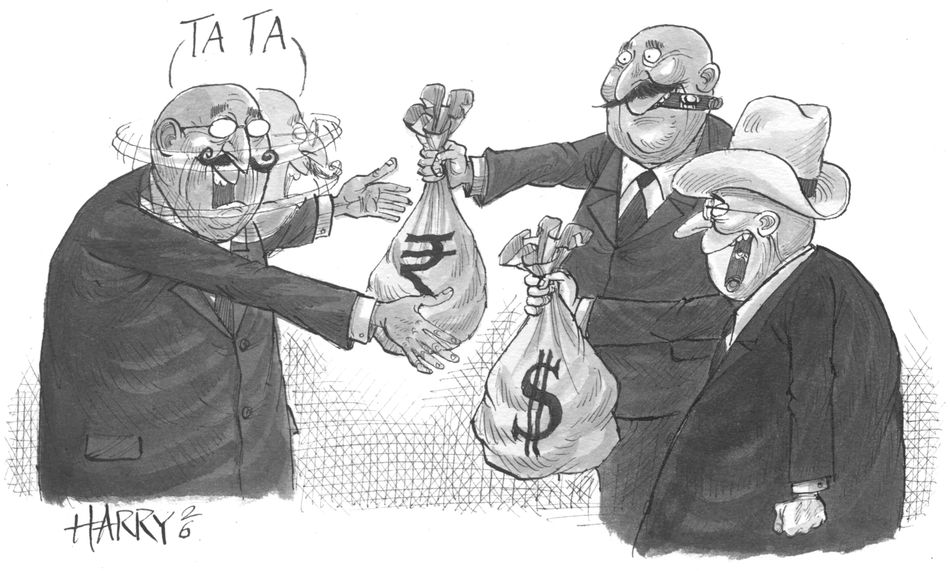
Barely a year after completing the largest private credit financing outside of the US, India’s Shapoorji Pallonji Group is planning to raise at least US$2.8bn from a transaction that includes its debut in the US dollar debt market.
The company is in discussions with investors for a US dollar financing of at least US$500m–$600m that will complement a rupee bond tranche of around Rs200bn (US$2.18bn).
Views on the timing of the deal are mixed. On one hand, global financial markets are reeling as the Iran war rages on, adding to other headwinds including uncertainty over US tariffs and risks emerging in the US$1.8trn private credit market.
On the other hand, one factor in favour of SP Group’s return is the Reserve Bank of India’s relaxation of rules on external commercial borrowings in February that broadens the investor base for Indian borrowers.
“There are discussions with a diverse set of investors for a privately placed dollar tranche of up to US$1bn,” a source close to the deal said. “There have been investor meetings with US fund managers AllianceBernstein, BlackRock and Pimco, Swiss private bank Lombard Odier, and Middle Eastern and European banks. The real money investors have shown decent interest in the deal.”
The revised ECB rules have increased the offshore borrowing limit for borrowers to US$1bn or 300% of their net worth, and removed a cap on all-in pricing for such borrowings. The pricing cap had previously held back some high-yield issuance and based on the current SOFR level would have prevented issuers from paying an interest rate higher than 8.6% on dollar debt.
Borrowers can also use proceeds from ECB deals with a minimum average maturity of three years to refinance existing debt, among other purposes.
A roadshow for the deal was held in Singapore and Hong Kong in the week of March 9 following meetings in the Middle East and London the week before. The deal is expected to price in early April, with settlement around April 10–11, according to the source.
The deal is being marketed to nonbank investors, some of which are said to have expressed interest in a dollar financing under the revised ECB rules.
In SP Group’s previous private credit fundraisings, denominated in rupees, several offshore funds were shut out because they had to be registered as foreign portfolio investors in order to participate. This is no longer required for an offshore dollar deal through the ECB route.
“This simplifies onboarding, reduces compliance overhead, and shortens deal timelines,” said a partner at a law firm. “The exchange rate risk for a foreign currency-denominated ECB is on the Indian borrower/issuer, and not the investor. This shields investors from rupee volatility and eliminates the need for hedging at their end, especially at a time of geopolitical uncertainty which we are seeing currently,” he said.
“With the currency at an all-time low and rupee forwards still running at 5%, it makes sense to do a dollar tranche,” said a head of structured credit at a domestic private credit fund.
Proceeds will partly refinance US$1.75bn-equivalent (principal plus interest) of zero-coupon bonds issued by SP Group unit Goswami Infratech (rated BB– by CareEdge) that mature in April and currently pay holders an 18.75% return. The deal will also fund the repayment of US$465m-equivalent of bonds issued by another unit, Porteast Investment, that pay 19.75%, with the balance earmarked for growth capital.
Both the dollar and rupee portions of the latest financing carry three-year tenors with a call option after the first year. The dollar portion is being marketed at a yield of around 13%, and the rupee piece at 16%–17%. SP Group’s swap costs for the dollar tranche are estimated to be around 3.5%–4%, according to the same source close to the deal.
The new borrowing will carry collateral in the form of a 9.185% stake in Tata Sons held by SP Group’s Cyrus Investments. This stake is currently pledged as security for the Goswami notes, while another 9.185% holding via Sterling Investments is pledged to the Porteast bond.
The total 18.37% stake SP Group owns in Tata Sons is valued at around US$15.3bn, implying an LTV ratio of 18.6% on SP Group’s secured borrowings.
The company had been preparing a January launch for a domestic private credit deal and aimed to tighten the pricing by at least 400bp, to 14%–15%, compared with the previous two trades. Goswami raised Rs143bn in June 2023 from April 2026 bonds, while Porteast closed a Rs286bn non-convertible debenture last May.
Multiple hurdles
Not everyone is positive on the deal with some private credit investors calling the 17% pricing tight considering current market conditions.
“Most investors have turned a bit cautious due to the war in the Middle East and growing strains in the global private credit market linked to redemption requests in BlackRock’s private credit funds in the US,” said a second private credit fund manager. BlackRock this month limited withdrawals from its HPS Corporate Lending Fund following an increase in redemption requests.
Meanwhile, there is uncertainty over progress on a potential listing or sale of the Tata Sons shares held by the group, which plans to use proceeds from the stake to reduce the debt.
Recent news reports indicate that a Tata Sons listing is unlikely in the near term, with internal divisions among trustees – who collectively own about 66% of Tata Sons – complicating the agreement on the sale of SP Group's stake.
“There are some positive developments such as Noel Tata, the chairman of Tata Trusts, seeking an assurance of a faster resolution with SP Group during a board meeting in February as one of the conditions, besides keeping Tata Sons unlisted, for approving Natarajan Chandrasekaran’s reappointment as chairman of Tata Sons for a third term,” the source close to the deal said.
The decision on Chandrasekaran’s reappointment has been deferred until the next board meeting in June.
Tata Sons, the holding company of Tata Group, missed the central bank’s September 30 listing deadline after the RBI classified it as a top-tier nonbanking financial company. It has surrendered its NBFC licence and reduced debt to zero to seek declassification.
Meanwhile, the selloff that has wiped out billions of dollars from software and services stocks because of what is seen as an existential threat from AI has also spooked investors in India’s IT sector. As a result, shares of Tata Consultancy Services, in which Tata Sons holds a 71.77% stake, are languishing at 5.5-year lows. TCS is a cash cow for Tata Sons and any negative consequences for TCS will in turn have an impact on its parent.
“While AI is no doubt causing tectonic shifts in the IT sector, the impact is overexaggerated,” said one senior loans banker in Singapore, brushing off concerns about bellwether Indian IT companies. “Will large companies such as Infosys and TCS die? Absolutely not, but they will have to adapt.”
Deutsche Bank has been mandated for SP Group’s latest financing.
SP Group did not immediately reply to an e-mail seeking confirmation of the details of the upcoming trade.