


Chinese credits see demand amid Middle East conflict
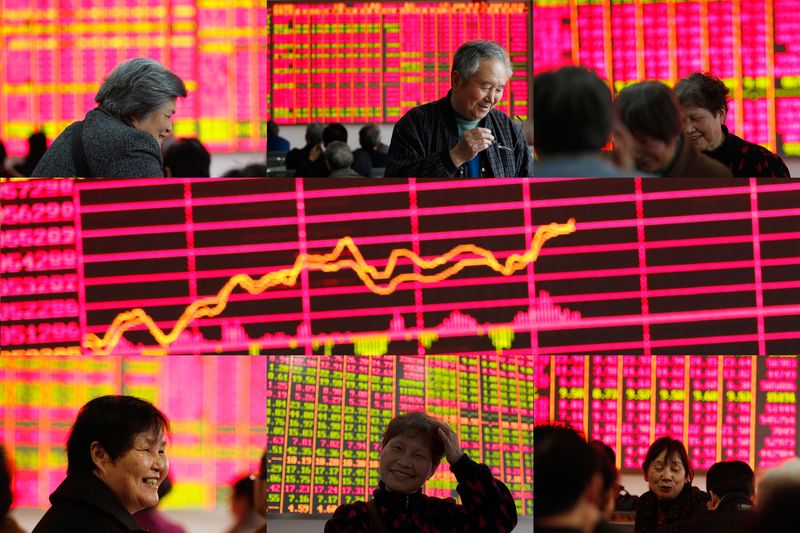
While Asian offshore bond issuance has practically ground to a halt since the Middle East crisis began in late February, issuers from China have continued to print, as Chinese investors’ demand for assets, low onshore rates and positive policies have helped these credits outperform.
Industrial and Commercial Bank of China raised US$1.915bn-equivalent on March 9, following a US$800m three-year floating-rate note from Industrial Bank Hong Kong branch the previous week. Another financial institution, China International Capital Corporation, sold a Rmb2bn (US$291m) Dim Sum on Thursday.
Activity also came from state-owned companies. China Oilfield Services made a Rmb5bn Dim Sum debut, while Beijing Construction Engineering Group printed a dual-currency deal totalling US$598m-equivalent. Power Construction Corporation of China is doing roadshows across Singapore, Hong Kong and Frankfurt for a US dollar bond offering.
“China IG is performing well. Not only financial institutions and state-owned companies, TMT and privately owned companies are also doing okay in the secondary market. There’s some softening in the high-yield space, but generally Chinese credits are holding up well,” said a Chinese banker. “Some Dim Sum bonds are even trading up.”
Chinese investors, mostly banks, are continuing to buy bonds despite market volatility. Many are desperate for assets after the Lunar New Year holiday, and the conflict in the Middle East, a region they turned to in recent years for diversification, has stopped issuance there, leaving them with even fewer options.
“There’s an overall lack of supply, and lack of refinancing deals,” said the banker. “Chinese investors are less concerned about the geopolitical tension, and they see little impact of the conflict on the assets they bought.”
For comparison, the banker said many investors pointed to the Russia-Ukraine conflict, saying it did not affect Chinese credits much.
Some international investors also see value in Chinese credits, as assets across fixed income and equities, as well as the currency, remain stable.
“When the war broke out, if I wanted to reduce risk, my first port of call would be going to CGBs [Chinese government bonds] and SOEs [state-owned enterprises] in the Dim Sum market,” said Ang Ze Yi, senior portfolio manager at Allianz Global Investors. “Renminbi is one of the best-performing currencies across G10 and Asian currencies. It really shows the appeal of renminbi when it comes to diversifying.”
Like most Asian countries, China is a net energy importer, but it is better positioned to weather the spike in the oil price compared with other countries in the region.
“The starting point is very healthy. There’s a lot of room to absorb the oil price moves and to manoeuvre the macro policy,” Ang said.
Based on the current 25% year-on-year increase in the oil price, Ang estimates that China’s consumer price index inflation will remain below the country’s 2% target, and the current account surplus will stay above 3%. China reported a 1.3% year-on-year increase in its CPI in February and its current account surplus was calculated at 3.7% of GDP in 2025.
Bo Zhuang, global macro strategist for Asia at asset manager Loomis Sayles, noted that the effects of the Middle East conflict could help China avoid deflation risks.
"Higher inflation is better for China, which is different from practically every country in the world," said Zhuang. He also noted that the war could act as a "green accelerator", spurring interest in solar and wind power.
“If the war drags on, other countries will start to think about alternative sources of energy and China is one of the strongest in the renewable energy infrastructure, so that makes it medium-term positive for China,” said Allianz's Ang.
Better returns
The juicy returns from US dollar and Dim Sum bonds compared with onshore yields have attracted many Chinese investors, with bankers saying Dim Sum bonds can offer a 30bp yield pickup compared with the same issuer's onshore bonds. Many expect the differential to become wider when China cuts rates later this year.
People's Bank of China governor Pan Gongsheng said in a media briefing during the government's Two Sessions meetings, which ended on Wednesday, that the central bank will continue its modestly loose monetary policy and will use various monetary tools, including rates and reserve requirement ratio cuts, in an efficient way. The market has priced in at least 10bp of cuts this year.
An article published in January in Qiushi, an official publication of the Chinese Communist Party, calling for the push to adopt the renminbi as a reserve currency, is seen by many market participants as a positive catalyst for the Dim Sum market, as China is likely to further expand the market and ensure a stable flow of liquidity.
A Hong Kong-based investor said the competition for assets is intensified by many new buyers in the offshore market, including bank treasuries, life insurers and asset managers, which came after the dealflow in the onshore market dropped significantly following the property crisis.
He said those investors only buy safe names like financial institutions and high-grade SOEs. The fact that they usually get little allocation in primary deals forces them to put in orders whenever these kinds of issuers come to the market.