


South Korean spinoffs ignite controversy
South Korean cable manufacturer LS Corp has dropped a plan to list its US unit after the deal drew heavy criticism from shareholders – and even the country’s president.
LS Corp on Monday withdrew an application for a W500bn (US$347m) Korea Exchange IPO of its affiliate Essex Solutions, which is a major supplier to Tesla and Toyota Motor.
LS Corp said it took the decision, after considering feedback from stakeholders, including minority shareholders, to enhance shareholder protection and trust. It will review alternative options with pre‑IPO investors in Essex.
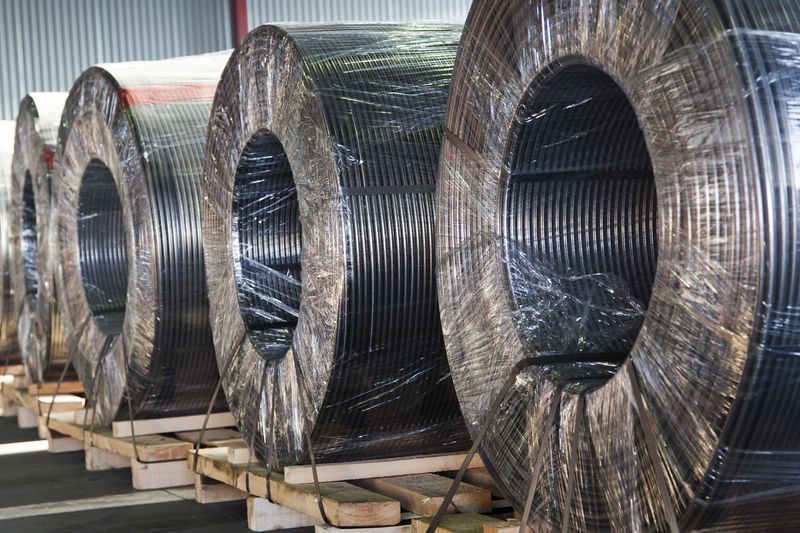
According to local media, some shareholders criticised the planned IPO as a "duplicate listing" that would dilute their returns from the expected fast growth of Essex, which manufactures magnet wire and winding wire used in electric vehicles, automotive components and industrial applications.
In South Korea, "duplicate listing" refers to the spinoff and listing of high-growth assets by a company – a move seen as diluting the parent’s business value and hurting shareholder interests. The criticism is usually levelled at chaebols, family-controlled conglomerates that dominate the country's economy and have historically cared little for shareholder value.
South Korean president Lee Jae-Myung, who in his election campaign last year denounced duplicate listings, reportedly criticised the LS Corp deal at a meeting on January 22 with members of his political party, according to The Chosun Daily, which quoted him as asking, "are there still such cases?"
While Essex does not contribute a lot financially to LS Corp, investors expect the business to grow rapidly. It posted an operating profit of W54.9bn in 2024, representing 5.1% of LS Corp’s total W1.1trn, according to an IPO presentation in November.
Investors seemed to welcome the decision to drop the listing plan, with LS Corp shares jumping as much as 8% on Monday before ending 2% higher at W233,500.
Mounting pressure
Essex filed a preliminary IPO application in November to the Korea Exchange. LS Corp argued this would not be a duplicate listing as it would basically relist Essex in South Korea after it acquired the company in 2008 and delisted it from Nasdaq.
LS Corp has also said it would consider setting aside some Essex IPO shares for LS shareholders, and it had no plan to list other subsidiaries such as LS Cable & System.
But mounting pressure from shareholders and the government forced the company to back down.
“The government maintains a strong view on the value-up programme and it believes spinoff listings may diminish the value of parent companies,” said a person familiar with the LS Corp transaction.
The value-up programme, introduced in February 2024, aims to tackle the "Korea discount" by encouraging listed companies to enhance corporate governance, increase capital efficiency and improve shareholder returns.
“I think president Lee Jae-Myung prioritises policies that could boost the Kospi Index,” the person said.
Indeed, Lee campaigned last year on bringing the Kospi Index above 5,000, an objective that became reality on Tuesday following a 76% rise in the index last year. The index hit another record high on Thursday, closing at 5,221.25, more than doubling in the past year.
Since taking office in June, Lee has vowed to tackle poor corporate governance and improve companies’ valuations through the value-up programme.
In July, regulators revised the Commercial Act and made it a legal duty for directors to consider the interests of all shareholders rather than just the company. Korea Exchange is also reportedly looking to tighten regulations governing duplicate listings.
In limbo
The controversy over duplicate listings is expected to put other planned spinoffs in limbo. HD Hyundai Robotics, a unit of HD Hyundai, has recently picked banks for a KRX IPO. Semiconductor and AI-focused SK Ecoplant, a unit of SK Group, is also planning a KRX IPO of around US$800m this year.
“Following the Essex case, the government is likely to closely monitor other conglomerates’ spinoff listings. This may increase the difficulty for those deals to happen,” said the person.
Bankers expect some conglomerates will look to list their subsidiaries offshore instead.
“In an optimistic view, overseas listings could be an option for companies and conglomerates to consider,” said a South Korean ECM banker.
Essex was planning to use the listing proceeds to fund investment in US facilities to meet North American power grid replacement demand. Korea Investment & Securities and Mirae Asset Securities were arrangers.