


A package of support measures helped Singapore’s stock market hit an all-time high last month, but can it maintain that momentum as global investor sentiment weakens?
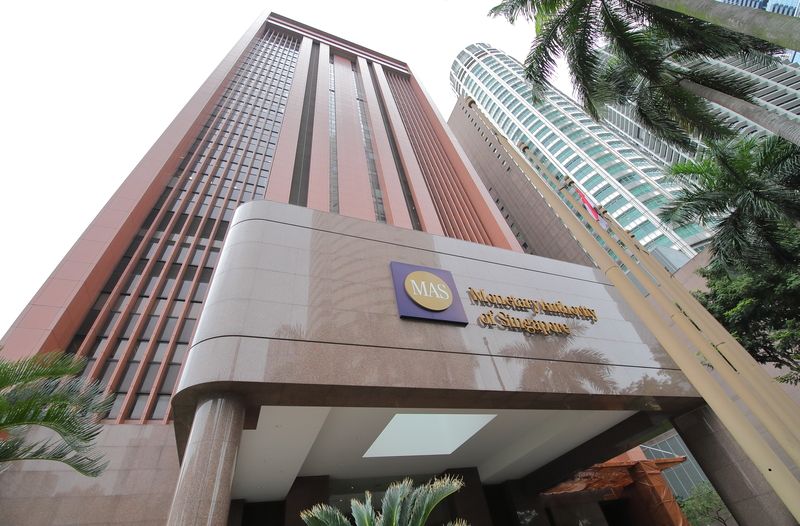
The Monetary Authority of Singapore in August 2024 established the Equity Markets Review Group, comprising experts from across the financial and government sectors, to come up with ways to revitalise the equity market.
In February 2025, the MAS and Singapore’s Financial Sector Development Fund said they would place S$5bn (US$3.9bn) with active fund managers to invest in a range of Singaporean stocks under the equity market development programme. Five months later they named the first batch of fund managers under the EQDP scheme, allocating an initial S$1.1bn between Avanda Investment Management, Fullerton Fund Management and JP Morgan Asset Management.
That helped the FTSE Straits Times index to gain 22.7% in 2025, outperforming the S&P 500 and Nasdaq 100 indices (though not Hong Kong's Hang Seng index, which rose 27.8%). It hit an all-time high in February this year, even though much of the EQDP funds have not been invested yet.
“The market started moving even before the EQDP deployment,” said Jason Saw, group head of investment banking at CGS International Securities, which was the top ranked securities broker on Singapore Exchange in 2025. “What happened was not really institutional-driven but retail putting money into funds and investing on their own that gave the market that early run.”
Robert St Clair, head of investment strategy at Fullerton Fund Management, argues that the turnaround began prior to the announcement of the EQDP scheme, as share prices started to catch up with strong earnings growth.
“The turning point was 2024,” said St Clair. “There was a big gap between earnings performance and market performance. We were sure this couldn’t continue, and thought there would be a re-rating.”
So while the STI is up 5% year to date, compared with declines of more than 5% and 6% for the S&P and Nasdaq indices, that performance is not necessarily driven by the EQDP funds and other policy measures such as funding for extra company research and a push for companies to focus on increasing shareholder value.
“It’s impossible to distinguish how much is from fundamentals and how much is from policy actions,” said St Clair. “The policies are not trying to push the market in a way it doesn’t want to go.”
Fund managers receiving EQDP funds are required to invest in more than just the STI constituents, meaning that the recent rally has been broad-based.
“In the past some companies were overlooked and under-owned,” said Shawn Ang, portfolio manager of the Fullerton Singapore Value-Up fund, which invests in Singaporean equities and aims to put 30% into small and mid-cap stocks. “When you have the EQDP, a spotlight is shone on the market.”
The average daily securities trading value on SGX rose by 27% year on year to S$1.3bn in 2025, and increased further to S$1.6bn and S$2.1bn in January and February this year, respectively. Now there is more than S$1m of daily trading volume in over 100 companies.
Some had wondered whether the Singapore exchange could digest the sudden rush of buying or whether it would cause unwanted effects.
“People are wary about excess liquidity spilling into the economy and creating inflation, but MAS has maintained a high exchange rate,” said Fullerton’s St Clair. “Liquidity growth did increase a lot but it’s now going back to normal. People were worried with too much liquidity the cash interest rate would fall to zero, but it’s well above that.”
The rise in share prices has been driven not purely by the EQDP, but by companies trying to improve governance and shareholder returns, following successful similar initiatives in Japan and South Korea in recent years.
“In the last two years there have been more companies doing things to unlock shareholder value and drive growth,” said Fullerton’s Ang. “The alpha is in companies unlocking shareholder value, it’s no longer about a particular sector.”
Share buybacks in Singapore reached US$1.3bn in 2025, according to asset manager Capital Group. The annual increase of 62.3% was one of the highest globally, it said, and came in contrast to a decrease in Hong Kong.
"A stronger emphasis on shareholder discipline is likely to translate into higher dividend payouts and improved capital efficiency, enhancing the return on equity for Singapore equities over time,” said Weiheng Chen, global investment strategist at JP Morgan Private Bank, in a note on March 19.
Chen noted that the STI trades at a forward P/E multiple of around 15 times, reasonable relative to global markets, while dividend yields of around 4.7% are among the highest in developed markets.
“Clients think US stocks are still quite high, so where should they put their money?” said CGSI’s Saw. “Singapore is still the clear answer. There are still a lot of companies trading below 10 times price-to-earnings.”
Listing pipeline
A crucial part of the policies to revitalise Singapore’s equity market is attracting new listings through tax incentives and other initiatives. The Anchor Fund@65 of state investment firm Temasek Holdings invests in companies and requires them to list on the SGX eventually, while a cross-border listing tie-up with Nasdaq will allow companies with a market capitalisation of S$2bn or above to use a single set of documents to list on both markets when it goes live in mid-2026.
“The policies to encourage new listings, like the Nasdaq link, create a new avenue of investible companies looking for growth capital,” said Fullerton’s Ang. “Returns beget returns, so you have more investors looking to invest and it’s a virtuous cycle.”
The SGX has also been trying to attract Chinese listings, even though Hong Kong is a more natural fit. CGSI’s Saw said listing on the SGX would allow Chinese companies to access a new investor pool in Singapore.
“Traditional retail and high-net-worth investors can’t access A-share companies, which include some world class companies with high growth prospects,” he said. “Some A-share companies could consider raising S-shares to raise money for international expansion.”
While there are understood to be around 30 IPOs in the pipeline, some of those are likely to be put on hold given the global market volatility. REIT IPOs, traditionally one of the SGX’s strengths, could be difficult while rates remain relatively high, said bankers.
“Some of us are nervous that if the current geopolitical crisis continues, it will be difficult for ECM to show the growth that such [government] support merits,” an ECM banker said.
However, a second ECM banker said the EQDP has improved the medium-term outlook for Singapore’s primary market. “There is ample liquidity in the market and now it is up to the bankers to find opportune launch windows for issuers,” he said.
The bearish mood globally raises the question of whether Singaporean stocks can still attract new investor interest and achieve higher valuations while market sentiment is weaker.
“If there is a global selloff every market will get hit, but if it is shallow then Singapore will be defensive,” said Saw. “Thanks to EQDP Singapore will have a bit of a backstop and people will be more confident to buy in a downturn.”
In a surprise move, the budget in February this year included an extra S$1.5bn for the EQDP programme. So far, S$3.95bn has been allocated among nine asset managers.
“If they think longer term, there is a chance it could continue,” said Saw. “Singapore is probably watching what is the multiplier effect, because they require fund managers to raise money as well. Is this money growing?”
Even if EQDP comes to an end, it has put Singaporean equities on the radar of more investors.
“Beyond headline fund allocations, we believe the other initiatives – such as value unlock grants and targeted research support programmes, are equally important in strengthening the overall Singapore equity ecosystem,” said a spokesperson for Eastspring Investments, which was appointed an EQDP manager in the second round. “These measures help improve corporate quality, research coverage, and investor engagement, which are essential for long term market development.”
Local retail investors hold a lot of money in bank deposits and allocating some to stocks would have a big impact. Fullerton’s St Clair estimates the average household has S$440,000 in cash holdings, plus savings under the Central Provident Fund, the national retirement scheme, some of which can be invested in stocks.
“Even if the policy effects stopped tomorrow, it’s not just about policy support but a mindset change,” said St Clair. “That will be something that continues over time. There is a lot of dry powder sitting on the sidelines that can be put to work.”
(Additional reporting by S Anuradha)