


Issuer of the Year: MTR Corporation
Changing tracks
Hong Kong’s mass transit railway operator ramped up its capital market activity to fund infrastructure for the Northern Metropolis mega-project, crafting varied debt structures to access deep and diverse pockets of liquidity while keeping financing costs low. For reinventing itself in the funding markets, MTR Corporation is IFR Asia’s Issuer of the Year.
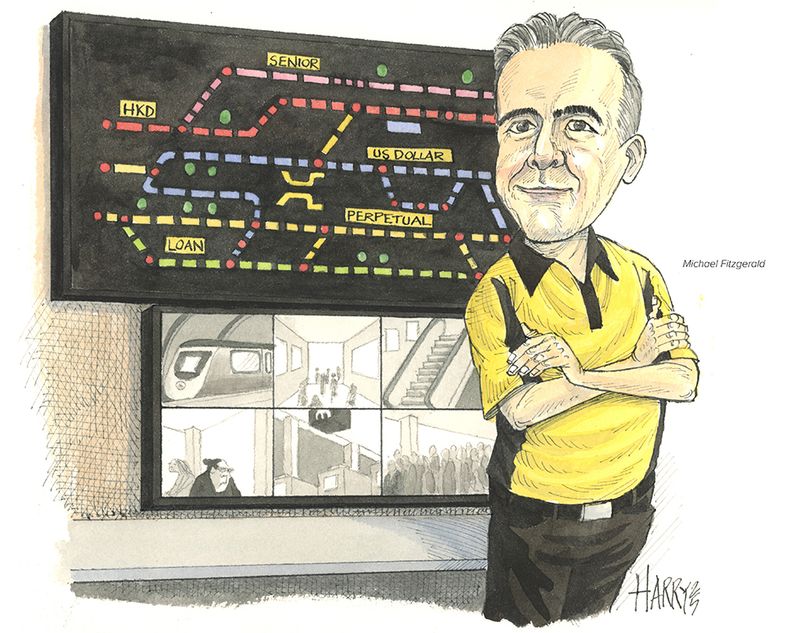
MTR Corporation took a bold new approach to financing this year as it began work on the rail network for a new city being built in the New Territories under Hong Kong’s ambitious Northern Metropolis project.
The rail operator and property company plans to spend around HK$140bn (US$18bn) on new railway projects, as it aims to complete the underground metro lines for the Northern Metropolis by 2034, and had spent HK$20bn of that by August 2025. While it was breaking new ground for its railway project, it was doing the same thing in the bond and loan markets in 2025, raising nearly US$10bn-equivalent of funding, a huge step-up from its usual financing activity.
MTR had no major expansion projects in the previous decade, and healthy cashflow meant it made only occasional visits to the offshore senior bond market, having last issued there in 2020, and had been away from the syndicated loan market for even longer.
“The financing we were doing was primarily in the form of private placements, which were very flexible and worked perfectly well, but are not sufficient for the expansion phase we are in now,” said Michael Fitzgerald, finance director at MTR. “We took the decision 18 months ago that we needed to step up.”
In March, MTR brought its largest public bond issue to date, a US$3bn senior offering split between US$500m five-year, US$1bn 10-year and US$1.5bn 30-year tranches.
Notably, it opted to print in Reg S-only format, taking advantage of the increased depth of liquidity in that market. Since books did not have to stay open for US-based investors, this also helped to minimise market risk.
The 30-year tranche was the largest issue at that tenor by a Hong Kong corporate in two decades, and the tenor aligned with its long-term development needs. It was also the largest Reg S-only tranche at that tenor from an Asian issuer.
The depth available in the Reg S market allowed MTR to upsize the deal from an initial base case of US$2bn, even as pricing tightened sharply from initial guidance.
The five, 10 and 30-year tranches priced at Treasuries plus 40bp, 58bp and 70bp, respectively, inside initial guidance of 75bp area, 85bp area and 100bp area.
The announcement of US “liberation day” trade tariffs on the rest of the world roiled financial markets the following month and temporarily closed the primary bond market, but just three months later MTR was back for another eye-catching transaction.
In June, it sold US$3bn of subordinated perpetual notes, the first time it had raised hybrid capital.
The Reg S-only notes have 50% equity treatment for the life of the bonds from Moody’s, and 50% until the first reset date from S&P, allowing MTR to protect its Aa3/AA+ (Moody’s/S&P) senior ratings, on par with the Hong Kong government. The notes are eligible as equity in MTR’s accounts.
“We knew we needed to pay attention to our gearing and credit metrics, and that it made sense to add a new tier of hybrid capital,” said Fitzgerald. “Our view was that it should be done up front, not in two to three years when we’ve spent more capex and are wondering about our ratings. It was our strongly held view that the perps should come soon after the senior.”
A US$1.5bn perpetual non-call 5.5-year tranche priced at 4.875% and a US$1.5bn perp non-call 10.5-year at 5.625%, inside respective initial guidance of 5.375% area and 6.125% area.
Market conditions were far from ideal, with Israel having attacked Iran two days before the deal was announced. Still, the deal attracted a combined US$16bn of orders at final pricing, and the hybrid structure allowed MTR to reach new kinds of investors who had not participated in the senior issue.
“We need to implement transactions that ensure we have access to diversified funding markets,” said Fitzgerald. “We know there is going to be plenty of issuance coming out of Hong Kong in the next few years, from a range of issuers, so we need to have access to different baskets of liquidity no matter who else is out at the time.”
The perp non-call 5.5 and perp non-call 10 priced around 60bp and 80bp over MTR’s senior curve, far tighter than the usual 100bp–150bp spread typical at the time.
Helping to achieve that narrow senior-to-subordinated spread, the ratings of A2/A (Moody’s/S&P) for the hybrids were the highest issue ratings ever for a US dollar corporate subordinated perpetual issuance globally.
MTR is 74.4%-owned by the Hong Kong government, and its senior ratings incorporate a two-notch uplift to reflect the high likelihood of extraordinary support from the government, given the importance of the public rail network. However, rating agencies do not usually factor in the potential for government support when assigning ratings for hybrids.
In this case, S&P incorporated one notch of uplift from MTR’s standalone credit profile to reflect the potential government support, the first time this had happened for a debut hybrid issue, while Moody’s reflected it through a two-notch differential from the senior rating.
Given the scale of its funding programme, it was important for MTR to make investors understand how each financing transaction would fit into the bigger picture.
“I don’t want people to see these as a series of isolated transactions, I want the market to see that there is a train of transactions, each of which makes sense individually, and which together make sense collectively,” said Fitzgerald.
Despite ramping up debt issuance and raising the hybrid, MTR’s weighted average interest cost dropped to 3.7% in the first half of 2025, from 3.8% a year earlier, according to its interim 2025 report.
Following the hybrids, MTR returned to the syndicated loan market for the first time in more than five years, raising HK$30bn from a debut green facility. The loan was launched in August and took just five weeks to close, despite the huge size.
While a five-year tenor is more common in the loan market and would have been easier to place, MTR opted for a seven-year maturity, which more closely matched the construction cycle for a new metro station. The rare seven-year maturity also meant that it was not in direct competition for funds with other borrowers in the market.
The 15 mandated lead arrangers, bookrunners and underwriters included banks from China, the rest of Asia and the Middle East, and 40 banks joined in syndication. This allowed the deal to be increased from an initial launch size of HK$23bn, and to price at a tight spread of 60bp over Hibor.
Separately, MTR also obtained a HK$780m seven-year bilateral green revolver from Korea Development Bank.
“We had a strong sense of the world coming together to deliver this new stage of growth in Hong Kong,” said Fitzgerald.
On the day of the signing ceremony there was a Typhoon 10 signal in Hong Kong, so the bankers did not stick around for long after lunch – but MTR’s trains kept running.
MTR’s financing plans are going to keep running at a rapid pace for the next few years, too, as it funds the build-out of the Northern Metropolis rail link, as well as a HK$65bn asset maintenance, upgrade and replacement programme from 2023 to 2027. Having reinvented itself in the capital markets in 2025, MTR aims to keep reaching the broadest pockets of liquidity with future transactions.
“As long as we can swap back to Hong Kong dollars at a good rate we are relatively indifferent to which currency we fund in, but if we can add to our diversification mix that’s even better,” said Fitzgerald.
To see the digital version of this report, please click here
To purchase printed copies or a PDF, please email shahid.hamid@lseg.com