


Forgive and forget
It is a truism of the financial markets that investors have short memories, and never shorter than in a bull market. The peerless liquidity for emerging market equity over the past six months has seen no end of landmarks in the Asian capital markets – and looks set to allow another interesting character to raise new funds. Chris Wright reports.
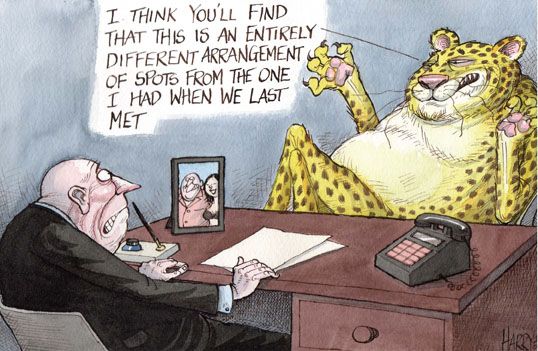
With Asia booming and much of the rest of the world subdued, it is natural for investors to regard the region with a certain level of exuberance. It is understandable, therefore, that investors are beguiled by the story of Sateri International, which at the time of writing was marketing an IPO expected to raise up to US$686m, post-greenshoe, through Morgan Stanley, Credit Suisse and BOC International.
Sateri was being marketed as an emerging market growth story, combining Chinese consumption with Brazilian resources. The pitch delivered to investors ran like this: Sateri is one of the largest speciality cellulose producers in the world; it owns wood plantations in Brazil; and is the largest supplier of rayon grades of dissolving wood pulp to China, the world’s largest market in terms of demand.
Investors were also told that Sateri’s products could be used in a range of consumer applications, chiefly textiles, but also lip gloss, sunglasses, toothpaste, shampoo, cigarette filters and ice creams, among other things.
Emerging markets, consumption, commodities and pictures of children eating ice cream – what’s not to like?
But there is another part to the Sateri story and some investors and bankers were rather surprised to see the company coming to market at all. The issue was not the quality of the business itself, but its owner: Sukanto Tanoto.
Sukanto is well known, not least to Bank Mandiri, which published a list of its top bad debtors in 2006. Sukanto’s Raja Garuda Mas pulp and paper group sat at the top, well above others on the list. It owed Rp5.35trn (US$599.4m) in principal and interest at that time. Mandiri did not respond to requests for an update on that debt position.
Sukanto’s conglomerate of interests includes pulp, paper and fibre group April, palm oil group Asian Agri and resources group Pacific Oil and Gas. It took a severe hit during the Asian financial crisis, which surfaced just as April was in the middle of a US$2bn fundraising exercise for expansion.
For years down the road, Sukanto companies struggled to repay debts, which observers could not fathom in view of the man’s great personal wealth.
Member companies of the April Group – Riau Andalan Pulp & Paper (RAPP), Riau Prima Energy and Riau Andalan Kertas – wrestled with the almost US$1.5bn owed in 1999. Many creditors claimed that attempts at commercially workable restructurings had been blocked or delayed. Foreign banks thought to have had to sell out of their claims at steep losses included Citigroup, ING and Standard Chartered.
Meanwhile, Deutsche Bank has been stuck in court with a Sukanto-backed company since 2006. The dispute stems from a US$100m bridge loan that Deutsche extended in 1997 to a company called Asminco. The company, owned by Beckkett, a vehicle whose owners include Sukanto, defaulted in May 1998 and three years of subsequent standstill agreements failed to yield a restructuring agreement.
As collateral on the loan, Beckkett had pledged 40% of the shares in a coal company called Adaro, which has since expanded, has been listed and now boasts a market cap of US$8.77bn. In order to recover its losses, Deutsche sold the pledged shares in 2002 for US$46m to a group called Dianlia Setyamukti, under the management of Edwin Soeryadjaya of the Astra dynasty.
The various parties have now been locked in a court case for more than four years in an uncommonly acrimonious dispute over the ownership of the shares, Deutsche’s efforts to find the best price for them and its right to sell them.
These days, Sukanto, who is regularly named Indonesia’s richest man by publications such as Forbes, has reinvented himself as a philanthropist and an environmentalist. His Tanoto Foundation has “the aim of educating and empowering marginalised members of the community, so they can improve their lives”, according to his own website.
April, in particular, is painted as an environmental champion, a signatory to the UN Global Compact and a crusader against illegal logging. Actually, its brand features green leaves in nurturing hands. This is a far cry from the institution whose Indorayon pulp and rayon fibre plant in north Sumatra saw production halted due to community protests in 1998.
So is Sukanto a reformed man? Are his companies creditworthy? As marketing for the IPO got under way, opinions were divided. “We will take a look, obviously, but instinctively, we are likely to avoid it,” said one major global fund manager.
Others were more direct. “I cannot believe he is coming to the capital markets,” said one. “It really reflects to me how short people’s memories are.”
However, a third camp suggested that Sateri would get its money, seeing the seniority of its bookrunners and the scale of its capital-raising ambitions as an endorsement of the business’s propriety.
“If he [Sukanto] was front and centre in the deal, I’d be amazed if Morgan Stanley and Credit Suisse would touch it,” said one fund manager. “We will look at the company on its merits.”
Certainly, the issuer and its bookrunners appear to be aware of the concerns. You only have to get a few pages into the summary section of the 446-page draft information material lodged with the Stock Exchange of Hong Kong before the question of the controlling shareholders is raised.
The prospectus confirms that Sukanto, his family, and the Gold Silk investment holding company he owns are the ultimate controlling shareholders. However, it is stressed that he “is not, and has never been, a director of our company or any of our subsidiaries and has not been involved in the day-to-day operational decisions of the group since January 1 2007”.
Sateri is not operationally dependent on Sukanto and all amounts due to and from him have been settled, according to the documentation. Sateri can access third-party funding without him and has an internal control and financing system with its own accounting and finance department, independent from him, including a separate treasury department. It is hard to imagine a more strident attempt to distance a company from its owner in the eyes of the investing public.
Welcoming markets
In the risk factors section, amid the usual disclaimers about resource price fluctuations and the global economy, is a two-page write-up entitled “adverse claims and media speculation”. These include the Beckkett litigation, problems around Sukanto’s previous ownership of Unibank (which went under in 2001, although he was not a majority holder at that time), allegations of tax evasion around the Asian Agri companies, illegal logging and allegations of embezzlement dating back to the Asian financial crisis.
The issuer itself has raised all these questions, presumably on the advice of lawyers that it is better to disclose them up-front. “Whether or not justified,” the prospectus says, the claims “could adversely affect our reputation and our corporate image, or otherwise affect our ability to conduct our business.”
Sukanto’s representatives maintain that criticism of their man is misguided and out of date. IFR asked if investors should be worried about his debt repayment history and if he continued to have bad debts due to Indonesian or foreign lenders today. “No is the answer to both questions,” said a spokesman. “Additionally, the loan issues, in no way, relate to Sateri.”
The spokesman said that although some loan obligations, such as the US$1.5bn Mandiri syndicated loan connected to the RAPP plant in Riau, were restructured, “restructuring of loans was not at all unusual at that time in history, and RAPP has continued to pay back the loan. Many other troubled companies went bankrupt during the crisis, but RAPP continued to pay back the loan.”
Sukanto’s team says that Mandiri publicly stated later in 2006 that Riau Pulp Group had fulfilled its payment obligations under the syndicated loans.
“Although some of Mr Tanoto’s various companies went through difficulties during the Asian financial crisis, we believe these have been dealt with appropriately,” the spokesman said. “Across Mr Tanoto’s businesses, there is now a large banking network from many different countries across several continents. The robust health of Mr Tanoto’s businesses today is further demonstrated by the strong positioning they have had coming out of the recent financial crisis.”
It is not the first time Sateri has attempted to come to the capital markets since the Asian financial crisis. In 2005, it hired CSFB and Merrill Lynch to lead a US$300m high-yield bond issue. The deal was abandoned even after adding an additional security package, which investors had required before lending to a company that Sukanto largely owned.
At that stage, the company had Ebitda of US$43.5m on turnover of US$228m, strong enough to get most bond issues away in the market at that time. The connection to Sukanto appeared to derail the deal even after the stock of two plantation companies were added as security. Sateri did, however, subsequently raise the money needed through a loan from WestLB.
Of course, Sukanto is not the only entrepreneur who came out of the turmoil of the Asian financial crisis with a stained record. Asia Pulp & Paper, a company owned by Indonesia’s Widjaja family, was the most controversial of those unable or unwilling to pay back their debts. APP became the biggest corporate defaulter in the region in 2001, owing at one point more than US$12bn.
APP has explored listing its China business and has been in talks with banks to that end. So far, no deal has arrived. But it is safe to say that few people will be watching to see how Sateri’s IPO fairs more closely than the Widjajas.
