


Restructuring Adviser
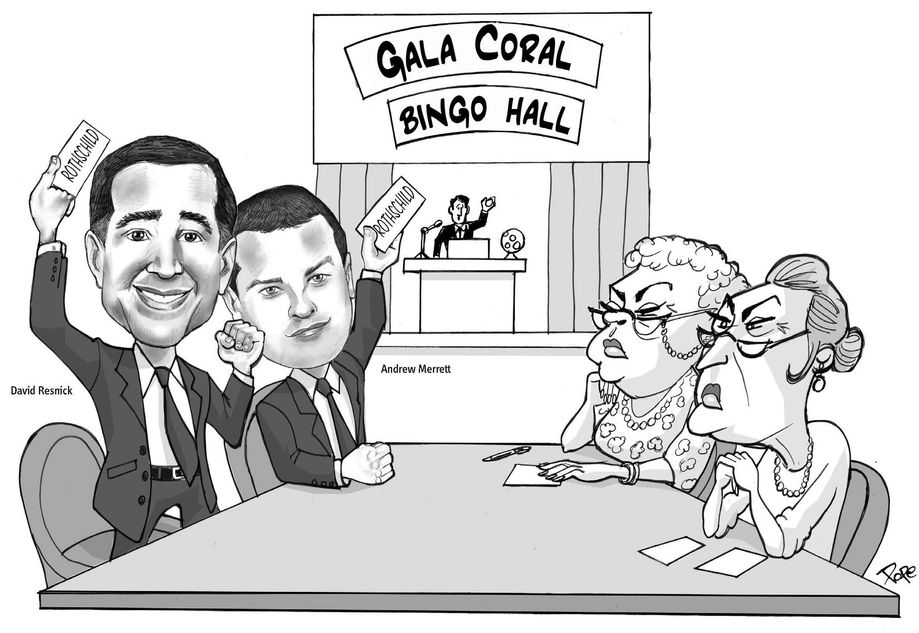
Rothschild’s full house: In 2010 Rothschild stood its ground as a consistently high-quality global adviser. It found technically innovative solutions to difficult restructuring situations while remaining a volume player, driving a host of deals to successful conclusions. Rothschild is IFR’s Restructuring Adviser and EMEA Restructuring Adviser of the Year.
In Europe and the Middle East it has been a year where restructuring advisers have had to dig deep and negotiate hard to find solutions to challenging restructuring situations. The sheer size of banking syndicates, jurisdictional impediments and valuation issues have posed complications not seen in previous cycles.
Many of Rothschild’s smaller competitors have been notable in finding successful and skillful solutions for these situations. But Rothschild has stood out due to the sheer breadth of market leading deals it has been involved in, across a broad gamut of clients.
Mandates have come not only from companies and senior creditors but also from junior debt holders and sponsors as value has begun to creep back into the capital structure. The firm has also been significant in placing itself in line for forthcoming trends in the new turn of the cycle, being instrumental in, for instance, Europe’s first consensual CMBS extension deal for Center Parcs and the first French Sauvegarde pre-packaged restructuring for SGD.
Rothschild has held a lead position in nearly all of the landmark EMEA restructuring deals of the past 12 months including Dubai World, Nakheel, Almatis, Truvo, Rusal, Oerlikon and Gala Coral, to name but a few.
Juniors fight back
In Europe 2010 was characterised by the successful fight-back by junior lenders in restructuring negotiations. Gala Coral’s restructuring was arguably the first of these deals in 2010, and the one that garnered the most headlines. It was also one of the first loan-to-own transactions in this cycle, whereby funds have acquired mezzanine debt in a UK company and used that as a platform to secure control.
Before its troubles, Gala had been acquired by Candover and Cinven in February 2003. They subsequently had their stakes diluted to 33% each when Permira acquired its own 33% stake in September 2005. After this, Gala experienced underperformance due to the impact of increased regulation, taxation and the smoking ban, combined with the economic downturn.
Rothschild advised the lead mezzanine lenders including Apollo, Cerberus and Park Square on the financial restructuring of the company. The mezzanine lenders swapped 100% of their debt claims for equity in the restructured group, and injected £200m of new money. The proposal gained 100% mezzanine consent, avoiding the need for a scheme of arrangement, thereby significantly speeding up the process.
As a result, the restructured group retained in excess of £200m of cash within the business. Net debt was reduced by more than £700m to about £1.9bn and senior debt reduced to some £1.5bn. It also paved the way for senior lenders to consent to a £600m high-yield issue.
Andrew Merrett, co-head of European restructuring at Rothschild, said: “Gala Coral was a pathway transaction for mezzanine lenders taking control of a company through new equity and the equitisation of debt. It was the largest mezzanine restructuring following the setback for that class in 2009 in the IMO Carwash restructuring where mezzanine lenders received no consideration.”
The restructuring of alumina materials business Almatis highlighted another important trend of the year: the restructuring of predominately Europe-based companies via a US Chapter 11 bankruptcy process.
Rothschild was engaged as financial adviser to the co-ordinating committee of first-lien lenders. The restructuring was the outcome of complicated negotiations between a number of parties: the co-com; the company; distressed debt investor Oaktree, which acquired a blocking stake in the first-lien debt in the fourth quarter of 2009; incumbent sponsor owner DIC; junior lenders, including second lien, mezzanine and junior mezzanine; and the providers of new debt financing.
Rothschild negotiated between Oaktree and the company and other first-lien lenders to create a deliverable restructuring under the initial Oaktree-led proposal. This proved acceptable to a majority of first-lien lenders and could be implemented via a Chapter 11 process. At the same time, Merrett said, Rothschild was leading parallel dialogue with DIC to “encourage maximum competition between Oaktree and DIC”. That led ultimately to a full par refinancing of the first-lien debt.
Rothschild also played a key role on one of the most closely observed restructurings of the year: Dubai World. It was the most important transaction in the Middle East this year, and the largest and most complex restructuring in the region’s history.
The firm was financial adviser to the company and led negotiations with lenders and shareholder, the Government of Dubai. Dubai World is a strategic holding company owned by the government and includes companies key to the economy, such as DP World, Nakheel, EZ World and Drydocks World. It was built via acquisitions, most of which were financed by debt, including US$24.9bn of debt taken on at the Dubai World Holding company level.
The pressure caused by the international focus of the deal was compounded by a lending group, which comprised more than 80 institutions, predominately European and local banks. The entire restructuring was conducted under the jurisdiction of Decree 57, a bespoke untested insolvency regime for the Dubai World Group, adding another layer of complexity.
The innovative aspects of the deal, which Rothschild helped negotiate with the co-ordinating committee chaired by RBS, was the creation of a choice of economic terms to fit different lender preferences in the restructured facilities. This “menu” offered different upside potential, cash and PIK, and downside protections, via a government guarantee. That increased the chance of the proposals being acceptable to the wide range of lenders with different objectives.
This was particularly important to ensure support from local and regional banks, which had substantially higher funding costs than their international counterparts, and Asian banks, which were more focused on day-one provisioning requirements.
“We had worked to stabilise and extend the company’s facilities and secure government support to fund operations and interest payments since 2009, and it was against this backdrop that the broader restructuring was then negotiated,” said Merrett.
Another company mandate saw Rothschild act as sole adviser to UC Rusal, the world’s largest aluminium producer, on the restructuring of its US$16.8bn facilities which completed in December 2009. The sequence of transactions constituted the largest corporate restructuring in Russian history and one of the largest and most complex financial restructurings in Europe to date.
It involved US$13.8bn of bank debt held by 72 credit institutions split into 12 syndicated and club facilities and 42 bilateral facilities among 17 different borrowing entities within the Rusal groups. In addition, it included the close involvement of the Russian government since the company was deemed “strategic”. Rusal represents the single largest bail-out by the Russian government during the recent financial crisis, facilitated via a US$4.5bn loan from state bank VEB.
“It set international precedent for international lenders in dealing with Russian restructurings,” said Merrett.
The deal involved the restructuring of all facilities, each of which had different terms and conditions with regard to maturities, interest rates and covenants. These were all rolled into a single override agreement pushing out all maturities to four years under the same terms and conditions, while maintaining the particularities of each facility.
The deal also included the implementation of a simultaneous IPO process launched three months prior to the signing and closing of the restructuring. This was used “as leverage to renegotiate a number of key points such as asset disposal obligations”, said Merrett.
Clearing up in the US
In the US, Rothschild continued to sort out the aftermath of the 2008 credit crisis, helping to close 17 restructurings in 2010. The adviser is positioning itself to deal with restructurings for mid-sized companies in the forthcoming cycle.
One of the biggest assignments in the current cycle, however, was for auto parts supplier Visteon, spun off from Ford in 2000. Rothschild also handled the restructuring of Delphi, the parts-maker spun off from General Motors in 1999. The story of the two restructurings is a case study in opposites. Where the market turned against Delphi after a period of euphoria, an initial austerity plan for Visteon was recast as a bonanza.
Rothschild advised Visteon, helping the company raise US$1.25bn through an equity rights offering to bondholders and US$700m in exit financing. The plan paid secured lenders in full, in cash, after aborting an initial plan that would have handed those creditors equity.
While many of the creditors bought secured bank debt as a play for the equity, bondholders continued to insist that there was value in the company beyond the bank debt. In the end, a consensual plan was crafted that won majority support from all creditors. Rothschild helped Visteon hedge its bets allowing the company to go forward with the prior plan if bondholders failed to fund the rights offering.
The company repaid US$1.6bn in bank debt, converted US$860m in unsecured debt to equity, and offered Visteon shareholders 2% of the equity with warrants for an additional 3%. This was one of the best recoveries for auto creditors during the wholesale restructuring of the industry.
Rothschild also advised Trident Resources through its US$247m rights offering and U$410m exit financing. Trident is engaged in the acquisition, exploration, development and production of natural gas.
Trident’s performance suffered in late 2008 and 2009 as volatility plagued the exchange rate and natural gas prices slumped. The company filed for bankruptcy protection in the US and for creditor protection in Canada with US$1.7bn in debt, including US$540m in second-lien debt.
Under the plan of reorganisation holders of 95% of the company’s unsecured debt backstopped the rights offering, taking 60% of the company’s equity. The remaining 40% of the equity went to holders of US$420m unsecured debt issued in 2006. The proceeds from the offering and the exit facility were used to repay second-lien debt holders owed US$540m.
Rothschild advised Access Industries in connection with a US$2.8bn rights offering to fund LyondellBasell’s recapitalisation and exit from bankruptcy protection. Access was behind Basell’s acquisition of Lyondell in 2007 and held a 50% stake in LyondellBasell prior to its bankruptcy filing in January 2009.
Rothschild also advised Controladora Comercial Mexicana. The Mexican supermarket chain defaulted on debt in 2008 after failing to raise cash to meet margin calls on its derivative book. The company filed for protection in the US and in Mexico. It was one of the first companies to use 2007 reforms to Mexico’s insolvency law that allow companies with pre-negotiated creditor agreements to fast-track bankruptcy proceedings. The deal exchanged US$3.2bn in debt and derivative claims for US$1.6bn in new facilities.
For transportation services company YRC Worldwide, Rothschild organised a debt-for-equity exchange, swapping US$470m of debt across five tranches for 94% of the company’s new equity. Through the out-of-court restructuring, the company deferred interest, fees and principal amortisation relating to its US$950m revolver and US$150m term loan.
As well as its significant presence in North America, Europe and the Middle East, Rothschild also made its stamp on the Asia-Pacific, where it acted as exclusive adviser to Indonesia’s flag carrier, Garuda Indonesia for its capital restructuring and aircraft financing transactions.
It also advised principal Indian lenders in the Dabhol power company restructuring and earlier advised Lehman Brothers (Asia) on its sale to Nomura.
Sandrine Bradley, Philip Scipio