


Commodity Derivatives House
Pure gold
Commodities including oil, gold and silver stole many of the positive headlines in 2009 even despite a huge rally in equities, illustrating the continued allure of the asset class. During the year, one bank proved its ability to focus on client needs, consolidating its physical presence in the area to structure innovative trades as a three-year expansion finally paid off. JP Morgan is IFR’s Commodity Derivatives House of the Year.
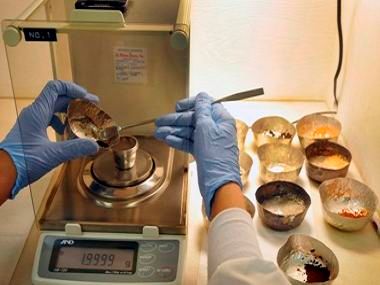
In a year when many commodities surged ahead of other asset classes, it was more important than ever for banks to maintain their presence in the field, even if they were also struggling to put out fires in other parts of the business.
JP Morgan did exactly that in 2009. Even as the firm was under intense pressure from huge losses in credit cards and interest rates, which saw a US$1.67bn loss in the fourth quarter of 2008, the bank never lost its focus of expanding its commodities franchise and continuing to help its clients through the depths of the crisis.
It is a strategy that has been a long time in development, and one that has seen the bank almost treble its headcount in the area, increasing staff from about 175 people in 2006 to about 500 now. That has paid dividends as demand for commodity exposure has increased – the bank is one of only a handful of houses that can now count its presence on six continents, in places as diverse as Santiago de Chile, Istanbul and Nairobi.
But perhaps most important has been JP Morgan’s willingness to spend. In May 2008, the bank completed its purchase of Bear Stearns for US$10 a share, a transaction that dramatically expanded its presence in physical commodities. That was followed by the purchase of UBS’s Canadian commodities and global agricultural business early in 2009 – indicative of its investments as others were reconsidering their presence.
“We have a totally different business today compared to what we had just two years ago,” said Mike Camacho, head of global structured commodities at the bank’s New York office. “Through the Bear Stearns purchase, basically overnight we became huge in the physical business. And with it we’ve moved away from prop trading towards being more client-orientated in our approach.”
Perhaps the biggest news of the year was JP Morgan’s purchase of EcoSecurities for US$204m back in September, when the bank pipped others to the prize in contentious bidding. Coming just ahead of the Copenhagen climate meeting, the move was seen by many analysts as an intelligent one, increasing the bank’s carbon offering ahead of what was expected to be a massive expansion of the cap and trade system.
“This purchase takes us from being a carbon participant to being the largest carbon player in the world,” said Blythe Masters, global head of commodities. “We are positioning ourselves to be relevant to clients in the future. This is an awesome opportunity and big news for us.”
All that has put the US bank in prime position to service client needs, whether that be in power or precious metals, energy or agricultural produce. The bank now has over 6,000 megawatts of power generation under management, in addition to a further 4,000 megawatts of load managed by the firm. It is one of the largest market makers in precious and base metals, and one of the largest clearing houses for over-the-counter gold.
During a year that has been infamous for periods of limited liquidity, the bank’s strength in both physical commodity presence and market depth has allowed it to continue writing deals for clients even during the weakest market volumes. One hedge fund client was particularly impressed by the bank’s ability to step into its trades on the London Metal Exchange in order to enable the fund to free up cash and meet other liquidity calls.
According to Masters, it is the bank’s commitment of its balance sheet to client needs on a continuous basis that has differentiated it from other commodities houses during the past year. The bank’s Tier 1 capital stood at US$126.5bn at the end of the third quarter, having changed little during the past year even as others cut back their balance sheets. The commodity business’ 99% value at risk has also remained steady through the period, not wavering outside of a range between US$28m and US$38m during any of the first three quarters of the year, while others reduced their exposure.
“We are the best-capitalised large bank out there,” said Masters. “JP Morgan benefited from a flight to quality effect in that most of our competitors suffered more than we did during the crisis. For many, that led to an increase in the cost of trading and increased counterparty concerns. We were ready to take advantage of all of that.”
New payoffs
Deal-wise, 2009 was a year second-to-none for the house. It continued to innovate new payoffs for clients wishing to invest in a wide variety of commodities, using its vast physical presence to structure deals that many others were unable to offer. One example of such a deal was an innovative hedge done for a South American client in which the payoff in crude oil was contingent upon local rainfall – the first ever such transaction.
Another notable deal was an absolute return solution done by the bank for one of its asset management clients. The client was looking for absolute return opportunities in the commodity market whilst also protecting itself against large losses. At a time of illiquidity in many exotic commodity instruments, JP Morgan was able to structure a series of variance swaps in various commodities for the client. Not only that, but the bank was also able to do those variance swaps with an embedded limited loss potential in assets as illiquid as cocoa through its trading desk.
“It’s only when you have the portfolio that we have that you can really do this kind of thing comfortably,” said Masters. In another indication of how the bank innovated to meet client needs even during a difficult year, the house also created the industry’s first option on emission reduction units. The contract was sold to a UK trading company for one of the largest gas producers in Europe, giving them the option to sell at the end of 2011. It was the bank’s pricing and correlation modelling that allowed it to capture such business.
In the structured products arena too, JP Morgan kept up bringing out new solutions for clients as many of its competitors trimmed back on their offerings. Gold was a key area in a year when the metal has continually posted new record highs. That created some strange dynamics: due to the massive demand for the precious metal, investors with long gold positions had taken to selling short-dated call options into the market as a way to boost their profits from rising gold prices. That created an anomaly in the term structure, causing one-month options to trade at a lower implied volatility to one-year contracts.
JP Morgan quickly devised a way for clients to play this. Its Golden Crown structured product allowed investors to express a bullish view on gold over a one-year horizon whilst also locking in the relatively high implied volatility of one-year options by simultaneously selling those contracts. It did this whilst also putting it together in a collateralised vehicle to cater to general concerns in the market about counterparty risk.
The security was issued by a special purpose vehicle, within which a long physical position in gold was held as collateral. The bank then structured a swap which replicated the sale of call options with a monthly resetting strike equal to 110 of the spot level at the end of each month. Investors had to cap monthly performance to 10%, but the bank compensated for this by selling the note at a 10% discount to par.
“We wanted to have the same security as an exchange-traded fund but whilst at the same time having a derivative overlay,” said one banker on the deal. “Given the level of volatility in the markets, investors were being paid a lot to write the calls and we wanted to capture that.” He said that by October, the product had sold over US$100m in its seven-month life, primarily to high net worth clients and family offices.
Gareth Gore

