


Investment-Grade Corporate Bond House
Covering all bases: In a year when the demand for guidance on which market, structure and currency could provide optimal financing levels reached fever pitch, a bank that could offer impartial advice across the full spectrum was high in demand. With a stable of inaugural cross-border, dual-currency, liability management and benchmark strategic transactions, Royal Bank of Scotland is IFR’s Investment-Grade Corporate Bond House of the Year.
Global financial markets were in a state of flux in 2008, and investor dynamics were constantly changing. Sentiment in the corporate bond market was driven by ever-worsening headlines, and characterised by increasing selectivity on sectors and credits, wider pricing and spread decompression, high new issue premia and narrow issuance windows. The landscape shifted from being an issuers’ market, in which pricing was aggressive and covenant light, to one where investors dictated the terms and levels.
In this environment, only by being continually in touch with demand and attitudes were banks able to provide calculated and up-to-the-minute advice to borrowers, tailored to their own individual requirements. Impartiality was paramount: banks had to offer advice on structures without market or currency bias. Those with a truly global franchise stood out from the crowd.
Royal Bank of Scotland has been at the forefront of the European debt capital markets in 2008. It has sharply increased its footprint in the US dollar market, showing consistency and leadership. And it has achieved this whilst simultaneously completing the integration of the ABN AMRO franchise.
“In order to respond to these new and challenging market dynamics RBS developed an issuance strategy enabling it to identify the most opportune issuance window and create the best price tension for issuers – the crux of which was centred around flexibility and timing,” said Mark Dodd, joint head of corporate syndicate at RBS. “Overall flexibility has been key in delivering successful bond issuance in such market conditions, whereas flexibility with regards to the terms of the deal has been essential in attracting maximum investor interest.”
In Europe the bank has constantly attracted issuers as the first choice bookrunner on their transactions. It has been involved in close to half of all corporate Eurobond issues during the IFR awards period, 70% of the weeks when there was issuance activity and over half of all corporate Eurobond issues. In the main European bond markets of euros, sterling and Swiss francs, RBS maintained its number one position, with 83 issues totalling US$25.76bn equivalent and an 11.7% market share.
The euro market has been one of its most noteworthy successes: more companies turned to RBS for experience, insight and execution than any other bank. This was reflected in an impressive surge up the IFR corporate bond league table in 2008 to second place as of November 15. It accomplished this with €11.627bn of volume and a 10.3% market share. It was number one in terms of total transactions, at 46 – nine more than its closest competitor. This compares to 2007, when RBS finished seventh with a market share of 6%.
Activity in the last 12 months included a number of groundbreaking corporate transactions from a cross-section of industries and ratings. Danone chose RBS as one of the leads on what also represented only its second ever benchmark euro issue – and the only one outstanding – after an eight-year absence from the market. The dual-tranche €1.75bn transaction was very well received, with an order book of €11bn. Pricing was at the tight end of guidance, and it is performing well in the secondary market.
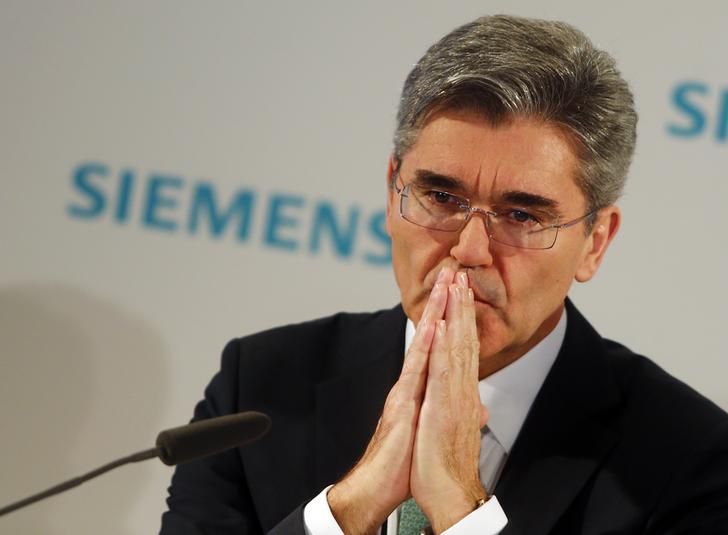
Siemens also returned to market under RBS’s guidance, having been absent since 2001, with the largest corporate issue in Europe in 2008. The three-tranche €3.4bn three, seven and 10-year structure commanded interest of €9bn, and also went on to perform admirably in the secondary market. RBS also helped to steer issuers such as HeidelbergCement, Severn Trent and KPN to re-open the corporate market after periods of prolonged volatility, defying investors’ gloom.
Cross-currency
With corporates increasingly forced to be open-minded regarding currency, cross-border execution was key for those with ambitious borrowing and price targets. RBS underlined its leadership on multi-currency transactions by spearheading a number of successful trades in Europe.
Imperial Tobacco’s well-received dual £600m and €750m issue was a case in point: the tobacco sector is non-cyclical, with decent cashflow, but the company’s Baa3/BBB/BBB– rating hardly put it at the top of investor shopping lists when it emerged in early September. Against a volatile backdrop, Imperial managed to extend its sterling curve by six-years through the £600m 2024 tranche, complimented by a €750m September 2014 tranche. Under RBS’s stewardship Imperial achieved a combined book of €3.64bn.
British American Tobacco (BAT), Xstrata and Electricite de France (EDF) also successfully issued dual-tranche euro and sterling transactions under RBS’s guidance.
While the sterling market was starved of supply for much of the first half of 2008, issuance volume picked up in the second half of the year. UK investors seemed less swayed by emotion that their euro counterparts when volatility weighed.
Goodman Finance Australia, the finance arm of Australia’s largest industrial REIT, rated Baa1/BBB, would probably have struggled to raise sufficient traction with continental European accounts. Instead, it opted to issue its inaugural sterling benchmark on advice from RBS.
The GlaxoSmithKline deal helped RBS cement its leading position in the UK market. The £700m 2039 issue represented the largest single tranche corporate sterling transaction in 2008. So too did the largest overall corporate transaction of the year: the dual-tranche £300m 10-year and £450m 25-year package from Centrica.
RBS was instrumental in delivering product innovation, developing features to ensure best execution in volatile markets, where conventional issuance was often expensive. This was exemplified by Thames Water’s £400m 50-year Puttable Callable bond. The structure, which enabled the issuer to reduce the net cost of funding over the initial 10-year period, is such that if Thames Water calls the issue in year 10, it has the right to resell 40-year bonds. If the call is not exercised, the notes are put to the utility at par.
The issue was oversubscribed, with demand exceeding £500m. There was little price sensitivity in the book, allowing for pricing at the tighter end of initial Gilts plus 260bp–270bp guidance. This also boasts the longest duration for a corporate bond during the IFR awards period.
Through RBS Greenwich Capital, the bank already had a well established franchise in the corporate dollar market, yet it managed to significantly increase its domestic footprint in 2008. The bank propelled itself into the top 10 of the IFR-eligible all investment-grade dollar corporate bond league table, in fifth place with a market share of 6.3%.
As well as guiding a plethora of household domestic issuers to the market, including Time Warner Cable, Verizon, Wal-Mart and DuPont, RBS again underlined its cross-currency strength, acting as bookrunner on some of the largest Yankee transactions in 2008.
Rio Tinto’s decision to enlist RBS for its jumbo foray into the bond market in June – proceeds of which were used to refinance borrowings linked to its US$38bn acquisition of Alcan – was a notable achievement. The jumbo US$5bn multi-tranche five, 10 and 20-year package commanded demand of about US$8bn and was the largest deal ever from a metals and mining company.
The bank was instrumental on Philips Electronics’ US$3.1bn four-part transaction that was close to twice subscribed. TAQA, British Telecom, Marks & Spencer and Rexam all turned to RBS to raise in US dollars.
The Swiss franc market is a niche funding currency that offered additional liquidity and arbitrage opportunities to corporate issuers in 2008. RBS is one of the top liquidity providers in the market, thanks to the acquisition of ABN AMRO: it worked with a diverse client base, bringing a number of landmark inaugural issuers to the currency.
BASF’s dual-tranche SFr300m three-year and SFr200m seven-year commanded overwhelming interest, having been advised by RBS to capitalise on the strong bid from Swiss investors for high quality corporate names. This represented the largest debut transaction for a corporate in 2008.
RBS has been involved in about two thirds of all inaugural corporate transactions since November 2007. Tesco, Vattenfall, Danone, Groupe Auchan and Sanofi-Aventis have all benefited from the bank’s strong franchise.
RBS’s advice was also invaluable to a number of more established repeat issuers during times of volatility. BMW secured very attractive funding levels with its first public bond issue of 2008 compared to what would have been achievable in euros. The automaker’s dual-tranche SFr300m five-year and SFr325m seven-year package was a blow-out, boasting the largest non-Swiss corporate issue in the market for over five-years.
Liability management
But it takes more than mandates to be the pre-eminent corporate bond house. RBS earned its stripes in the liability management space with a number of high-profile transactions, including the largest ever such exercise in Europe, for BAA Limited.
The group successfully migrated €6bn, spread across nine series of bonds with different covenant packages, denominated almost equally by value between euros and sterling. Prior to launch, the transaction was negotiated first with a committee of six leading European insurance companies, holding in excess of €1.5bn of bonds, to achieve broad market support.
“Away from operational innovation and being at the forefront of pioneering new issuance strategies for borrowers, RBS is continually looking to leverage its intellectual capital with regards to introducing product innovation to the market, or developing innovative features to transactions, in order to ensure best execution,” said Robert St John, managing director, primary markets at RBS.
Andrew Perrin.

