


US Diversity and Inclusion House: Ramirez & Co
Steady footing on rough terrain
With diversity and inclusion under assault, Hispanic-led bank Ramirez & Co stepped up and exemplified what diverse firms bring to the table. Ramirez continued to illustrate that small independent diverse firms add value to capital markets and to their clients. Ramirez is IFR’s US Diversity and Inclusion House of the Year.
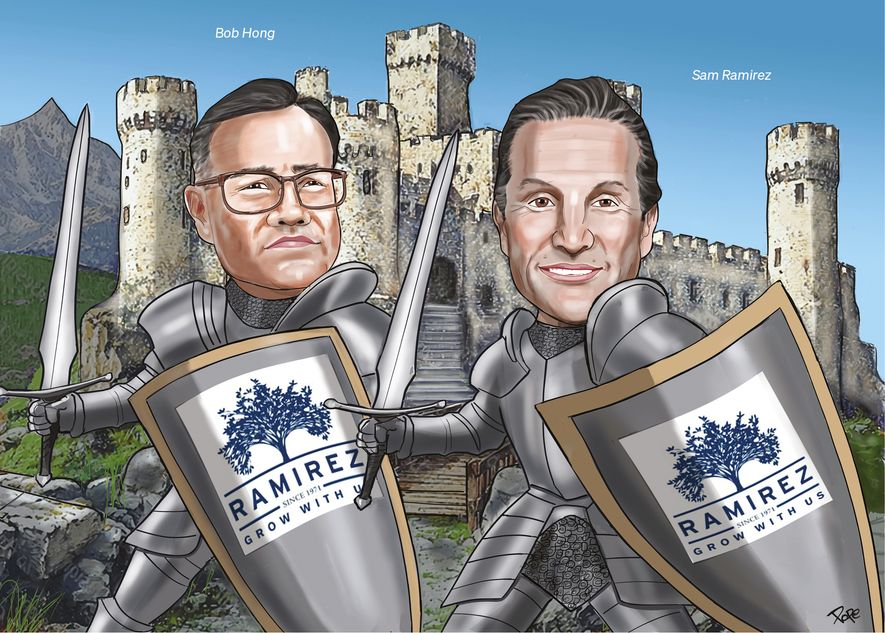
Heading into 2025, diversity and inclusion investment banks were justifiably apprehensive about what the year would hold.
But it was more or less business as usual for Ramirez. Many of the large companies that tapped the firm to join capital markets transactions in 2024 were still calling in 2025.
“The share of fees has actually gone up for D&I firms, from 4.5% to 4.8%,” said Bob Hong, co-head of capital markets at Ramirez. “That’s still very strong,” he said. The number of investment-grade deals matched the run rate in 2024.
"Our deal participation has not changed and I would say that’s true across the top D&I firms,” Hong said.
Underpinning that consistency is demand for Ramirez's services from banks and financials, which has remained strong.
Ramirez was a co-manager in 2025 on a US$6bn two-tranche offering for JP Morgan, a US$3bn three-tranche offering for Mizuho, and a US$2bn offering from Citigroup, among other offerings from financial services companies. Ramirez was also joint lead manager on a US$3bn two-tranche offering from Morgan Stanley.
One of Ramirez’s best transactions happened in February. It was a joint bookrunner on State Street's three-tranche US$2.75bn offering. It was one of the largest deals State Street has done and Ramirez was sole D&I bookrunner.
“They don't use a lot of different D&I firms,” Hong said. “You have to have the capability to be a bookrunner. You have to have the capital. And obviously you have to have the relationship with them.”
Ramirez was joint books with Deutsche Bank, Goldman Sachs and UBS.
On the same day, Ramirez was co-manager on a US$1.8bn offering for Southern Company, a US$1.25bn deal for MetLife, a US$1bn two-tranche offering for Dow Chemical and a US$750m offering for Key Corp. The string of deals illustrated Ramirez’s depth, breadth of relationships and strong capital position.
The bank’s total underwriting liability that day was US$603m across five deals with a capital requirement of US$41.5m – well within its capacity, but a high mark for D&I firms.
Dark clouds
There has also been strong continued engagement from companies in telecoms, media and technology, healthcare and insurance and utilities in 2025.
That was far from certain as US president Donald Trump took office again in January. In the first 100 days of his second term, Trump launched a bare-knuckled assault on D&I efforts. He revoked longstanding national policy mandating equal employment opportunities and moved to shutter the Minority Business Development Agency, which helped fund minority and women-owned businesses.
While those are government initiatives, there were reasonable fears that the private sector would follow Trump’s lead.
Some companies have indeed pulled back their use of D&I firms. While overall fees have gone up, the number of investment-grade transactions with D&I firms dropped to roughly 51% of all deals in the first half of the year from 58% a year earlier.
Companies are reacting to the pressure they receive from various sources, whether from government, shareholders or activists, and that has had an impact on D&I firms but it’s not been devastating. And Ramirez remains a staunch advocate for D&I.
In addition to strong support from financials, utilities continued to use D&I banks. Ramirez was a co-manager on several offerings in 2025 including Enbridge’s US$2.25bn four-tranche offering, Southern Company’s US$1.8bn 30-year hybrid and Dominion Energy’s two-tranche offering.
Utilities comprised a smaller deal count in 2025 but those deals paid higher feels relative to their size.
TMT made a splash this year as well. Ramirez was co-manager on deals for ADP, T-Mobile, Apple and Alphabet, for which Ramirez was senior co-manager on its four-part US$5bn offering and its five-part €6.75bn offering.
Ramirez was also co-manager in deals for healthcare and insurance companies, including Eli Lilly’s US$6.75bn seven-part offering, a four-part US$4bn offering for CVS Health and for Johnson & Johnson’s five-part US$5bn and five-part €4.5bn offerings.
“We're in more euro deals and we're active,” Hong said. “Which means we're distributing to our small European investor base.
“We've actually done pretty well, considering we don't have an office in any part of Europe,” he said.
Hong said the firm has been making inroads with Yankee issuers – not just banks but corporates.
“They've been coming into the D&I space in pretty large numbers in the last 12 months,” Hong said.
Sumitomo Mitsui Banking Corp has come into the fold in the last couple of years. Lloyds Banking Group did its first deal this year with D&I firms. On the corporate side, Shell did a deal with D&I firms. Although Ramirez was not always included, it was still able to start building relationships with non-US issuers.
While a substantial portion of IG deals without D&I participation are Yankees, there is a growing shift from the non-US issuers to use D&I firms, in spite of everything going on in the US, Hong said.
“I think the biggest consideration for the non-US issuers is they're treading very carefully because it's new to them,” Hong said.
Pull back
The companies that have pulled back their engagement with D&I firms are those with business in front of regulators like potential mergers and acquisitions that could be blocked by the Federal Trade Commission or the Federal Communications Commission. Those regulators have been very aggressive about dismantling diversity, equity and inclusion programmes.
Verizon, which typically has strong D&I engagement, offered an US$11bn five-part deal in November with no D&I firms attached.
It was Verizon's largest US dollar bond since 2021 and helps fund its US$20bn acquisition of Frontier Communications, which will need regulatory approval.
“Some of the issuers that came in over the last three or four years have stepped back, there's no question about it,” Hong said. “Especially those that were subject to shareholder or activist pressure.”
But Ramirez has been around for more than 50 years. It, as well as some of its rivals, have deep and deepening relationships with issuers that can withstand political winds.
A recent poll by treasurer peer group NeuGroup, in partnership with Sustainable Fitch, found that 86% of respondents expect to have the same or increased engagement with diverse-owned investment banks in future. Only 9% said they expected engagement to decline.
Those planning to decrease engagement cited an expected decline in capital markets activity next year and not the political climate.
Most were positive about their engagement with D&I firms. Eighty percent of treasurers polled said a top benefit of engaging diverse-owned firms was a broader investor base. That reinforces the strategic value of inclusion beyond social or reputational benefits, NeuGroup said.
In addition to tactical execution and market insight, many treasury leaders emphasised the value of working with firms that prioritise nurturing the relationship and providing outstanding service in their outreach.
“They’re not always selling,” said one survey respondent. “They’re trying to understand what we need and offering ideas that work for us.”
On the other side of Ramirez’s business, work on municipals deals has not been affected at all.
“In fact, probably the opposite,” Hong said. “They've actually engaged more with D&I, choosing them over the large banks.”