


Derivatives House and Interest Rate Derivatives House: Goldman Sachs
Preparation meets opportunity
Banks’ markets divisions enjoyed another bumper year as the new US administration upended global trade and rolled out a raft of policies. For investing to future-proof its business while remaining steadfast in its commitment to servicing clients, Goldman Sachs is IFR’s Derivatives House and Interest Rate Derivatives House of the Year.
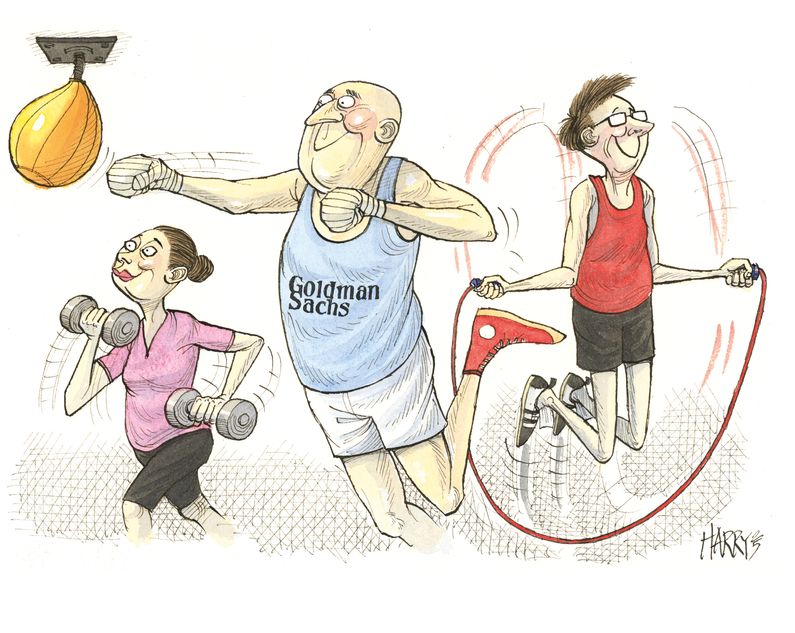
The post-pandemic trading bonanza reached new heights in 2025 as investors reacted to a stream of news, from US president Donald Trump’s trade policies and the AI boom to the prospect of a new Federal Reserve chair.
In these tumultuous times, Goldman Sachs once more demonstrated the qualities that has made it the go-to trading partner and financier of many of the world’s largest companies and investors.
Goldman’s risk appetite and expertise came to the fore time and again as clients adjusted to this new world, whether that was absorbing the deluge of flows that followed Trump’s “liberation day” tariff announcements in April or providing record-sized derivatives hedges for data centre projects.
All the while, Goldman retained its relentless focus on future-proofing its markets business, investing in technology and the people needed to adapt to a fast-changing financial ecosystem and identifying how it can best fulfil the needs of its corporate and institutional clients.
“I’m incredibly proud of how the overall business has performed,” said Ashok Varadhan, co-head of global banking and markets. “We are executing on our strategy of servicing clients, building out low-touch trading capabilities and managing resources effectively to ensure we have industry-leading return on equity.”
Goldman’s trading division has been on a remarkable run since the outbreak of the pandemic in 2020 ushered in a new era for financial markets. Markets revenues have more than doubled since 2019, comfortably outstripping growth in the wider industry.
Year-to-date earnings put Goldman on track for its largest trading haul since 2009’s blowout performance in the wake of the financial crisis – and its second straight year of record equities revenues. Fixed income revenues are also on course to rise amid gains in interest rates and FX trading.
Periods of calm have benefited the specialist, less liquid activities in which Goldman excels thanks to its famed risk warehousing capabilities, whether in structured interest rate products or longer-dated equity derivatives. Its sprawling flow franchises – trading everything from government bonds to FX and delta one equities – stood ready to kick into gear at times of stress, such as the mayhem after "liberation day".
“There have been so many meaningful macroeconomic changes around the world this year that have led to a real opportunity ... as the aggregate demand for our services goes up,” said Varadhan. “Especially when things get bumpy and clients need global, broad, deep and core expertise across a variety of different disciplines and markets, they know they can turn to Goldman Sachs.”
Rates excellence
Goldman’s interest rate derivatives business in 2025 embodied these dual strengths between structured and flow. The franchise absorbed a “barrage” of client trades in April’s chaotic markets, said FICC co-head Anshul Sehgal, even as it took a hit on risk positions it was warehousing on its books.
“As people who have skin in the game, we speak the same language as our clients,” said Sehgal. “At the same time, there is trust that if a client makes the phone call, there is a price at which they will be able to lay off risk in a difficult, volatile time for markets.
“Our risk warehousing capabilities are central to us being able to inspire that trust."
Goldman increased its market share with institutional clients by 92bp in G10 flow interest rate derivatives globally in the first half, according to Coalition Greenwich. That followed Goldman ranking number one by revenue in G10 interest rate derivatives globally in 2024, according to the analytics provider. Muhammad Qubbaj, co-head of US interest rate products, said Goldman regards periods of volatility as a chance to step up for its clients.
“We're worried about the long-term relationship and not any one trade … any one day [or] any one P&L,” he said. “We know that the return on partnership … the return on showing liquidity, the return on coming up with solutions in those high periods of volatility is where we excel.”
Goldman also stood tall during the lengthy periods of calm that characterised much of the year. Part of that came from continuing its focus on cementing relationships with its biggest clients in 2025. Goldman occupied a top three ranking with 125 of its top fixed income and equities clients in 2024, up from 77 in 2019, the bank said, citing internal and Coalition Greenwich data. Goldman also continued to invest in its technology and systematic market-making capabilities for flow products that are becoming ever more automated.
“In a lower volatility environment everything compresses and to have an edge and to stay first you have to be very sharp in terms of our offering,” said Richard Chambers, co-head of US interest rate products and short macro trading. “[Having to] really hustle for business has been a constant theme from [us] over the last 12 months and in particular this year outside of 'liberation day'.”
One of the best examples of Goldman’s determination to keep evolving is in regearing its rates business towards the extraordinary investment boom around AI. As much as US$5trn is forecast in AI-related investments in the next five years, with many data centre projects requiring interest rate hedges for their vast debt financings.
Sehgal notes that this AI investment wave – along with meaningful regulatory reform – means global growth in the coming years should be dictated through credit instead of fiscal expansion. “We want to be at the forefront of that transformation for the macro economy,” he said. “We've been spending a lot of our time this year essentially trying to refocus how we adjudicate resources.”
That resulted in Goldman executing what it said is the largest derivatives transaction it’s ever done, a deal contingent interest rate hedge for a data centre project financing. That involved the rates business working closely with Goldman’s bankers, the financing team and its risk department for a trade that ordinarily would have blown through the firm’s risk limits due to its size.
“We need Goldman Sachs to come together and we were able to do this and deliver a solution to the client,” said Sehgal, calling it a “marquee transaction”.
Equities prowess
Goldman’s equity derivatives franchise enjoyed another banner year. The bank’s traders were well placed to capitalise on a jump in trading volumes as it helped clients navigate the market swings around "liberation day" and other bouts of volatility.
“Goldman has always had a risk-taking culture,” said Travis Chmelka, head of Americas flow derivatives trading. “We prefer to live in volatile markets … that’s where we can really shine.”
The bank also had a “huge year” in retail structured products, said Jessica Janowitz, head of US equity derivatives sales, which provided a “massive” source of volatility for dealers to recycle.
“We think it creates really interesting opportunities for other clients that are looking to put on hedges to be able to take advantage of that,” said Janowitz.
The US bank has maintained a keen focus on the evolution of equity markets as ETFs and related options activity take on an increasingly prominent role.
“We think we’re [at a] very early innings in that and the opportunity set for what we do will only continue to grow,” said Chmelka. “[Clients] are really starting to realise that you can take options and customise for anything you want.”
More broadly, Varadhan sees the pickup in dealmaking as further benefiting the bank’s markets business in the months ahead.
“We have the best investment banking franchise in the world. Now M&A and corporate activity is coming back, clients are not only coming to us for the best advice, but they also know we can do things in very large size to immunise their risk,” said Varadhan.