


Financing Package: Blue Owl Capital/Beignet Investor’s US$27.3bn 23.6-year bond
How to make a Beignet
In a year like 2025 when AI fundraising became a reality and each trade seemed to be bigger and bolder than what came before, it was tough to stand out. For being the most daring deal of them all, the US$27.3bn offering from Beignet Investor for Blue Owl Capital is IFR’s Financing Package of the Year.
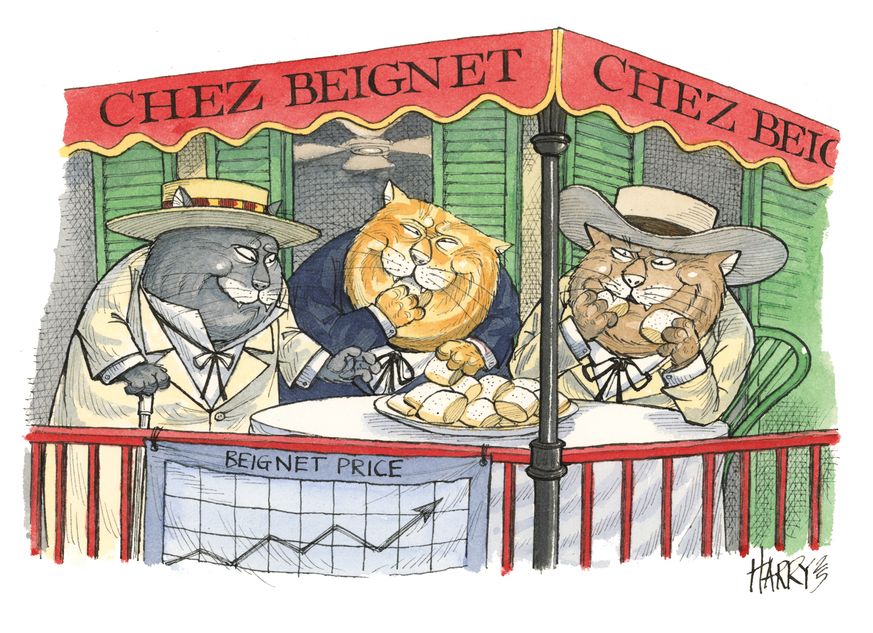
No deal exemplified 2025 credit markets better than a US$27.3bn investment-grade bond that priced in October from an issuer that takes its name from a deep-fried pastry popular in New Orleans, Louisiana.
The offering from Beignet Investor, like the wider credit markets these days, was somewhat public and somewhat private. The security itself borrows characteristics from straight bonds, project finance and elsewhere.
Like so much of the debt that would come to market in its wake, it also essentially backs the Herculean AI-related efforts of the biggest names in tech, in this case Facebook owner Meta Platforms and founder Mark Zuckerberg. Yet the huge tranche of bonds will not be found on its balance sheet, even if a major reason it garnered an A+ rating from S&P is related to Meta’s Aa3/AA– credit quality.
Simply calling the financing an investment-grade bond offering is a bit like calling a beignet – a French-inspired, pastry square sprinkled with sugar – a doughnut: technically accurate though the term is, it completely obscures the essence.
The biggest single-tranche bond deal on record is unique and, judging by its early trading pop of about 10 points, quite palatable for those who could get their hands on it.
Putting aside quibbles over whether it was priced tight enough (for now), the deal has more importantly redefined what is possible in capital markets. In its many facets, it is a harbinger of the impending marriage of AI spending and debt capital markets.
“Investors have talked about AI and financing AI, and how that's going to result in all this bigger financing in the future, but it's always been in the future,” said Teddy Hodgson, global co-head of investment-grade DCM at Morgan Stanley, sole underwriter on the bond.
"And I think we're right at that tipping point where there's now this realisation that this is actually going to happen and have market impact.”
Needing dough
The basic facts are relatively simple. On October 16, funds managed by Meta joint venture partner Blue Owl Capital, via subsidiary Beignet Investor, priced US$27.3bn of 6.581% senior secured bonds due May 2049 in 144A/Reg S format. The A+ rated amortising bonds printed at Treasuries plus 225bp.
S&P said it considers the ratings of the issuer, owned by BBB rated Blue Owl, to be only one notch below Meta’s based on how the JV contract works, passing “substantial credit risk to Meta during both construction and operation phases”.
Though it priced in the fourth quarter, the deal started a trend that would come to define the year’s high-grade bond market.
It was only weeks after the Blue Owl deal printed that Meta itself raised US$30bn in the biggest corporate bond offering of the year, a regular, unsecured deal that does indeed appear on the Instagram owner’s balance sheet.
Other hyperscalers, gunning for AI supremacy, followed: Google owner Alphabet raised about US$25bn via 14 tranches in two currencies on November 3, and a couple of weeks later Amazon priced a US$15bn six-part trade.
And investment banks are estimating that 2026 will be a record year for high-grade issuance, largely based on what is expected from hyperscalers and their data centre needs after their aggressive 2025 capital-raising spree.
Right ingredients
It all started with the JV, on which Morgan Stanley was exclusive adviser. Meta formed the 20:80 partnership with Blue Owl to finance the construction and operation of the Hyperion data centre, a 2.1GW, four million square foot facility in rural Richland Parish, Louisiana, slated for completion in June 2029.
After Morgan Stanley developed the custom JV structure to Meta’s standards, the New York bank ran a competitive multi-round auction to select equity and debt capital partners.
“The other key highlight about this deal is, in addition to kind of the centrality of AI data centre, it also touches the much talked about convergence of public and private,” Hodgson said.
He said that depending on which party won the auction process, the ultimate financing package could have been public, private or – what it ultimately became – a mix of both. One option, he said, was a 4(a)(2) private placement, another was bank financing for the construction phase followed by permanent financing put in place when the data centre is completed in 2029.
“The [ultimate] deal straddles both markets,” he said. “It’s a 144A bond that trades like any other public market CUSIP, but the [deal] document lives [in] the data room, so you have to go sign an NDA to get the doc, which is very different from most public market securities.”
Hodgson also said it is rare to see a single-tranche amortising bond in the investment-grade market.
A representative from one investment firm said that was an “extremely attractive feature” of the deal.
“The debt gets repaid over time even if AI/data centres have issues in the future,” the person said. “This is very different than other AI/data centre financings that require a refinancing in order for lenders to be repaid.”
Limited supply
The deal, as some chagrined investors were quick to point out, was not widely syndicated. People familiar with the deal told IFR that Pimco was the main anchor investor.
“[With] a low double-digit number of investors in a deal of US$27bn, the quantum of commitments placed in this deal dwarf anything ever done in investment grade,” Hodgson said.
Michelle Wang, co-head of IG corporate coverage at Morgan Stanley, said that was done on purpose. Going out to a small group of investors allowed the bank to be “very, very thoughtful about derisking”, she said.
“You don’t just place something like this in the standard 'let’s see where the market is on October 16' way.”
Morgan Stanley had lined up investors by the start of the second quarter for an offering that priced in the fourth, Hodgson said.
That meant that when the rest of the market was scrambling for ideas on how best to weather the chaos wrought by Donald Trump's second administration’s shocking tariff proposals, Morgan Stanley already had tens of billions of dollars in the bag for a demanding client at Treasuries plus 225bp.
April, it is easy to forget, was when the average spread on US investment-grade corporate bonds shot up to its highest level in about a year and a half, according to ICE BofA data. No one knew what was to come.
“What was very interesting is we made no outreach to investors after April,” Hodgson said. “So we priced a US$27bn bond without bringing in any new investors after April ... for a deal priced in October.”
Hunger pains
Going out to a small group of investors had another purpose. Meta wanted to avoid cannibalising demand for that very large, unsecured bond offering it was planning to price on October 30.
“One of their goals was to limit the overlap between the two transactions and de facto limit the number of participants in Beignet to the extent possible,” Hodgson said.
Several investment bankers away from the transaction pointed out that had Meta, Blue Owl and Morgan Stanley waited to launch a more broadly syndicated deal, they probably could have achieved better pricing and the Beignet bonds would not have surged so much in the aftermarket.
“In hindsight, with markets remaining stable throughout most of this year ... they could have achieved a better price just from that perspective on a broadly syndicated basis,” Hodgson said.
But that view misses the original intent of the deal and what made it so impressive.
“Meta's price and size outcome was derisked a significant number of months ahead of the pricing date in October, to the point that if the market had deteriorated right between summer and fall, we would have priced US$27bn at 225bp over,” he said.