


Reverse Yankee Bond House: Barclays
Keep on trucking
It was an amazing year for US issuers in the euro markets, especially in investment-grade corporates. For its ability to bring America’s biggest and best, to harness its transatlantic philosophy that’s core to its business, Barclays is IFR’s Reverse Yankee Bond House of the Year.
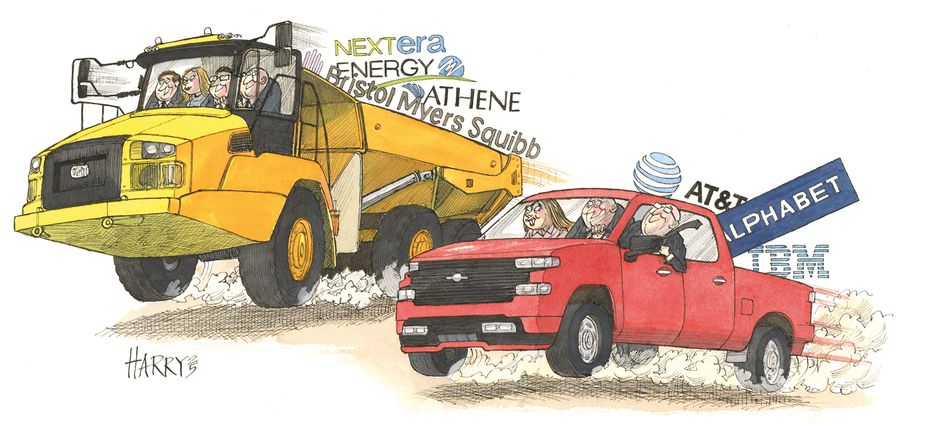
US issuers coming to the euro markets, and to a lesser degree sterling, is not a new sight. But there was always a tendency for issuance to wax and wane; mostly wane.
That is no longer the case. After a big reemergence of US issuers in 2024, their presence in the euro market was even more striking in 2025. Whether that’s because headline coupons are more attractive in euros than US dollars, or that issuers are addressing net investment hedges, or that arbitrage makes borrowing in the single currency compelling, US corporates are here to stay.
Leading many of the biggest and best in 2025 was Barclays, which was in the thick of the flow. Matthew Thomas, head of EMEA corporate DCM, summed up Barclays’ ethos for its investment-grade business: “It’s about consistent coverage and content generation.”
That applies equally to its reverse Yankee business, which has helped the bank get some standout mandates.
Top of the tree was Alphabet’s €6.75bn five-part transaction in April, the largest bond issuance in the euro market since 2020. It was also the third-largest debut euro issue ever.
The tech company had issued in dollars the day before, but it was the euro deal that delivered the majority of the US$12.7bn-equivalent in total funds raised.
The order book peaked at about €33bn, anchored by 80 individual orders of €80m and 66 individual orders north of €100m.
Indeed, one of the features of reverse Yankee issuance is size. US companies have big funding needs and many tend to seek jumbo issuances through multiple tranches. In another deal that Barclays was involved in, pharmaceutical Bristol Myers Squibb raised €5bn in early November.
It comprised €750m five-year, €1.15bn eight-year, €1.15bn 13-year, €750m 20-year and €1.2bn 30-year notes.
The company was looking to raise funds as part of a US$7bn liability management exercise, alongside cash on hand.
The deal summed up the euro market’s dynamic. Even though the bonds being bought back were denominated in dollars, it was funding the exercise in euros to make the most of the coupon differential and get investor diversification.
But Barclays was more than an intermediary on jumbo trades. It did the relatively smaller ones too. One was a €600m 10-year issuance from Colgate-Palmolive. What was notable is that there were just two banks in the syndicate, which was able to steer an upsized deal from an expected €500m to land 30bp inside initial price thoughts.
This is the sort of deal in which a bank can show its true value, given the small syndicate. “It’s about differentiated advice,” said Marco Baldini, global co-head of investment-grade syndicate.
Away from the flow, Barclays was also involved in the more strategic trades – it was a bookrunner, for example, on NextEra Energy’s €2.5bn dual-tranche hybrid in early November.
It came a day after Verizon became the first US corporate since 2021 to issue a hybrid in the euro market, albeit both companies had announced their mandates on the same day.
In a sign of confidence in both the credit and the market, NextEra made the unusual move of printing a hybrid in euros without a senior bond in the euro market. Both tranches came 50bp inside IPTs, with final combined demand of €8bn.
Barclays was also involved in some of the more interesting euro deals from US financials. Most of the big banks do self-led deals, but one corner of the market that is more competitive is funding agreement-backed notes, an area in which Barclays excels.
Apollo’s insurance arm Athene, which is the biggest issuer of the product, is a regular client. Barclays was at the helm of its €850m seven-year FA-backed note in mid-August, which was the insurer's biggest such issuance in the single currency. It followed Athene's largest order book for a euro-denominated deal, according to IFR data, attracting more than €2bn of demand.
Other Barclays clients include MetLife, MassMutual and Global Atlantic. For the latter, Barclays sole led a €500m 10-year FA-back issuance. The bank took down the risk and sold it into the market.