


North America Investment-Grade Corporate Bond House: JP Morgan
Team building
In a year when AI and M&A-driven marquee deals took centre stage in the North American investment-grade bond market, JP Morgan reaffirmed its position as the market’s anchor. For its strong execution across a multitude of jumbo transactions, JP Morgan is IFR’s North America Investment-Grade Corporate Bond House of the Year.
It was a year of contrasts in the US high-grade corporate bond market. First, there was US president Donald Trump’s "liberation day" tariff announcements in April, which caused credit spreads to spike temporarily and effectively froze all new issuance activities. Then came the Silicon Valley giants, who brought multibillion-dollar deals to secure capital for the AI supremacy arms race.
On the technical side, while all-in yields remain at elevated levels compared to the post-financial crisis average, credit spreads compressed to multi-decade tights in the second half of 2025, creating a unique window for opportunistic issuance.
Against this backdrop, JP Morgan continued to cement its leadership and hold its top three position on the North American investment-grade corporate bond league table.
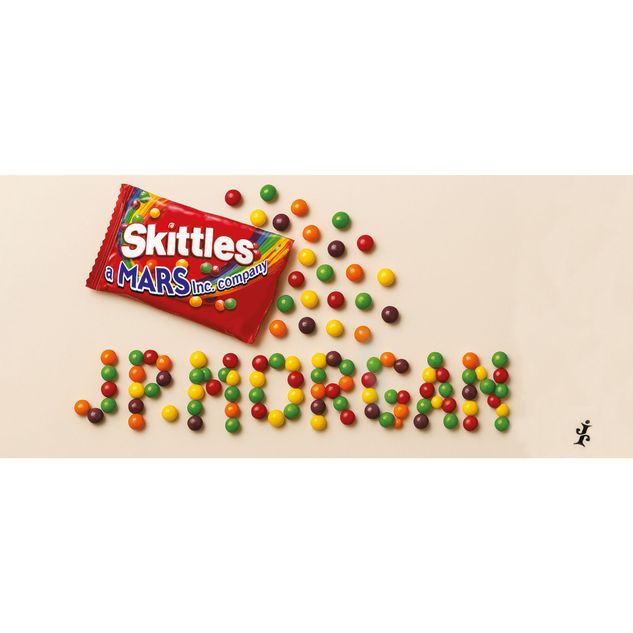
JP Morgan’s presence was underscored by its role in Mars’ US$26bn eight-part offering in March to fund the family-owned confectionery giant’s acquisition of Pop-Tarts maker Kellanova.
The deal came when the market was starving for big-ticket M&A issuance. Yet some investors were concerned about the 144A/Reg S format, which typically requires less extensive company disclosures and trades wider than SEC-registered bonds.
“Funds would tell you that they have limitation on how much 144A paper they can hold, and it’s difficult to know exactly how that would affect borrowing costs,” said Marc Baigneres, global co-head of investment-grade finance at JP Morgan.
Helped by the Mars family’s commitment to regularly disclose business figures to investors, the transaction attracted a record US$114.4bn order book and would become the second-largest high-grade bond sale in 2025.
“We clearly demonstrated that the 144A format can have minimal impact on pricing when managed well,” said Baigneres.
In a year categorised by the rise of AI financing, JP Morgan stood out as the trusted financier for big tech companies as they race to lock in funds for data centre buildouts and AI development.
The bank led Oracle’s US$18bn six-part trade in September, followed by two more gigantic deals in November – Amazon’s US$15bn six-part bond sale and Alphabet’s 14-tranche dual-currency offering totalling the equivalent of US$25bn.
All these transactions were oversubscribed, so much so that other issuers had to reschedule their bond sales to avoid competition.
“Up until a few months ago, there was still a little bit of dismissiveness around how hyperscalers can just fund all these massive investments with free cashflow,” said John Servidea, global co-head of investment-grade finance at JP Morgan. “We clearly see that’s not the case.”
Silicon Valley giants’ recent trips to the US high-grade bond market are a testament that deep connections and long-term relationships pay off.
“We play to our strengths, because we have tremendous relationships with all of them,” said Servidea. “We financed almost every large tech company even before the AI wave.”
JP Morgan hopes to provide holistic financing solutions for AI spending, spanning project finance, loans, bonds and securitised products.
“We are totally product-agnostic. The truth is we need all of the above to fulfil the capital needs,” said Baigneres.
“We actually sit on the same floor in the new building and we work together very seamlessly,” he said, referring to JP Morgan’s new global headquarters on 270 Park Avenue in midtown Manhattan.
Throughout the year, JP Morgan expanded its influence. In a market where execution risk loomed large, the bank proved that scale, strategy and flawless delivery remain the hallmarks of success.