


SSAR Bond House: Deutsche Bank
Protective adviser
Deutsche Bank has finessed funding for SSARs big and small in markets graced by sunny sentiment or those roiled by historic events. Its ability to perform in size and at market cruxes makes Deutsche Bank IFR’s SSAR House of the Year.
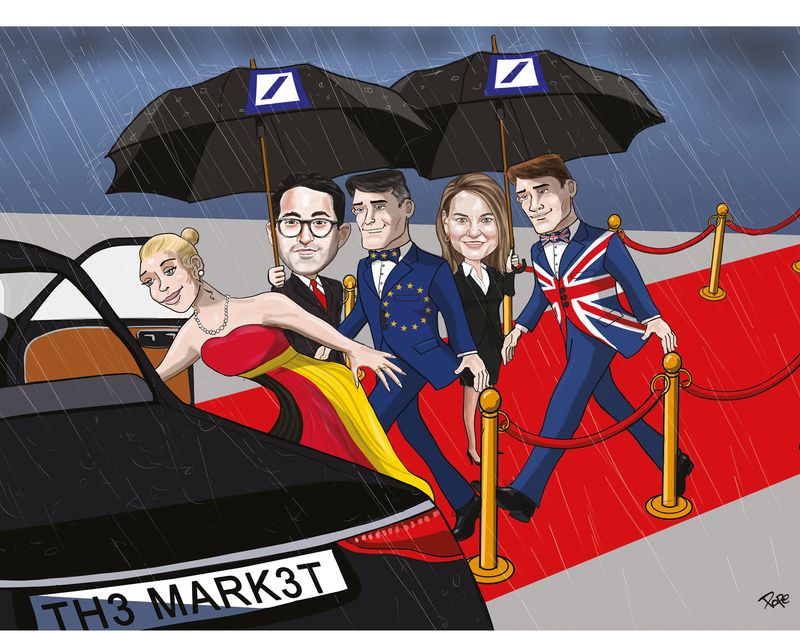
Some of the market’s biggest SSAR issuers trusted Deutsche Bank to deliver key trades in 2025. At the same time, the bank has delivered volume for funders across segments and currencies in a huge year for public sector issuers.
Banks tasked with syndicating those volumes have had mostly solid conditions in 2025. But when they took a turn for the worse, Deutsche was regularly sought.
“All of those big names, when it came to April and May, wanted us on the top line,” said Neal Ganatra, Deutsche's head of SSA syndicate. “On days when equities are down 7% and yields are moving around by 10bp–15bp, this is when you can really differentiate yourself as a bank.”
Adapting to the circumstances was key. “For all of those names, we were front and centre when it came to strategic advice about how to maybe have a plan B or plan C in terms of tenors or maybe the need to change the wording on the sizing,” Ganatra said.
The year’s otherwise supportive conditions cracked in April when US president Donald Trump announced his market-rocking "liberation day" tariffs.
Days after the news, Deutsche helped deliver an €8bn dual-tranche benchmark for the European Union. The deal’s combined €86bn order book dispersed any doubt about the EU’s access to the market. And it helped calm nerves about the broader SSAR market.
Certainly, bankers away from the deal appreciated that the EU came into a very tricky market and potentially paved the way for other issuers.
A month later, Deutsche aided the UK Debt Management Office in pricing its highly anticipated £4bn 30-year. The market watched it closely to see how much of the diminished long-end Gilt bid would show up for the trade. The success of the bond, which got more than £73bn of interest, reinforced the DMO’s reputation for primary market composure.
Even before those deals, Deutsche had shown its steady hand in tricky markets. It was part of the syndicate in March that delivered Germany’s €6bn 30-year in the wake of incoming chancellor Friedrich Merz’s announcement that he was upending the nation’s fiscal norms by reshaping its famous debt brake. After confirming the bid was still there, the syndicate built a €36bn order book for the bond.
Demand for Deutsche’s services is evident outside of crisis moments, too.
It tops the euro league table for the European Investment Bank, a name frequently described by bankers as one of the SSAR market’s most demanding and discerning issuers. The European Union, too, has relied heavily on the bank’s expertise.
On these sorts of issuers, “it’s down to servicing and coverage, to finding the right opportunity at the right time", said Katrin Wehle Becker, Deutsche's head of SSA debt capital markets.
Solid servicing and coverage also earned it a following with agencies. It is number one with those names in the single currency.
And in the highly competitive realm of sovereign bonds, in which issuers take auction participation and secondary trading into account alongside ideas and advice, the bank secured a number five ranking.
Opening new markets was another aspect of Deutsche’s offering for sovereigns. In January, it reintroduced Austria to the Swiss franc market after a 16-year absence with a SFr350m (US$385m) February 2035 green bond. It followed that up with more sole-led franc deals for Austria, reinforcing its repeat mandate credentials.