


EMEA Leveraged Finance House: Goldman Sachs
Finding the formula
For its pivotal role in steering large and complex debut financings, driving market innovation and helping borrowers from across the full spectrum of a bifurcated market, Goldman Sachs is IFR’s EMEA Leveraged Finance House of the Year.
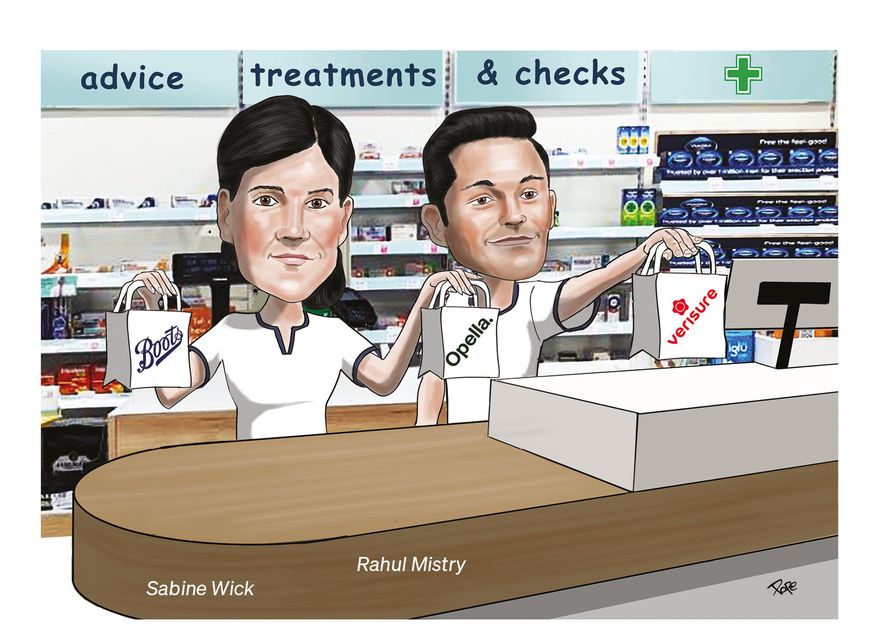
Activity in M&A was a source of frustration for leveraged finance bankers in 2025, leaving refinancing and dividend recaps to drive volumes. But while spreads might suggest there was an easy route to market for issuers – April volatility aside – the story of the year was far more nuanced, and Goldman Sachs forged a path to navigate a challenging market.
“We’ve been involved in the difficult deals, the small deals and the big deals,” said Rahul Mistry, co-head of EMEA leveraged finance at Goldman with Sabine Wick. “That variety gave us the information we needed to navigate the market. This looks like a benign year but actually, beneath the surface, things have either been really hot or really cold.”
One hope for M&A is that the IPO market might be unlocked by security company Verisure’s successful Stockholm listing and Verisure Holdco’s €1bn six-year non-call PIK toggle.
Goldman, Morgan Stanley and Barclays structured a deal that solved the conundrum of how to take a dividend without unnerving a leverage-resistant IPO market.
Issued via Aegis Lux 1A and secured against sponsor Hellman & Friedman’s 43.7% stake in Verisure, it was Europe’s first public high-yield bond backed by a minority stake in a newly listed company. The structure returned €940m to H&F while preserving upside potential.
With no share price trigger and better terms than margin loans or private credit, the notes were tightly priced at 5.625% cash and 6.375% PIK coupons, setting a template for post-IPO sponsor financing for high-quality assets.
“We have had a lot of inbounds of other companies wanting to do that,” said Wick. “It was very customised and important. A precedent-setting transaction.”
Goldman also played a key role in another major deal, as Opella, Sanofi’s consumer health spinoff, brought the largest LBO financing by a European issuer since 2020
The €7.45bn-equivalent package was split between term loan Bs and senior secured notes, in euros and US dollars.
Goldman was lead-left bookrunner for the €1.25bn euro bonds, with that leg absorbing an additional €250m that was due to be placed through the euro term loan B market. Despite the increase, it was the tightest of the four instruments to be placed. Some investors said pricing was jammed through fair value, moving from high 5s down to 5.50%.
Goldman also sought to unlock demand from US investors for the euro leg, anticipating a shift towards Europe as tariffs fears began to mount. The leads moved the deal swiftly through the market, and it successfully cleared just ahead of "liberation day" in April.
The Goldman and UBS-led high-yield notes also survived a bias towards loans in the US$4.5bn-equivalent debt package funding the buyout of retailer The Boots Group, the international business of Walgreens Boots Alliance.
While a US$500m senior secured offering was dropped to accommodate an increase in the TLB, the high-yield bond was divided into €650m and £375m seven-year non-call three notes. Both came inside initial price thoughts.
Despite some concerns over sponsor Sycamore Partners’ track record and high leverage – S&P forecast adjusted debt/Ebitda at 6.2 times – the deal cleared successfully, underscoring Goldman’s ability to help deliver jumbo, cross-currency financings for complex carveouts in challenging conditions.
“In July, it ended up being a very good and a very well subscribed deal,” said Mistry. “But I think going into it in Christmas [2024], this was quite a high beta underwrite, because there were a lot of concerns about the UK. It showed long-term underwrites can work.”
Goldman also played critical roles in other difficult deals, such as the refinancing for global broadcasting company NEP.
NEP’s looming 2026 maturities had caused Fitch in August to pin the company in its top market concern loan list. Goldman was lead-left on the euro loan, which helped clear the maturity wall and saw Fitch upgrade the company. Fitch forecast Ebitda leverage would fall below five times by December from 6.6 times a year earlier.
“It was an overlevered business that needed help,” said Kartik Subramanian-Nair, a managing director on Goldman's capital markets desk in London. “If this deal didn't get done, the company would have had to restructure.”
Greek gaming company Intralot, with Triple C ratings, was another challenge. The €900m dual-tranche bonds were part of a long-dated underwrite for the coming together of two post-restructuring names, with the financing package tapping liquid credit, private credit and bank markets across multiple currencies.