


EMEA CLO House: BNP Paribas
Bridge to future
BNP Paribas guided clients through regulatory difficulties, brought innovative structures and accessed new pools of liquidity, all while executing a huge volume of dealflow across the new issue, reset and refi spectrum. For cementing its position as a tier-one arranger, it is IFR’s EMEA CLO House of the Year.
BNP Paribas was a constant feature in the CLO market throughout 2025, bringing deals in both calm and turbulent conditions. This is no mean feat, given how demanding this sector is. Unlike many places in the primary debt markets, there are many moving parts that have to come together for a successful outcome, requiring deft handling of the push-pull dynamic between issuer needs and investor demands.
“This is a core business activity for BNP Paribas globally,” said Dushy Puvan, head of CLO origination and structuring.
The outcome of that activity in EMEA saw the bank arrange some 36 CLOs over the IFR Awards period for 2025, of which 17 were new issues.
The bank was the number two arranger for new issue deals with 15% market share in LSEG’s league table.
Its CLO business benefited from having the heft in terms of BNPP's balance sheet that can deliver Triple A anchor tickets when needed and the expertise to find support for equity placement.
The bank's CLO operation is a window into its broader banking activities, most obviously leveraged finance and loan trading but also the burgeoning private credit and middle-market space.
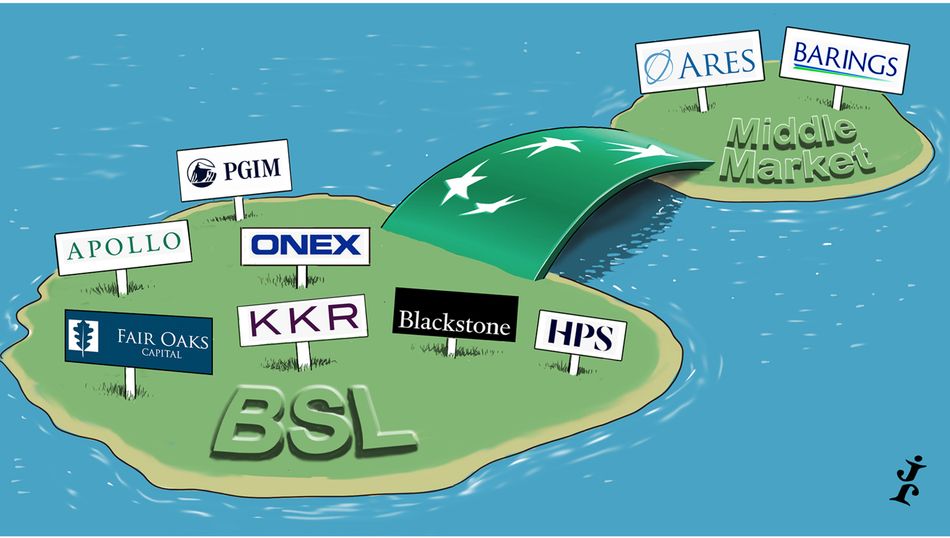
And the bank’s partnership with leading managers of private credit has created a bridge between them and public broadly syndicated loan markets, which has been instrumental to the development of European middle-market CLOs.
Once more the bank was at the forefront of the development of European middle-market CLOs, a highly anticipated product. First on the issuer side, with the creation of an alternative funding avenue, but also for institutional investors who can gain entry to an otherwise hard-to-access asset class.
The bank had already reopened middle-market CLOs in Europe in 2024 with a €380m static deal for Barings. This time, it reopened a moribund sterling CLO market via a £305m transaction called Ares European Direct Lending CLO 1, backed by senior secured loans to 50 UK middle-market companies.
It featured matching adjustment compatible features, opening up participation from UK insurers. The bank followed up with another middle-market CLO for Barings but this time featuring a reinvesting structure and two currencies – euros and sterling.
“I think what that demonstrates is we don't just follow liquidity, we actually create it. It's important to us that we bring new investors to the market. It also keeps us with a 100% market share for mid-market CLOs,” said Simon Jones, head of the securitised products group.
The bank promises there are more such deals in the pipeline and that it is already working with other private credit managers wanting to launch European middle-market CLOs.
BNPP was the arranger for multiple transactions featuring BSL for 11 managers, including Apollo, Blackstone, HPS, Invesco, KKR and Onex. It also expanded the frontiers of its franchise with new clients like Fair Oaks, Anchorage, Brigade and King Street.
“When Apollo needed to price €1.2bn of [CLO] resets across three deals in a single day, it was BNP that they called up to get that trade done,” said Jones.
That pre-"liberation day" trade for Apollo’s Redding Ridge platform illustrated BNPP’s ability to navigate strong markets. And then the bank reopened the sector, following the hiatus later in April, with a trade for Blackstone.
Puvan highlighted that the bank was also part of the nitty-gritty work to overcome the shifting regulatory framework.
The European Union's banking, insurance and securities industry regulators threw a potential spanner in the works in April when they cast doubt on the rules on third-party risk-retention vehicles, potentially slowing down CLO issuance.
The rules govern how CLO managers can meet skin-in-the-game requirements. Under the "sole purpose test", securitised exposures cannot be the "sole or predominant source of revenues" for the third-party risk-retention vehicle.
Navigating how to structure deals using third-party originator structures fell to the most active arrangers.
“Our fundamental understanding of the CLO market, deep investor relationships and trust from our clients, has been key to our continued issuance success,” said Puvan.