


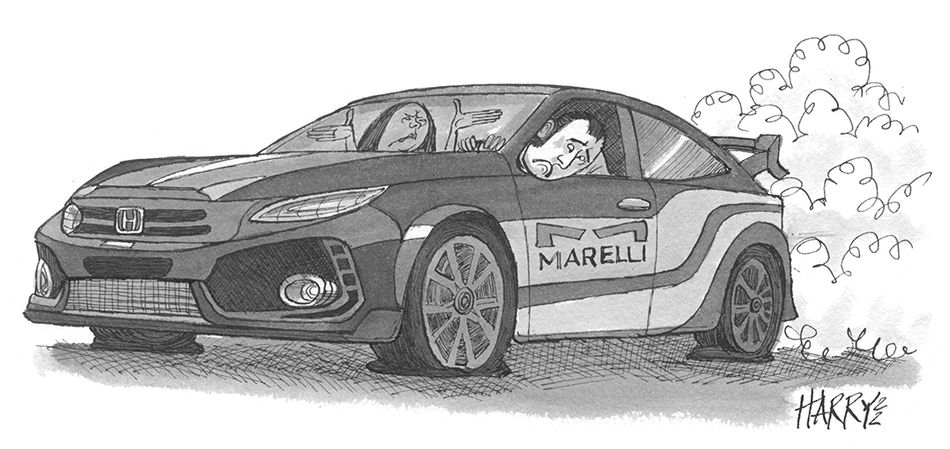
Less than three years after closing Asia’s largest leveraged buyout loan, KKR-owned auto parts supplier Marelli Holdings is seeking breathing room from lenders amid challenging business conditions arising from the pandemic.
The company is considering a business reconstruction alternative dispute resolution and bridge loans from its main lenders among the options as the impact of Covid-19 and global supply chain disruptions have hurt its bottom line and cashflows.
Marelli has a ¥50bn (US$432m) repayment due in March and was seeking an extension of a grace period after likely logging a fourth consecutive annual loss for the fiscal year ended in December, according to reports in Japanese media.
Bankers are closely monitoring the developments, which could dampen sentiment and turn lenders more conservative in Japan’s leveraged finance market, which perked up last year after a slowdown in previous years.
“Lenders will continue to provide LBO loans for deals going forward, but terms such as leverage levels and pricing may be affected,” a senior banker at a Japanese bank said.
Japan’s LBO loan volumes tripled in 2021 to US$5.768bn via 18 deals, compared with US$1.712bn via five deals in 2020, according to Refinitiv LPC data. With rising activity, the market had become more bullish on financing terms last year after being conservative in previous years.
“The LBO boom continues this year and the pipeline looks strong,” another senior banker at a Japanese lender said.
One transaction is cruising in the market – a ¥230bn senior loan backing Fortress Investment Group's LBO of Japanese golf course operator Accordia Golf – having attracted a strong response so far.
Pandemic effects
Marelli is one of several portfolio companies of financial sponsors to have suffered from the ravages of Covid-19. Last month, Bain Capital said it will sell hot spa business Ooedo Onsen Monogatari Hotels & Resorts to Lone Star for an undisclosed price as the pandemic took a toll on its performance.
Marelli was formed after Japan's Calsonic Kansei acquired Magneti Marelli, the high-tech car parts unit of Italy’s Fiat Chrysler Automobiles, through an LBO in 2019. Calsonic paid 17x Magneti’s estimated earnings for 2019, according to a Reuters report in October 2018. The combined company was renamed Marelli Holdings.
Marelli's outstanding debt at the end of December 2020 is said to have been over ¥1trn.
The company did not immediately respond to a request for comment.
Filing a business reconstruction ADR requires consent from all financial institutions involved and "it is very unlikely", one source familiar with the situation said.
"Talks between the company and the lenders relating to its deteriorating financials have been going on for a long time and it is not like we are entering a new phase now," the source said, adding that Marelli will have enough cash for the repayment.
Marelli has also requested help in inventory purchases from Nissan Motors, its biggest customer.
On January 6, Marelli announced that Beda Bolzenius had stood down with immediate effect as CEO and president after almost four years with the company and had been succeeded by David Slump, a 30-year industry veteran who joined from Harman International, a wholly owned subsidiary of Samsung Electronics.
"I believe strongly in the strategy already in place to make the company more cost competitive, more streamlined, more targeted towards the future of mobility and electrification," Slump said in a statement announcing his appointment.
Last May, Marelli agreed the sale of its headquarter building in Saitama-city, in the northern periphery of Tokyo, for an undisclosed amount.
Christoph Hobo, Marelli's chief financial officer, said at the time: “We are constantly striving to optimise our capital structure and to efficiently fund our investments for growth. Monetising real estate on our balance sheet via sale-and-leaseback transactions is a great way of maximizing our capital efficiency. The very attractive valuation of this transaction will generate the cash which will support the execution of our overall strategy.”
In May 2020, Marelli obtained additional capital and loans totalling ¥130bn from KKR and Japanese banks to “to withstand an extended market downturn and protects the long-term financial health of the business,” according to Hobo.
Marelli has run into difficulties despite having covenant-lite LBO debt, which is structured to provide financial flexibility to borrowers and sponsors.
Covenant-lite loans are rare in the ultra-conservative market in Japan, but Marelli’s previous two cov-lite borrowings had received good support from lenders. In April 2019, a year before the outbreak of the pandemic, Calsonic Kansei raised a seven-year senior loan of over ¥1trn to fund the LBO of Magneti Marelli.
Three quarters of the loan is denominated in yen and the remainder in euros. The borrowing, on which the March repayment is due, pays interest margins of less than 200bp over Libor, lower than the current market standard of mid-200bp.
Mizuho Bank, MUFG, Sumitomo Mitsui Banking Corp and Sumitomo Mitsui Trust Bank were the underwriters of the loan, with Mizuho taking the largest chunk of about ¥400bn.
The 2019 loan followed a ¥430bn seven-year senior financing that KKR raised in March 2017 to support its LBO of Calsonic Kansei. Mizuho, DBJ, MUFG, Mitsubishi UFJ Trust & Banking and SMBC were the lenders of the club financing.
Some bankers are concerned that Japanese megabanks have stepped up in recent years to provide cheap mezzanine financings and disrupted the market as a result.
MUFG, Mizuho and SMBC are providing a ¥60bn mezzanine financing to support Accordia Golf’s LBO that goes hand-in-hand with the ¥230bn senior loan.
Mizuho and Development Bank of Japan, along with other funds, provided a ¥80bn mezz facility with an interest rate of 8%–9% that complemented the 2019 senior loan for the Magneti Marelli LBO.