


ReNew powers up for clean energy debt
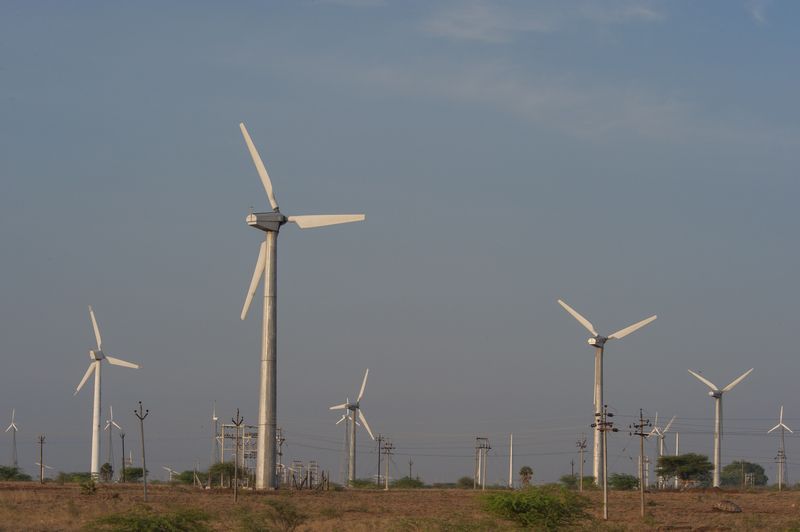
Indian clean energy developer ReNew Energy Global is likely to raise more than US$4bn-equivalent through a mix of loans and bonds over the next two years to fund its pipeline of renewable energy projects as well as refinance debt falling due until mid-2028.
ReNew is already one of the largest independent producers of renewable energy in India, with 11.6GW of operational capacity across multiple states and 6.8GW of committed projects in the pipeline as of the end of October.
The company has a pipeline of projects until 2028 with plans to add around 2GW of capacity each year and will need to raise new debt to fund the buildout.
“The numbers for that debt may change depending on the mix of projects, but are around US$1bn-equivalent each year in the form of new project finance,” said Kailash Vaswani, ReNew’s chief finance officer.
India is one of the of the world’s fastest-growing renewable energy markets and continues to draw investments into the sector.
“I have been in the sector for 15 years and never seen a better time for capital availability," Vaswani said.
India was the third-largest country for clean energy investment in 2024, behind China and the US, according to the International Energy Agency. Around US$38bn went to the sector to meet rising demand for electricity via non-fossil fuel-based sources.
The country aims to almost double its non-fossil fuel-based power capacity to 500GW by 2030. Renewable energy accounted for 184.62GW of the 242.78GW in installed electricity capacity from large hydro, nuclear and renewable fuel sources at the end of June, according to the Indian government.
ReNew is listed on Nasdaq but could soon go private. A consortium comprising Abu Dhabi Investment Authority, Canada Pension Plan Investment Board, Masdar and Renew’s founder, chairman and CEO Sumant Sinha made a non-binding offer to acquire the entire share capital of the company not already owned by them.
ADIA, CPPIB and Sinha collectively own around 64% of the outstanding shares. In October the consortium made a final nonbinding offer to take the company private for US$8.15 per share, up from previous offers of US$8 in June and US$7.07 in December last year.
Financing plans
ReNew will refinance US dollar bonds maturing over the next two financial years through a combination of US dollar bonds and foreign currency or Indian rupee-denominated loans, according to Vaswani.
The company has US$2.17bn outstanding from five green bonds, which fall due between July 2026 and July 2028, according to its presentation for the quarter ended September 30.
After issuing dollar bonds between 2020 and 2023, it moved most of its financing onshore as interest rates in international markets rose from 2022 onwards.
ReNew was able to bring down its borrowing costs by almost 150bp–200bp when it refinanced US$525m of offshore bonds via an onshore rupee loan in the financial year that ended in March 2023, Vaswani said.
Meanwhile, the pool of local liquidity has grown as foreign banks are also lending in rupees now and domestic mutual fund investors are also warming up to investing in renewable energy.
“The sector is quite established now, there is no risk of payments not coming in and we offer [mutual fund investors] a reasonable yield compared with other borrowers in the market,” Vaswani said. “It’s just that they don’t do long-term debt because the capital they get is redeemable at any time.”
ReNew plans to maintain a presence in the offshore bond market to diversify its sources of funding.
“In the offshore bond market, there is a lot of liquidity that is not finding opportunities since all borrowers in Asian markets are able to borrow from domestic lenders at rates cheaper than US dollars, so that is also causing the spreads to be very tight in the dollar market,” Vaswani said.
ReNew would like to maintain a balance between the dollar and the rupee in its debt mix as long as the pricing levels are near to what it can get in rupee funding, he said.
At the end of September, ReNew’s debt mix comprised borrowings in rupees (58%) US dollars (37%) and other currencies (5%).
“If the Indian central bank’s rules governing offshore borrowing are more accommodative and offshore bond market levels are suitable, then ReNew could raise a larger part of its financing through offshore bonds because the market offers diversification,” he said.
The Reserve Bank of India published a draft proposal in October that would lift restrictions such as the all-in pricing cap on offshore loans and bonds, the limit on how much can be borrowed without regulatory approval, and the list of recognised foreign lenders, among others.
Another change Vaswani would like to see is some way to manage hedging costs.
“The rupee has been depreciating so it would be good to have a hedging window or scheme with visibility on forex range so we can manage our currency exposure,” he said.
Cutting taxes
ReNew’s offshore loan borrowings have also been affected by higher withholding tax rates on interest payments that have been in place since July 2023.
“Offshore loans make sense only in yen or via GIFT City because then the withholding tax implication is lower,” Vaswani said. “GIFT City loans reduce the pricing by almost 35bp–40bp.”
ReNew is looking to raise a loan of around US$800m from a group of tax-exempt lenders to refinance a facility closed in October 2022, sources said. Vaswani declined to comment on this possibility.
The US$985m five-year facility ReNew raised from a dozen lenders in 2022 funded the construction and operation of a 1,300MW round-the-clock project that comprises three wind farms (with a combined capacity of 900MW) and one solar plus battery storage farm (400MW plus up to 100MWh capacity) across the states of Karnataka, Maharashtra and Rajasthan.
In 2024, ReNew raised its first yen-denominated loan of US$239m-equivalent to build a 600MW solar power project, and the company is considering tapping loans in euros, but since liquidity in those currencies is lower, any financing will be opportunistic.
Earlier this month, ReNew announced a US$331m-equivalent borrowing from the Asian Development Bank to build an 837MW RTC hybrid renewable energy plant in the state of Andhra Pradesh.
ReNew Vyoman Power is the borrower of the financing, which comprises a Rs25.78bn (US$291m) loan from the multilateral agency and up to US$40m from ADB-administered Leading Asia’s Private Infrastructure Fund 2. The ADB will arrange another US$146m to be raised from other lenders.
The ADB as lender to the Vyoman project is exempt from withholding tax.
The project is the first phase of a 2.8GW hybrid energy complex in Andhra Pradesh’s Anantapur district. It integrates 587MW solar and 250MW wind energy capacity with a 415MW-per-hour battery energy storage system, which is designed to deliver 300MW of peak power along with dependable baseload supply to the Solar Energy Corporation India under a 25-year power purchase agreement.
ReNew plans to invest US$2.5bn to build out the various phases as India moves towards round-the-clock power supply from renewables.