


SLR's Cedric Henley bullish on ABL

Cedric Henley, chief risk officer of specialty finance at SLR Capital Partners, switched his career path to finance from law when he was an undergraduate at the University of Southern California. After more than a decade in middle-market banking, Henley, a Los Angeles native, joined SLR in 2007 shortly after its founding. He spoke with LPC about the growth of asset-based lending and opportunities to partner with banks.
LPC: How did you get into private credit?
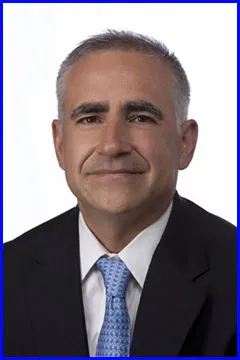
Cedric Henley: I was actually going to go to law school. I clerked for a law firm, and it's the only job I've ever had where everybody in that job tells you to get out of that job. I had a degree in political science, but I added an emphasis in finance.
I got a job working at a regional bank in California and was placed into a credit training program. It was a two-year program, and you rotated around different groups. I was in cashflow loans, I was in ABL, I did workouts, I did syndications. So I got a good flavor of leveraged finance, all in the middle market. I worked for the bank for a little while.
Then I got recruited to CIBC and began working in gaming and leisure, aerospace and defense, and a couple of other industries. One of the other areas that I did was sponsor coverage, where I met Bruce Spohler, one of SLR's co-founders. I eventually was elevated to run West Coast leveraged finance for him until I joined SLR at inception. My career has been spent entirely in middle-market finance.
LPC: What opportunities are you seeing in the ABL market right now?
CH: We're specifically targeting strong growth in ABL. One of the things that's a little different than what we've seen historically is that we're seeing sponsor-backed companies that have the ability to carve out certain working capital assets into a special purpose vehicle. We can lend against those assets.
We're seeing those credit facilities, which provide more liquidity in certain situations when the first-lien lenders in the cashflow facility don't want to extend more capital and the private equity sponsor doesn't want to add more capital, we can step in.
The structural nuance of ABL is allowing sponsors that historically have looked to the cashflow market to look to the ABL market. So we're seeing a decent uplift in ABL right now above the norm. The higher-for-longer interest-rate environment has really impacted a lot of companies. Even though you are seeing a steady decline in rates, I think that's getting offset by consumer sentiment and the labor market and tariff-related challenges companies are facing. So it's just a very challenging environment, and ABL, quite frankly, historically has thrived in challenging times.
LPC: Are there particular segments you find attractive?
CH: We continue to see significant opportunities to expand our industry specialization. We've built strong expertise in areas like healthcare, staffing, digital media and retail.
We won't do a cashflow deal in retail. We will only do it in an ABL construct. I think the really high end and the really low end of retail are suffering, but some of the stuff in the middle actually has been holding up OK, and I think that that trend may continue. We were one of the lenders in the Walgreens leveraged buyout. That's in the middle. People go in and get their prescriptions refilled and then buy stuff inside. That loan is performing really well.
Given how fragmented the ABL market is, there are many other industries where we can increase our reach and deepen our expertise. In addition to retail, we believe international ABL is an underpenetrated area where we see meaningful potential for growth and new opportunities.
LPC: What does the competitive landscape look like in ABL, with respect to other private credit firms and banks?
CH: Really, our main competitors haven't changed. The process of an ABL loan is far more labor intensive compared to a cashflow loan. As you invest in ABL, you need substantial back-office support to review borrowing bases and monitor portfolio activity.
A lot of times you're advancing loans every day, so you need that ability as well, and that type of functionality takes time and resources to build. You also need folks that have been doing ABL for a very long time because if things start to get messy, you need people that have a lot of experience around liquidating companies and assets. We liquidate less than 4% of the time, but you have to be prepared for that.
We are pairing with banks in certain instances where potentially we'll provide a first-in, last-out loan within the working capital assets of the company. Maybe the bank is providing a first-out piece that's still relatively inexpensive. However, that's for large, sophisticated borrowers with long operating histories.
What we're seeing more of is banks looking to reduce exposure to ABL assets, because based on the regulatory environment and on their own capital needs, a lot of times the ABL assets are classified as criticized assets, which means that there's a higher regulatory charge against them. So we're seeing banks approach us more and more, wanting to get out of ABL transactions because of that. A lot of the loans are perfectly fine, but given their internal classifications, banks have to move on from those assets.
As a result, SLR, which can hold these assets, is creating strategic partnerships with banks. About a year ago, we bought roughly US$124m of factoring assets from Webster Bank.