


China’s corporates and private equity firms are once again embarking on overseas expansion with a string of high-profile acquisitions in Europe on the agenda, signalling a revival of M&A financing from the country after several lean years.
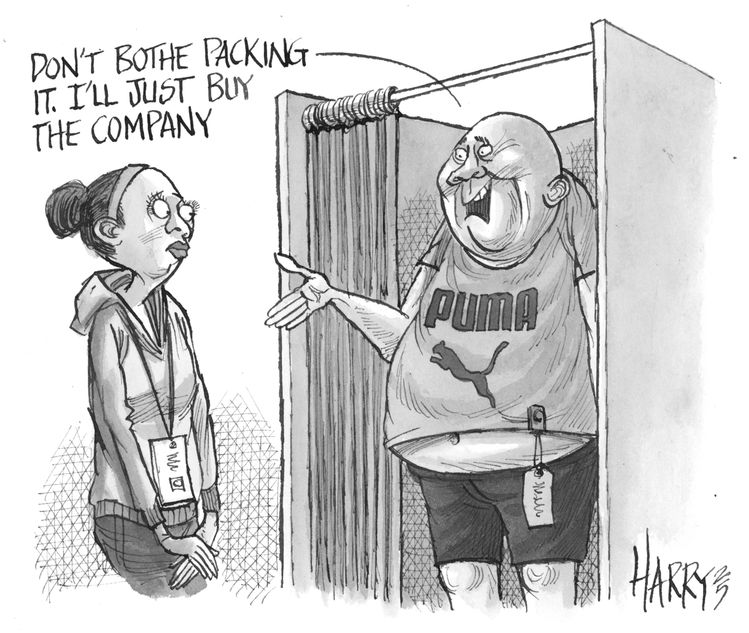
Lenders are lining up to finance Chinese sportswear groups Anta Sports Products and Li Ning in their potential takeover of Germany's struggling Puma. They are also eyeing involvement in a loan of around US$900m for Chinese PE firm Centurium Capital, a major shareholder of China's largest coffee chain Luckin Coffee, which is considering a bid for UK operator Costa Coffee.
Elsewhere, HongShan Capital, formerly known as Sequoia China, is raising a loan from Shanghai Pudong Development Bank to acquire the Avelox antibiotics business and related assets from Germany’s Bayer in a deal valued between €160m and €260m. Hongshan is also mulling a €2.5bn bid to buy Italian luxury sneaker maker Golden Goose from Permira.
Recent M&A-friendly measures have made it easier for Chinese buyers to obtain low-cost, long-tenor funding. The Lingang New Area policy allows banks based in the area within the Shanghai Free Trade Zone to provide loans for cross-border acquisitions under more flexible conditions, including a higher loan-to-value ratio of 80% (up from 60%) and extended maturities of up to 10 years (up from seven years).
The National Financial Regulatory Administration has also announced draft rules that make acquisition financing easier.
“Regulators have become more supportive of strategic overseas acquisitions,” said a Chinese loan banker. “Chinese companies can now obtain more favourable financing terms for outbound M&As compared with domestic transactions, and this flexibility gives them a competitive edge, enabling faster execution and the ability to act swiftly.”
According to bankers, loans for outbound M&A in strategic areas like high technology, energy security or the Belt and Road Initiative, can receive more favourable terms than loans for domestic acquisitions as national priorities can override purely commercial logic.
This may not necessarily result in lower pricing but does mean greater certainty of funding and faster execution.
Cheap valuations and strategic rationales are largely driving the renewed wave of Chinese outbound investments in Europe, according to bankers.
“European companies are relatively undervalued right now due to slower growth prospects, ageing demographics, and lingering geopolitical uncertainty,” said a senior M&A loan banker from a Chinese bank. “Many assets now trade at far lower Ebitda multiples than their US or Asian peers, creating attractive opportunities for Chinese investors seeking turnaround potential and brand portfolio enhancement.”
She said Europe’s challenging macroeconomic climate has also prompted some companies to divest high-quality assets to shore up liquidity, providing openings for well-positioned buyers.
Cheap coffee
The potential bid for Costa Coffee could value the UK chain at £1bn or more, roughly a quarter of the £3.9bn that Coca-Cola paid when it bought the business from Whitbread in 2018. In addition to Centurium Capital, a state-backed Chinese company and PE firms Bain Capital and TDR Capital are also in the fray, according to sources familiar with the matter.
“Although Costa Coffee’s performance has declined in recent years due to fierce competition and operational challenges, a £1bn valuation represents an exceptionally attractive entry point for Luckin Coffee as it eyes a global leap,” said a third loan banker from a Chinese bank.
According to bankers, Centurium is likely to team up with Luckin on the bid, which will help it tap into the latter’s strong balance sheet and credit profile, and achieve greater leverage while also shoring up support from lenders.
If successful, the bid would mark Centurium’s first major European investment and propel Luckin onto the global stage with the target’s network of more than 4,000 stores in 52 countries. Luckin had 29,214 outlets as of September.
Similar dynamics are at play for Puma, whose valuation has nearly halved this year amid intensified competition and weak consumer sentiment. Acquiring a stake in the German brand would significantly extend the global reach of Anta and Li Ning into Western markets while offering growth potential for Puma in Asia.
“This significant devaluation, alongside Puma’s strong brand heritage and global footprint, presents a rare chance for Chinese buyers to invest at what appears to be a temporarily depressed price,” the third Chinese banker said.
International lenders are also showing strong interest in financing consumer sector acquisitions, given the attraction of resilient cashflows and sustainable profitability in a volatile global economy.
Chinese online retailer JD.com is acquiring German electronics retailer Ceconomy, for which it is a tapping a €1.23bn 364-day bridge loan from underwriters HSBC and Standard Chartered.
Earlier in the year, Hongshan Capital raised a €415m seven-year term loan B to finance the acquisition of Swedish audio equipment maker Marshall Group, with HSBC and UBS as joint physical bookrunners and StanChart as joint bookrunner.
Going global 2.0
According to official Chinese statistics, China’s outbound direct investment across all sectors for the first 10 months the year was up 6.2% year on year at US$144bn.
Completed outbound M&A deals from China in 2025 totalled US$22.36bn as of December 10, a 33% year-on-year increase, according to LSEG data.
Deal value involving Europe has skyrocketed 264% year on year to US$9.55bn as of December 10, accounting for 43% of the total and overtaking the Americas as the leading destination for China Inc’s overseas expansion.
While the first wave of Chinese outbound investment in the 2010s mainly targeted natural resources and infrastructure, the current resurgence has shifted towards soft-power sectors such as consumer brands, sportswear, and food and beverage, with European consumer and retail assets offering compelling strategic opportunities.
“For cash-rich Chinese acquirers, European consumer brands are particularly appealing,” said a fourth loan banker from a Chinese bank. “Acquiring well-known Western names brings instant brand prestige, loyal customer bases and established global supply chains. These are valuable assets that can be revitalised by integrating them into China’s dynamic consumer market and digital ecosystem.”