


Super Micro scores with lenders in Taiwan
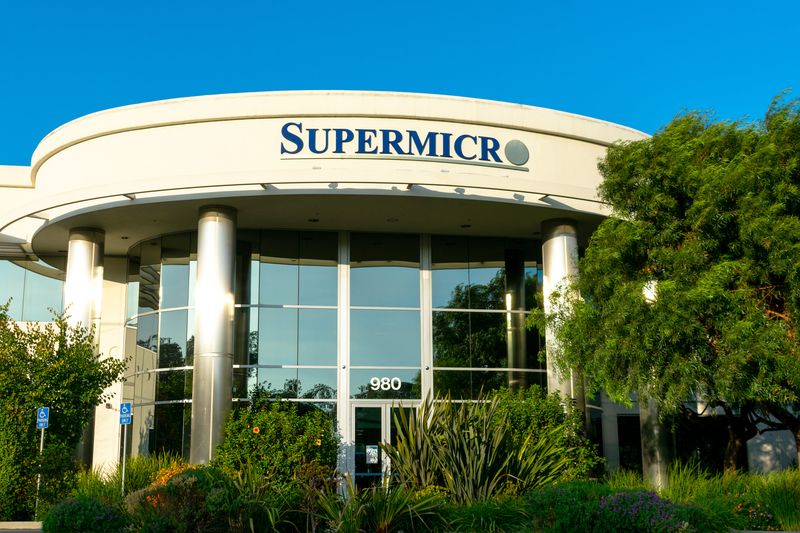
US server and storage equipment maker Super Micro Computer has notched an impressive debut in Taiwan’s syndicated loan market, lifting a one-year borrowing to US$1.77bn and overcoming concerns over recent corporate governance issues.
Nineteen banks joined original mandated lead arrangers and bookrunners CTBC Bank and Credit Agricole on the deal, thanks to the Silicon Valley company’s business profile, the loan’s attractive pricing and its short tenor.
“We view Super Micro’s liquid-cooling solutions as its competitive edge,” said one banker in Taiwan. “Plus, interest margins for US dollar syndicated loans are more attractive than those in the local currency.”
Liquid-cooling technology is used to cool power-draining AI data centres. In January, Super Micro said it was expanding its capabilities in that area in collaboration with AI chip behemoth Nvidia, one of its customers, to fit the latter’s newest AI architecture, Vera Rubin.
Super Micro’s revolving credit facility pays interest margins of 100bp over Taifx and 120bp over term SOFR. The borrower can also choose to draw down in Taiwanese dollars at a margin of 100bp over Taibor, which also comes with a pre-tax interest rate floor of 1.7%.
By comparison, Quanta Computer, which also makes servers for data centres and is a frequent borrower in the loan market in Taiwan, closed a US$2bn three-year facility in December that pays a margin of 62bp over SOFR and drew 18 lenders in addition to original MLAB Mega International Commercial Bank.
Some of the lenders joining Super Micro’s US dollar loan in Taiwan also drew comfort from another larger borrowing the company closed in late December with 11 lenders. JP Morgan was the administrative and collateral agent, and joint bookrunner on that US$2bn five-year revolver. BNP Paribas, Credit Agricole and HSBC are common lenders to both Super Micro loans.
The latest loan syndicated in Taiwan can be increased to a maximum of US$2bn, according to Super Micro’s filing to the SEC on January 26. At US$1.77bn, it is already the largest US dollar-denominated loan in Taiwan from the computer peripherals sector.
Prospects and track record
The shorter tenor of the loan – it carries a one-year maturity with two one-year extension options – was another factor that appealed to lenders, particularly those concerned about Super Micro’s business prospects and its corporate governance track record.
A repeat of the Nasdaq-listed company’s failure to file its financial reports punctually, which nearly caused its delisting in 2024 and 2025, or reemergence of accounting red flags could deter lenders from supporting the borrower beyond its one-year term, bankers said.
“At the end of the day, lenders would participate based on an overall consideration on both the company’s prospects and its shortcomings. We are committing based on the deal’s one-year timeline,” said a senior banker in Taipei. “If the tenor is two or three years, it would be a different story.”
In October 2024, EY resigned as auditor citing concerns about governance, transparency and internal controls. This came after Super Micro missed a deadline in filing its annual report for the year ending June 30 2024. The company subsequently appointed BDO as auditor in November and refiled all the late reports in February 2025.
The delinquent filings and auditor resignation coincided with a report from now-defunct short-seller Hindenburg Research published in 2024, which alleged “account manipulation” at the company. It cited transactions done with “related party suppliers” involving companies in Taiwan controlled by founder and chief executive Charles Liang’s brothers and partly owned by Liang, as suggestive of “sibling self-dealing”.
Super Micro denied the allegations contained in the report.
Earlier this month, Super Micro reported net profit of US$400.56m, up 25% year on year, and revenues of US$12.68bn, up 123%, for the quarter ended December 31, beating most estimates. However, it also had a negative net cash position for the second consecutive quarter. Moreover, analysts have expressed concerns about its gross profit margin, which showed sustained weakening to 6.3% from 9.3% in the previous quarter, and 11.8% a year earlier.
“We see a similar declining trend in gross margins even across leading server makers in Taiwan. But Super Micro’s management has said their new building block solutions for data centres would lead to margin improvement,” said the first banker.
Super Micro claims its liquid cooling technology can help hyperscalers save up to 40% of electricity costs compared to traditional air-cooled setups. Liang said last August he was targeting to reach a third of all global new data centre deployments with the technology within 12 months.
A third banker pointed out that lenders could decline participation in the extension of the loan upon its one-year maturity “if the visibility on its earnings were to deteriorate with its internal controls lapsing again”.
Security package
Credit enhancements on the loan played a part in alleviating some of the concerns. The security for the borrowing includes a second-lien charge over a two million square-feet science and technology park in Taoyuan City in Taiwan that has been operational since 2012 to support Super Micro’s software development and production.
Moreover, all receivables of Super Micro and proceeds deriving from them also form the security, according to the January 26 SEC filing. All account receivables and advance payments from customers – the key source of the repayment of the syndicated loan repayment – will be deposited into a pool that will be monitored by the agent bank every three months.
“The security interest in the receivables is designed to show lenders that the loan will be backed by real orders. Still, the monitoring of the receivable pool every three months could benefit from more frequent scrutiny. For now, the pool’s status in between the three-month snapshot remains unknown,” said a fourth banker.