


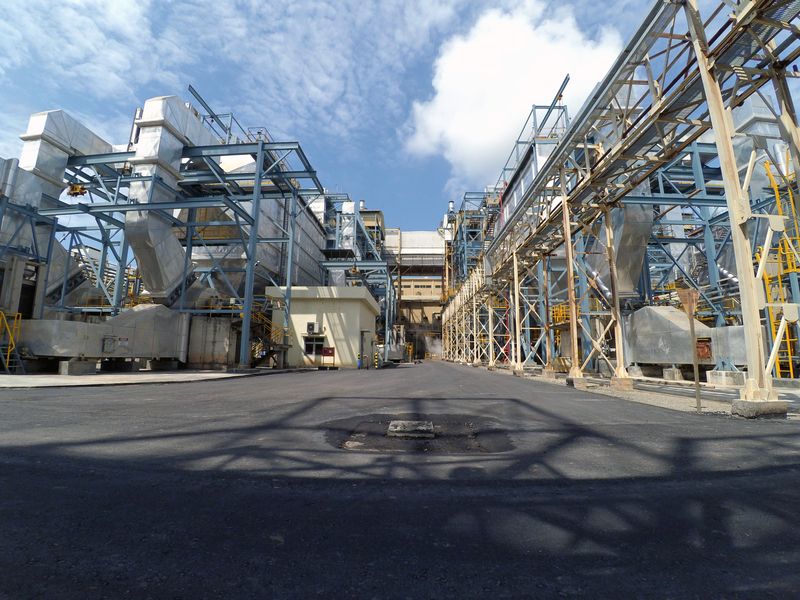
Indonesia has abandoned plans to retire its Cirebon-1 coal-fired power plant early, raising questions about the progress of a funding initiative meant to help the coal-dependent nation transition to renewable energy.
The energy transition scheme had been seen as a bellwether in South-East Asia, which is the world’s third-largest consumer of coal after India and China. However, the plan seemed ambitious from the start.
Chief economic minister Airlangga Hartarto cited the plant's long remaining lifespan and critical technology as reasons for not retiring it early and argued that the environmental benefit of shutting down other, dirtier coal power plants based on older technology would be bigger.
The Asian Development Bank, as part of its South-East Asia Energy Transition Mechanism programme, in 2022 signed an agreement with state-owned power distributor Perusahaan Listrik Negara, independent power producer Cirebon Electric Power and the Indonesia Investment Authority to shorten the power purchase agreement for the 660-megawatt Cirebon-1 in West Java and end the plant’s obligation to provide electricity in December 2035 instead of the original July 2042.
Cirebon Electric's plant started operations in 2012 under a 30-year power purchase agreement to supply PLN. The project’s sponsors include Japan’s Marubeni and Korea Midland Power, while Japan Bank for International Cooperation and Export-Import Bank of Korea were the main lenders, alongside MUFG, ING, Mizuho and Sumitomo Mitsui Banking Corp.
Under the ADB’s ETM partnership, PLN, Cirebon Electric and sovereign wealth fund INA would aim to find a suitable structure and financing terms to retire the plant early. While details were not disclosed, it was expected to be a refinancing deal that would give sponsors the same returns they had expected under the original power purchase agreement. At the same time, new clean energy capacity needed to be funded to replace it.
“It became apparent a couple of years ago that this was not going to work. You have to finance the new renewable plant and give a return to the existing investors in the coal power plant,” a sustainable finance banker said.
Another sustainable finance banker said it was difficult to convince green investors to participate in the ETM scheme, because even though they would be funding a renewable asset the use of proceeds would also go to repay debt from a coal-fired power plant.
Indonesia has explicitly stated it would prefer to retire older, less efficient coal plants that are state-owned, as the Cirebon plan’s early retirement entails high compensation costs for the long-dated PPA, and it estimated replacing the 660MW capacity would be expensive, said Rose Choy, a director at the Anthropocene Fixed Income Institute.
“They have justified their decision in terms of cost,” said Choy.
Few in the sweet spot
Indonesia, which has pledged to reach net-zero greenhouse gas emissions by 2060, has said it will pick another plant to retire early instead of Cirebon-1, but that is not an easy decision either.
“The existing plant can’t be too young or too old. If the plants are too old there’s no point decommissioning them because there’s not much upside. Only a few will be in the sweet spot,” the first sustainable finance banker said.
“There are over 100 coal-fired plants in Indonesia. They could choose one that’s older, has more emissions intensity, or a smaller one,” Anthropocene's Choy said. “And then you have to build the renewable piece that replaces the coal piece.”
The ETM scheme was first successfully used in the Philippines, but adoption elsewhere has been slow.
ACEN, the energy arm of the Ayala group, reached financial close in 2022 for the first market-driven ETM to retire the 246-MW coal-fired South Luzon Thermal Energy Corp power plant by 2040, cutting its expected operating life in half.
The Ps17.4bn (US$295m at the current exchange rate) transaction comprised Ps13.7bn in debt financing provided by the Bank of the Philippine Islands and Rizal Commercial Banking Corporation, as well as Ps3.7bn in equity investments from the Philippine Government Service Insurance System, Insular Life Assurance and ETM Philippines Holdings.
ACEN received Ps7.2bn to invest in renewable energy projects and the remainder was used to refinance debt and for transaction fees.
ACEN later signed memoranda of understanding with Singaporean conglomerate Keppel, Temasek-founded GenZero, which makes investments to accelerate decarbonisation, and Japan's Mitsubishi and its subsidiary Diamond Generating Asia to explore the use of transition credits to retire the plant by 2030 instead.
G7 funding initiative
The ADB said phasing out fossil fuels continues to be a priority and it is still engaging with “the government of Indonesia and other stakeholders on a range of clean energy initiatives stretching from coal retirement to renewable energy development to electricity grid expansion and modernisation”.
In November the ADB approved a US$470m loan to PLN to help develop solar and wind projects, strengthen grid infrastructure and enhance PLN's capacity to manage the energy transition. This programme is expected to avoid up to 2.5 million tons of carbon emissions annually and help integrate more renewable energy into the grid.
PLN did not respond to a request for comment.
Indonesia's clean energy transition is also set to benefit from the Just Energy Transition Partnership, a US$20bn G7 initiative to channel funds from wealthy economies to high-emitters to support their transition. However, only about US$3bn of that amount has been mobilised so far, and some say Indonesia’s flip-flop on the early retirement on the Cirebon plant could weigh on the outlook for the JETP, which is contingent on Indonesia agreeing not to add any new coal power capacity.
“JETP frameworks are designed to be adaptive. However, delays in flagship projects can affect momentum, confidence, and pipeline visibility to a degree,” said Melissa Cheok, an associate director at Sustainable Fitch.
“Indonesia has indicated it is assessing other plants for potential early phase-out and is negotiating terms to use JETP funding for renewable energy projects related to solar, wind, and transmission,” she said.
Experts say clearer criteria for project selection, timelines, financing terms and delivering on real world projects will be important to sustain stakeholder engagement and maintain commitment towards achieving targeted deliverables.
“US$20bn is a big number and progress needs to happen on the ground for funds to be released. Indonesia needs to devise plans,” said Girish Madan, director for Asia Pacific corporates at Fitch.
“Investors want clarity on how much cash they will earn, what returns will look like, along with government targets around wind and solar. The return framework needs to be clear, and there need to be clear pathways for investors."
Additional reporting by Daniel Stanton