


China's stablecoin curbs cool HK hype
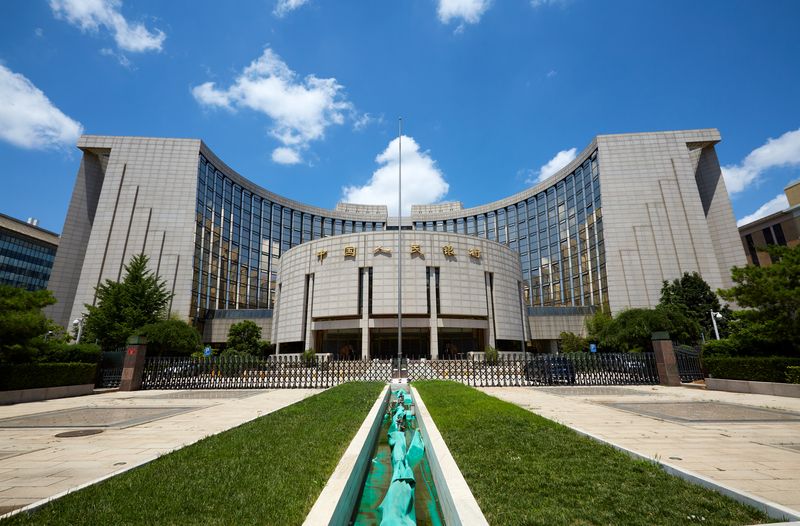
China, long cautious towards cryptocurrencies, this month banned the unauthorised issuance of offshore renminbi stablecoins by domestic and foreign entities, even as Hong Kong prepares to license stablecoin issuers for the first time.
The People’s Bank of China on February 6 reiterated the nation’s ban on cryptocurrency activity, which dates back to 2021, and also closed the door on the overseas issuance of stablecoins pegged to the renminbi without prior approval.
“It indeed comes back to questions about control over national currency and also supervision over activities in the financial sector,” said Andrew O’Neill, managing director and digital assets analytical lead at S&P, noting that China’s concerns about stablecoins are primarily centred on mitigating potential risks from rapid scaling of renminbi issuers outside China.
Stablecoins are a type of cryptocurrency token designed to maintain a constant value and usually pegged to a fiat currency such as the US dollar, allowing money to be moved using blockchain networks. The PBoC noted that the use of stablecoins is related to monetary sovereignty.
“Sovereignty is the play,” said Kher Sheng Lee, co-head of Asia Pacific at the Alternative Investment Management Association, calling the move a “surgical strike” on capital leaks. “If it walks like [renminbi], but bypasses the central bank, it is dead,” he said.
“This is the most comprehensive action since the 2021 [cryptocurrency] mining ban, but the direction was already clear," said Ben Charoenwong, an associate finance professor at the Insead business school in Singapore.
He noted that the driver for caution towards stablecoins is the threat to the banking system and capital controls. “The risk of stablecoins circumventing capital controls is real and growing," he said. "Beijing is protecting the banking system and its capital account regime.”
China’s tightening grip on CNH stablecoins comes as authorities work to strengthen the framework for the e-CNY, its official digital currency. As of the end of November, China recorded 3.48 billion cumulative digital renminbi transactions worth Rmb16.7trn (US$2.4trn). The currency became the first interest-bearing central bank digital currency in the world as of January 1. Stablecoins usually do not pay interest to holders.
Meanwhile, Hong Kong is in the process of reviewing applications for stablecoin issuance after passing a Stablecoins Ordinance in May last year. The Hong Kong Monetary Authority received 36 applications from prospective stablecoin issuers as of September, including Anchorpoint Financial, a joint venture between Standard Chartered Bank, telco HKT and fintech investor Animoca Brands.
HKMA chief executive Eddie Yue told lawmakers earlier this month that the award of licences was likely to be announced in March, with only a “very small number” approved initially. He noted that several submissions lacked detail on use cases, risk management and reserve composition, and required follow-up.
“Since the Hong Kong framework came out, there has been a cautious tone. The initial expectations of a very quick rollout have been somewhat tempered,” S&P’s O’Neill said. “It is possible that China is monitoring Hong Kong closely as a testing ground, assessing the effectiveness of the framework and how regulators adapt to the technology.”
“Hong Kong is being deliberate, not delayed,” AIMA’s Lee said. “The HKMA is curating a gallery, not opening a bazaar. They want the first batch bulletproof. Strong reserves. Clean AML. No Beijing blowback. Scarcity is strategy. Rushing approvals would undermine the credibility they are trying to build.”
The first stablecoins from Hong Kong are likely to be pegged to the Hong Kong dollar, and expectations that CNH stablecoins would follow soon afterwards have been tempered by the PBoC's announcement.
Lee noted that while Hong Kong's stablecoin push moves forward, the scrutiny on CNH products will intensify.
Chinese technology giants Alibaba Group Holding and JD.com paused plans to issue stablecoins in Hong Kong after the government raised concerns about the rise of currencies controlled by the private sector, the Financial Times reported in October. Both companies had said earlier in 2025 that they would participate in Hong Kong’s pilot stablecoin programme.
'Caution is the vibe'
China also said it was boosting scrutiny of real-world asset tokenisation, which involves the conversion of traditional assets such as stocks, bonds and funds, into digital tokens traded on a blockchain. The PBoC noted that the unauthorised issuance of such tokens could amount to illegal fundraising.
S&P’s O’Neill noted that while concerns about stablecoin are centred on maintaining control over the national currency, China’s caution towards RWA tokenisation is in line with how most regulators, particularly those in Asia Pacific, are progressing with their digitalisation efforts.
“They are supportive of innovation, sandboxes and pilot projects, but generally believe that clear rules need to be in place before there is any adoption at scale,” he said. “The announcements last week from China showed a cautious stance toward RWA tokenisation, [and reflect] a preference for regulatory frameworks to be established before technology is experimented with at scale.”
“It is not a blanket ban, but a firewall. Beijing is fencing off mainland assets from offshore speculation. Real assets issued through regulated Hong Kong infrastructure remain viable. But caution is the vibe,” AIMA’s Lee said.