


Missiles, mobilisation and cold: Citi Ukraine chief juggles risks after four years of war
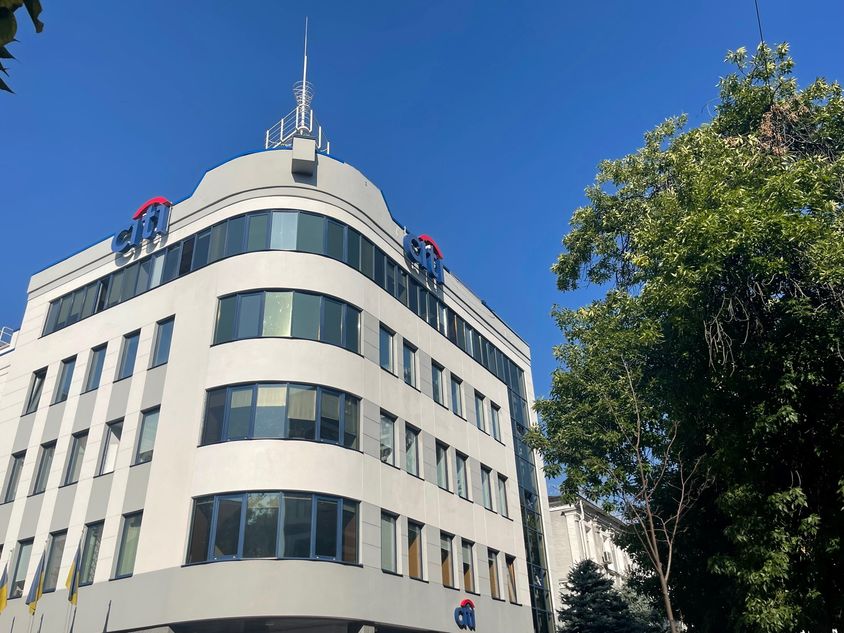
In early January Alex McWhorter had an almost impossible annual assignment for a country chief of a major bank: he had to decide which 50% of his male staff he could protect from being called up for military service, and which he would have to make available to potentially go off to fight in a war.
McWhorter is chief country officer in Ukraine for Citigroup, the only US bank still with a presence in the country.
February 24 marks the fourth anniversary of Russia’s full invasion of Ukraine. At the start, banking staff and other professionals were classed as essential workers and therefore exempt from being mobilised, but those exceptions have been pared back and now only half of male bank staff are exempt. McWhorter has to provide the list.
“It is far and away the most difficult thing I have to deal with. It's just soul crushing, trying to tell someone that they're coming off the list or I can't put them on is not an easy conversation to have,” McWhorter told IFR in a telephone interview.
“I don't get a lot of sleep for a few weeks around every time we have to refresh that list, but the process has to be completed based on business rationale and continuity, and that is the direction we have from the government.”
Citi has about 230 staff in Ukraine. Several of its male staff have been mobilised, and all have survived. After adding family members and other dependants, support staff and others, the bank has felt responsible for about 850 people and there are more husbands, partners, children and other relatives who have been called up. The war is inevitably taking a toll.
This winter has been particularly tough in Kyiv due to freezing temperatures, and in recent weeks Citi has opened up its office to help. Temperatures have dropped to minus 20 degrees Celsius, and power blackouts have lasted for 18 to 24 hours a day.
“That can create life-threatening situations, so we’ve taken steps to open the office for staff and their families to come in, warm up, heat up, sleep, cook food if need be,” McWhorter said. The bank has also booked rooms for staff and families in hotels that have generators.
“We’re watching the weather closely and hoping it turns soon, so it gets back to a situation that may be uncomfortable, but is no longer life threatening.”
McWhorter has had to juggle helping staff stay safe and keeping operations running for clients. There is no precise playbook, and although Citi made extensive preparations before Russia’s full invasion in February 2022 it has regularly had to adapt.
The vault in the Kyiv office’s basement was no longer used to hold cash, for example, so after a few modifications it started serving as the air raid shelter when sirens go off, as they do regularly.
“The business environment is definitely challenging, as you can imagine, but in recent months you’ve seen real hits on the energy grid and extended blackouts and heating and other issues, which hasn’t impacted our operations, but for our people that has been challenging,” McWhorter said.
War impact
McWhorter, an American, has worked at Citi for 23 years. After roles in risk, corporate banking and investment banking in the US and the UK, he was appointed head of Citi Ukraine in 2018.
Citi has been in the country since 1998. It provides corporate and investment banking services, including corporate finance and lending, payments and other cash and liquidity management, foreign exchange, and custody and treasury services. It is not a retail bank. It has about 500 clients, including major multinationals, local firms, the Ukrainian government and a growing list of non-government organisations. Only two clients from before 2022 are no longer operating – because they were based in areas occupied by Russia.
Several European banks also have operations in Ukraine, including Deutsche Bank, BNP Paribas, Credit Agricole, Raiffeisen and ING. No international bank has left since the 2022 invasion.
“We never considered leaving Ukraine,” said Ernesto Torres Cantu, head of international for Citi. “Our commitment has been clear: support our colleagues, keep essential services running, and be there for clients when they need us most.”
Hit hard
Ukraine’s economy has been relatively resilient, although it relies on western financial aid and the winter airstrikes have hit hard. The IMF estimated GDP slumped 29% in 2022, but grew by 5.3%, 3.5% and 2% in the next three years, and sees it growing 4.5% this year. Some 90% of Ukrainian companies said they are fully operational, according to a survey by the American Chamber of Commerce and Citi released last month.
Strict capital controls and high interest rates have helped bank income, although half of profits go to the Ukrainian government in tax. Citi Ukraine made a pretax profit of H6.7bn (US$155m) in 2024, and its assets increased to H85.4bn.
McWhorter said payments activity is above pre-war levels, FX trading has recovered, albeit it is below pre-2022 levels, and the bank has been onboarding clients throughout, especially NGOs. It also has a revolving credit line agreement with the EBRD for US$200m to lend to clients whose businesses have suffered.
Positioning for reconstruction
Significantly, investors and companies are preparing for post-war Ukraine. So are banks.
“We’re now seeing a lot of companies starting to position for reconstruction and obviously the defence sector has become a growing area in our client base,” McWhorter said. “We’ve been working on this since the start of the war, thinking about the next stage and post-war Ukraine. There will be real significant opportunities for our clients and for other companies to come in and invest.
"We’re uniquely positioned to bring companies and expertise from around the world to Ukraine and help with that effort and also help Ukrainian companies scale and go global in ways they haven’t been able to before.” He said the bank had worked with Japanese, South Korean and Latin American as well as US and European firms about playing a role in reconstruction.
“Ukraine's reconstruction and domestic market potential are equally compelling, driven by the country's most valuable asset – its people,” Torres Cantu said, adding that that was shown by its tech sector, where exports have risen in the last four years. “The opportunities are significant today and will only grow as Ukraine rebuilds and modernises its economy.”
Reconstruction needs for the country will be huge, but much will hinge on the timing and nature of any peace deal.
The World Bank last year estimated Ukraine will need US$524bn over the next decade to rebuild, and others have put the need at more than US$1trn if adding power, transport, defence and other infrastructure and security modernisation.
Capital markets should be a major plank of the process. Citi was a major firm in local capital markets before the war and handles most non-resident investment in Ukrainian government bonds.
“That will have to expand – we’ll need domestic capital markets and international capital markets to really make this successful given the scale and size of what we’re talking about,” McWhorter said.
Although bank officials declined to comment, Citi is reported to have already been working on a unique debt-for-reconstruction swap that would allow state-owned electricity grid operator NPC Ukrenergo to refinance a big slug of its debt on more attractive terms, to help rebuild the power grid.
Citi also had a sizeable business in Russia, but has been trying to sell its consumer bank since April 2021, and said in March 2022 it would fully exit the country. It closed the sale of its Russian subsidiary to Renaissance Capital on Wednesday, sealing its full departure.
When war came
Russia invaded Crimea and parts of eastern Ukraine in 2014, although that had limited impact in Kyiv, where all of Citi’s staff were based. But as tensions escalated, Citi’s global security team notified McWhorter in November 2021 that risks had grown.
The bank stepped up preparations for a possible full invasion. It made plans to move its backup site from northern Kyiv to Lviv in western Ukraine and paid a hotel to allow it to take half the rooms at 24 hours' notice if needed. The bank started procuring more first aid supplies, blankets, food and satellite phones in Kyiv, and assessed what processes could be done overseas.
Citi also gave staff a bonus of US$5,000 and told them it was so they had cash on hand if something happened, and if nothing materialised, they could have a holiday on the bank.
In mid-January 2022 all expatriate staff were told to leave, except for McWhorter, whose family returned to the US. In early February many staff moved to Lviv or Warsaw in neighbouring Poland, and McWhorter was told he had to move to Warsaw.
He said when the invasion happened, communications held up better than expected and in the first few days the priority was knowing where staff were, especially as the Russian army neared Kyiv. A difficulty was that many staff had moved to parents’ or relatives’ houses, and there were worries that Russians were tracking mobile phones.
“It became very, very difficult and obviously emotions were high. There was a lot of fog of war ... about where are the Russians?” McWhorter said.
“We also had staff that were in areas that Russians were occupying in the early days, and they witnessed things that no one should witness.”
At the same time, Ukraine issued extensive capital controls and new sanctions lists, and clients were calling because they wanted to ensure they had access to accounts or make emergency payments to staff, so McWhorter said staff were dealing with that, despite being told to focus on their safety.
“The resilience and the dedication, frankly I was amazed at some of that,” he said.
The bank moved more staff and families out of Kyiv in convoys and buses to Lviv and Poland when it could, although many of the male staff could not leave the city. About two-thirds of staff left Kyiv.
A few months later, after Russian forces were pushed back from the Kyiv area, McWhorter said the operational risk eased. Today, about two-thirds of the bank’s staff are back in Kyiv.
“We have extensive air attacks, a lot more and a lot more extensive now, but there's not the same risk of a ground attack, and people can go to shelters and manage through that,” he said.
'People are exhausted'
McWhorter said the resolve and spirit of Ukrainians remains strong, despite war weariness and exhaustion.
His family is now in London and he spends most of his time between Kyiv, Warsaw and London, but is also in other countries to discuss “the opportunities and the challenges” that reconstruction will involve.
“The headlines move on and people focus on the immediate, but it’s important to recognise that this is still very much a brutal war, happening in one of the largest countries in Europe.
“Ukraine will get through this, and I'm very optimistic about where it goes with long-term EU membership and the reconstruction, but in the meantime, Ukrainians need a lot of support, and the people are definitely suffering after four years of this.
“Right now, I think people are just exhausted,” McWhorter said. “After four years of the tension, the constant risk, the air alarms, the mobilisation, the power cuts and everything else … I think there's just a resignation that it goes on until it's over.”