


Can data centre ABS fill Asia’s funding gap?
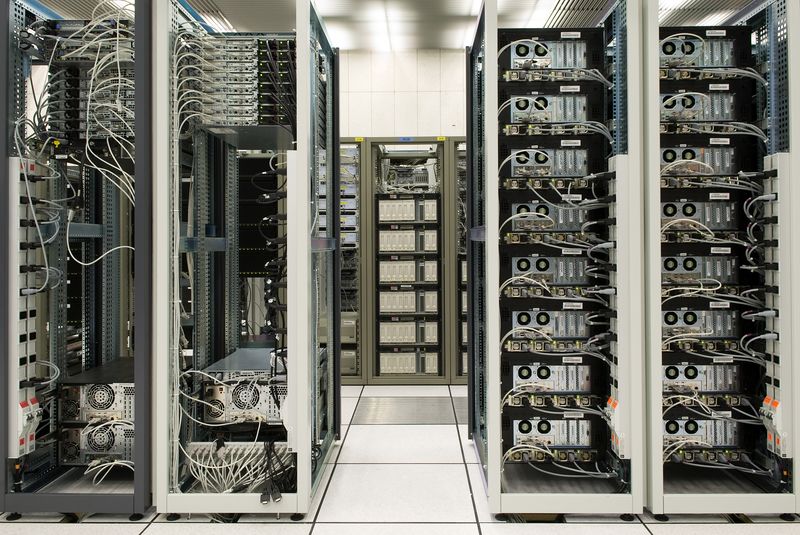
Securitisation offers a promising route to fill an over US$100bn funding gap to build data centres in the Asia Pacific, but this solution is still a while away, according to market participants
Blackstone’s high-profile A$24bn (then US$16.12bn) buyout of Australian data centre operator AirTrunk in 2024 drew attention to the sector's huge financing needs. Following a A$5.5bn loan that funded the buyout, AirTrunk last year raised A$16bn from a consortium of more than 60 banks and financiers to invest across Australia, Hong Kong, Malaysia and Singapore.
About US$116bn will be needed to build out the existing co-location data centre pipeline across Asia Pacific in the coming five to seven years, property broker Cushman and Wakefield estimated in February 2025.
Data centre companies have recycled capital by moving assets to REITs in places like Singapore and Australia, but this means giving up some ownership.
Asset-backed securities using leases to data centre customers as collateral can provide relatively cheap funding to meet data centres’ capex needs.
According to Philip Kam, CEO of the Asia Pacific Loan Market Association, data centre ABS is “a nascent, but emerging trend. And like any other trend, the growth starts in the mature markets first – so places like Australia, Japan and Singapore, have these types of structures in place. But hopefully it gets down to the smaller countries in Asia."
While data centre ABS have gained popularity in the US and Europe since the first transaction in 2018, market participants in Asia are still waiting for the first deal to set a template.
Adoption in Asia faces several barriers, including fragmented markets and different legal systems. Additionally, the region is still in the early cycle of development with many data centres under construction, leaving only a few mature candidates for ABS financing.
“The model is not so straightforward ... some are backed by a long-term lease when they build and they already have an offtaker, but some are just building facilities and hoping they can fill it up,” said a Malaysian investor.
He said that late last year one bank had been gathering interest from investors like himself regarding a potential data centre ABS, but there have been no updates on whether the deal was completed.
"Conservative investors"
Tenant credit quality is an important issue in Asia, according to APLMA’s Kam. “Looking for a large anchor tenant is a challenge because there are only few hyperscalers in the world,” he noted.
Hyperscale data centres, more common in the US and Europe, are likely to be seen more favourably by ABS investors than co-location facilities because they are often leased to a single big tech firm via long-term contracts. But co-location facilities, which are multi-tenant facilities that allow companies to sign shorter-term contracts to lease space, power and cooling, are more common in Asia.
Different legal systems make cross-border transactions delicate, as many countries have capital controls or require approvals from regulators for offshore deals.
“From a legal systems perspective, Europe is harder than the US but better than Asia, because the countries are aligned on a lot of things. In Asia, you have different regulators who don’t talk to each other as much as regulators in Europe do, and the legal systems are very different,” said Victor Wan, Asia head of capital markets at Linklaters.
Jie Liang, a managing director at S&P, agreed that standardisation across operating metrics in Asia is challenging due to varying regulatory requirements and the opaqueness of data centre development in terms of who the tenants are and what the lease provisions are.
Given the patchy Asian legal framework, “sustainability requirements, water usage, power regulations, among many other things, can be unique across different markets in Asia”, she noted.
International investors also like simple structures and high ratings.
“For European and US investors who prefer the senior pieces, like the AAA and AA rated tranches, they don’t mind the returns to be a bit lower, but they are conservative investors who don’t like very complex structures that they have not seen before. So, the challenge in Asia is to get the right rating and structure. If the structure is too complicated, people may hesitate,” Linklaters’ Wan said.
The quality of the tenants, the tenor of the leases, currency risk and country risk will all be reflected in ratings.
Ben McCarthy, head of APAC structured finance and covered bonds at Fitch, expects the first deal to be in a local currency, with offshore deals following when local markets are not deep enough.
“It’s probably those who have done data centre ABS or CMBS in another jurisdiction already who will do the first deal in Asia,” said McCarthy. He pointed out many global data centre operators have significant operations in Asia.
Asia’s data centre pipeline is concentrated in five markets – Japan, India, Australia, mainland China and Malaysia. Australia and Japan, both with established domestic ABS markets and familiar legal systems, are more suited to data centre ABS. Singapore also meets these conditions.
“Australia’s legal system is well understood, the economy is open, it doesn’t have that many add-on restrictions, and it has an established domestic ABS market. Japan also has an established domestic ABS market but the cost funding onshore is relatively low,” said Linklaters' Wan.
For now, specialists agree that bank loans and private credit will remain the mainstays of data centre financing in most of Asia.
"Private credit certainly has a lot of dry powder and can bridge that gap," S&P's Liang said.
(Additional reporting by Hui Ting Yong)