


End of special retail shares brings back memories of landmark Singtel IPO
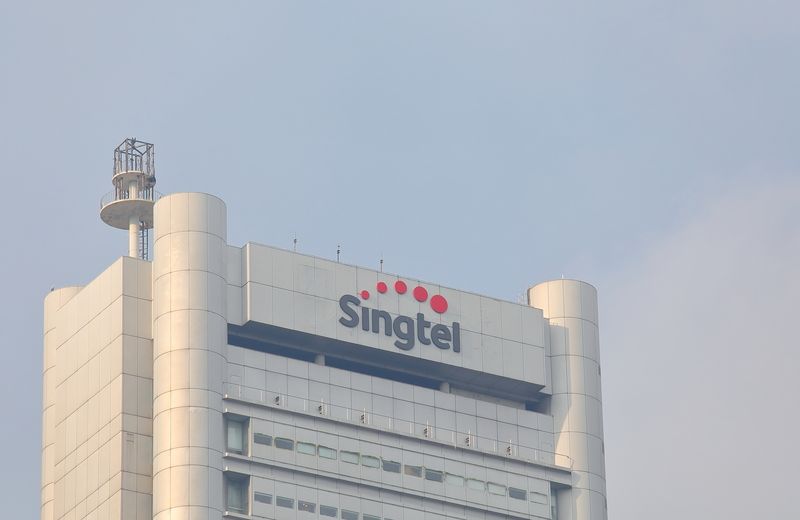
Singapore Telecommunications is removing the unique features of a class of shares created at its privatisation three decades ago when the government tried to engage Singaporeans to invest in the stock market.
When Singtel listed on the Stock Exchange of Singapore in October 1993 in a S$4.3bn (then US$2.7bn) IPO, participants in the Central Provident Fund, the country’s retirement saving scheme, were eligible to buy shares at a discount.
Group A and B shares were offered to Singaporeans at S$1.90 and S$2.00, respectively, far below the clearing price of S$3.60 per share in the IPO bookbuild, but allocations were capped. Buyers of group A shares paid S$1.90, and received 10 loyalty shares for every 100 shares they owned after the first, second, fourth and sixth years if they retained their holdings, giving them an up to 45% discount over six years.
The discount was possible because Singtel was entirely state-owned (Temasek Holdings still held a 50.3% stake as of June 2 2025) so the government was giving up some of its potential proceeds.
The idea was to make share ownership easy and encourage Singaporeans to invest for retirement, and the CPF Board rather than the Central Depository (CDP) was made the trustee of Singtel's Special Discounted Shares scheme. That also meant when Singaporeans sold their SDS the proceeds would remain in their CPF accounts and could not be readily withdrawn.
The government is now supporting the transfer of SDS to individuals’ CDP accounts on November 21 so holders can consolidate them with any other Singtel shares they own. Since April 8, holders have been allowed to sell their SDS for cash.
More than 1.4 million Singaporeans became shareholders under the SDS scheme, and saw immediate paper gains. The stock exchange extended the trading day by 5.5 hours to 12 hours on Singtel’s trading debut on November 1 1993 in anticipation of high interest. After a flurry of activity, in which 116m shares were traded, the stock closed at S$4.14.
Singtel’s IPO was the biggest float in Singapore at the time and it closed its first day of trading with a market capitalisation of S$63bn, more than half the exchange’s entire market capitalisation.
The price-to-earnings multiple in the bookbuilt tranche was 48 times, according to The Business Times newspaper, compared with an average of 22 for Singapore stocks at the time.
“In just one year, Singapore has become a nation of investors – thanks to the stock market bull run and the massive Singapore Telecom float in October,” wrote The Straits Times on December 30 that year.
The bull run was soon over, however. By March Singtel’s share price had fallen to S$3.38, below the institutional IPO price.
One of a kind
In 1996, Singaporeans were given another chance to use their CPF funds to buy Singtel shares at a discount in a follow-on offer of so-called ST2 shares – no other state privatisation in Singapore has employed a similar kind of share offering since then.
“Broadening ownership through a one-off allocation is a very different exercise from building the plumbing that sustains it,” said Ben Charoenwong, associate professor of finance at INSEAD in Singapore, noting that retail engagement from such exercises tends to tail off in the long run.
For instance, Margaret Thatcher's government in the UK led a programme of privatisation of companies like British Telecom and British Gas, helping to push direct retail share ownership to a peak of 25% in the late 1980s from 7% in 1979 when she became prime minister.
Within a decade, however, most of those holdings had drifted back to institutions. Retail-targeted IPOs of Nippon Telegraph and Telephone and Deutsche Telekom in the 1980s and 1990s ended up inflicting heavy losses on Japanese and German investors when the share prices plunged.
Hong Kong has had more success. Government-related companies like Link REIT offered IPO discounts for retail investors, and in 1998 the Chinese special administrative region created an exchange-traded fund backed by shares it had acquired during the Asian financial crisis, which it then sold as the Tracker Fund of Hong Kong in 1999 in a retail-targeted float.
“The pattern is that one-off distributions produce a photo opportunity and not much else,” said Charoenwong. “What sustains retail participation is a default channel households can't easily opt out of and a listed market that gives them something worth holding."
That is something Singapore is seeking to address with its equity market development programme, which aims to attract new listings, allocate money to fund managers who invest beyond the benchmark Straits Times Index, encourage companies to focus on shareholder returns and increase research coverage of smaller companies.
Greater flexibility
A joint statement from CPF and Singtel said the changes to the shares would give “greater flexibility to carry out corporate actions in a timely and cost-efficient manner” and “more options to reward shareholders and fund growth initiatives”. Singtel launched its first share buyback programme last year at S$2bn.
There are now 615,000 holders of the discounted shares, all of whom are in their fifties or older.
The median holder today has approximately 1,360 SDS and paid S$2,000 for shares that were worth S$6,800 as of April 1, having received about S$5,000 in dividends over the years.
The scheme encouraged buyers of SDS to explore other stock market investments. Nearly three in five of them have CDP accounts today, indicating that they have purchased securities with cash.
More recent efforts to reinvigorate the Singapore Exchange are bearing fruit too. There were net retail inflows of S$2.6bn into Singapore stocks last year, bringing the figure for the past six years to S$17bn, according to SGX.