Brazil returned to the euro market on Wednesday for the first time in more than a decade, raising €5bn from a three‑tranche transaction that matched the size of Mexico’s deal in September – the largest euro deal from a Latin American issuer.
The finance industry is breathing a sigh of relief over revisions to incoming US bank capital rules that lobbyists had warned in their earlier iteration could increase systemic risk in the US$846trn derivatives market.
Pershing Square USA kicked off marketing for its closed-end fund on Monday, targeting US$5bn–$10bn to be invested in 12–15 large-cap publicly traded companies.
Contemporary Amperex Technology, the world's largest maker of electric batteries, is considering a share offering of around US$5bn in Hong Kong after a strong run-up in its share price.
Financial regulators need to be alert to the risk in government bond markets from a small number of major investors using high leverage and similar strategies, which could result in "a disorderly unwinding of positions", the head of the Financial Stability Board has warned.
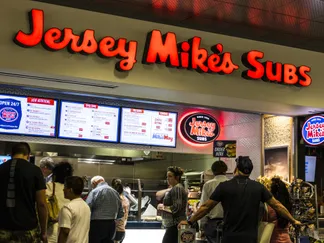
Jersey Mike’s announced today that it has confidentially filed for an IPO, a move that comes a little more than a year after Blackstone acquired a majority stake in the sandwich retailer for US$8bn.
AI chip maker Cerebras Systems is expected to raise up to US$3bn on its Nasdaq IPO after publicly filing documents with the SEC, supported by a fresh US$20bn deal with OpenAI and another deal with Amazon's AWS, a banker involved in the offering told IFR.
Edged Compute is preparing a US$1.3bn junk bond to back the development of AI data centers leased to CoreWeave and Alibaba, marking another debut foray for this growing corner of the asset class.
Liftoff Mobile refiles for US IPO after February failure
The Liftoff Mobile IPO is back on after the adtech company filed documents with the SEC on April 17 to go public, reviving a deal that was pulled just two months ago.
Flowback risk is a relatively new regulatory term . It aims to capture the risk that a bank may be unable to roll a synthetic risk transfer transaction, resulting in previously protected risk-weighted assets once again attracting full capital treatment.
UniCredit has set out more details behind its low-ball offer for Commerzbank, arguing the German bank’s 20% average discount to peers, in place before UniCredit’s first investment in September 2024, has already been wiped out and that applying its own strategy would enhance shareholder returns.
Records continued to fall in the first quarter as banks ably managed a rolling wave of volatility: Goldman Sachs delivered an all-time high on Wall Street for equities trading, JP Morgan produced the second-best fixed income quarter ever, and advisory and underwriting fees were the highest in years.
Moves – HSBC's banking heads for Europe and Middle East leave
HSBC's head of banking for Europe and the Americas, Gerry Keefe, has resigned to take up a role outside banking, and Karim Tannir, its head of banking for the Middle East, North African and Turkey region, is also leaving, according to people familiar with the matter.
Revised bank capital rules alleviate clearing concerns in US$846trn derivatives market
The finance industry is breathing a sigh of relief over revisions to incoming US bank capital rules that lobbyists had warned in their earlier iteration could increase systemic risk in the US$846trn derivatives market.
Banks outperform in investment banking despite volatility
Investment banking fees at the big five US banks jumped 30% last quarter, despite the breakout of war in Iran casting a pall over capital markets in March after booming activity in the first two months of the year.
EnQuest to refinance on positive tone on North Sea drilling
Independent oil and gas company EnQuest has begun marketing US$575m of senior unsecured bonds, with the deal announced as the UK government's tone on North Sea drilling is becoming more positive, say bankers.
Edged Compute is preparing a US$1.3bn junk bond to back the development of AI data centers leased to CoreWeave and Alibaba, marking another debut foray for this growing corner of the asset class.
Saudi Arabia’s Al Rajhi Bank has issued the first US dollar sukuk since the Middle East war began, according to sources, through a private placement that was subsequently tapped.
FIG issuance pauses as geopolitical crisis escalates
Euro FIG supply has once more fallen silent while market participants monitor reactions to the latest escalation in the Middle East conflict. A handful of issuers that had been eyeing the covered and senior sectors opted to hold their horses on Monday.
Preplaced securitisation supply has surged across Europe in the opening months of 2026, as issuers move early to refinance maturing deals and hedge against renewed market volatility, according to bankers and investors.
European CLO primary remains stuck on pause, with just a handful of deals making their way through the market as managers struggle with increasingly uneconomic arbitrage dynamics and bankers toil to engage with investors made skittish by the volatility brought on by the Middle East war.
Luxembourg-based digital bank Advanzia Bank has successfully priced its debut public ABS issue, as the first ever securitisation of German credit card receivables benefited from improved market sentiment.
European ABS was dominated by auto deals in the past week, with four issues, including a Swiss lease ABS, coming to market despite ongoing volatility from the war in Iran.
Tideway, the operator of the Thames Tideway Tunnel known as London's "super sewer", is planning to turn its entire green debt stack blue as it completes final testing before handing over the asset to Thames Water.
French utility Engie's use of a green hybrid to part-finance its £10.5bn acquisition of electricity distributor UK Power Networks is a rare example of green M&A financing issued under the company's sustainability financing framework.
Amundi bullish on tailwinds for responsible investing
Amundi, Europe's largest asset manager, said the negative narrative around ESG and sustainable finance and investing is at odds with the positive market dynamic it is seeing as responsible investment remains resilient despite the uncertainty.
SpareBank 1 Sor-Norge attracted colossal demand on Monday as it visited the euro market for the first time since May 2024, with a €500m six-year non-call five green senior non-preferred trade that was more than five times subscribed.
AI chip maker Cerebras Systems is expected to raise up to US$3bn on its Nasdaq IPO after publicly filing documents with the SEC, supported by a fresh US$20bn deal with OpenAI and another deal with Amazon's AWS, a banker involved in the offering told IFR.
Jersey Mike’s announced today that it has confidentially filed for an IPO, a move that comes a little more than a year after Blackstone acquired a majority stake in the sandwich retailer for US$8bn.
Liftoff Mobile refiles for US IPO after February failure
The Liftoff Mobile IPO is back on after the adtech company filed documents with the SEC on April 17 to go public, reviving a deal that was pulled just two months ago.
US IPO revival gathers pace as investors show capacity for scale
The US IPO market is in the early stages of a sustained recovery as investors look past geopolitical uncertainty to seize on opportunities aligned with a domestic-first economic agenda.
Seeds and crop protection powerhouse Syngenta Group is looking to file confidentially as early as June for a giant Hong Kong IPO, said people with knowledge of the matter.
Lenders cast wary eye over Trump-driven Japan-US financings
Japanese export credit agencies are in talks with Japanese and US commercial banks over jumbo financings to support large-scale infrastructure projects under Japan’s planned US$550bn investment programme into the US.
US leveraged finance markets are beginning to come back to life, as a two-week ceasefire in the US war with Iran has created a narrow but actionable window for issuers to return with riskier debt offerings.
Building materials loans slide on weak earnings, macro concerns
Building materials credits have come under sharp pressure, as investors react to the sector’s sensitivity to the economic cycle and inflation concerns triggered by the war in Iran.
Leveraged finance bankers are confident that demand is ready and waiting to meet supply, with momentum building behind LBO deals, although there is little pressure forcing issuers to move ahead with transactions.
Ford drops sustainability adjustments on amended loans
Ford Motor, an early US adopter of the sustainability-linked loan framework, has removed the incentive from its revolving credit facilities as part of a wider exercise to amend US$21bn of its loans.
Synthetic risk transfers: a trillion-dollar tool that needs to take the next step
Flowback risk is a relatively new regulatory term . It aims to capture the risk that a bank may be unable to roll a synthetic risk transfer transaction, resulting in previously protected risk-weighted assets once again attracting full capital treatment.
Knocking on UMG’s door: Ackman's proposal is a self-help plan dressed up as M&A
There is a tremendous amount of fuss surrounding Bill Ackman’s proposal to acquire the outstanding shares in Universal Music Group: an announcement , a detailed presentation deck and a headline 78% premium comprising part cash and part scrip. Typical M&A theatre, at least on the surface. Yet when the smoke clears, what remains looks far less like a genuine bid than a self-help exercise.
Macaskill on Markets: Is it time for a new president (at Citi)?
Citigroup chief executive Jane Fraser manages a team of rivals who might aspire to her job. Competition is healthy but appointing a new president as a deputy could help Fraser deliver the next phase of her growth plan.
Strategy squared: multiple channels, same exposure
It is unusual for a listed company to buy income-bearing securities of a peer as a treasury decision. In orthodox corporate finance, surplus capital is meant to do one of three things: fund projects that clear the hurdle rate, preserve liquidity, or be returned to shareholders. It is not normally redeployed into another company exposed to much the same trade, especially at a lower yield than the investing company pays on its own stock.
Banks should go on the front foot as private credit crisis plays out
Private credit mishaps are coming at us with such speed and intensity that many of the stories are blurring into one. But rather than the private credit crisis dragging banks down, it might give them an opportunity to play offensively in this space.
IFR hosts a comprehensive programme of conferences, seminars and roundtables throughout the year, providing authoritative insight into the trends and outlooks for specific regions and asset classes.
All websites use cookies to improve your online experience. They were placed on your computer when you launched this website. You can change your cookie settings through your browser.